Beauty trends
The beauty industry moves at breakneck speed, and nowhere is this evolution more visible than in nail artistry. What defines a trend today extends far beyond a trending color or pattern—it encompasses technical innovation, client experience, marketing timing, and the delicate balance between artistic expression and everyday wearability. For nail professionals and beauty enthusiasts alike, understanding these multifaceted trends means staying relevant in an increasingly competitive and creative landscape.
This comprehensive resource explores the core pillars shaping modern beauty trends in manicure and nail design. From mastering the chemistry behind mirror-like chrome finishes to capitalizing on viral moments for business growth, from translating high-fashion runway looks into salon-friendly designs to positioning your services as premium experiences—each dimension plays a crucial role. Whether you’re refining technical skills, planning seasonal campaigns, or seeking to differentiate your offerings, these interconnected elements form the foundation of contemporary nail artistry and successful beauty businesses.
Technical Mastery: Achieving Flawless Finishes
The pursuit of perfect shine and durability has become a defining characteristic of modern nail services. Clients expect their manicures to maintain salon-fresh appearance for weeks, making technical excellence non-negotiable. This requires understanding not just application techniques, but the underlying science that determines longevity and visual impact.
The Chemistry Behind Lasting Shine
A brilliant, mirror-like finish begins with understanding how top coat formulations interact with underlying layers. The molecular structure of top coats determines their ability to create smooth, reflective surfaces. Modern formulations incorporate polymers that self-level during curing, eliminating microscopic irregularities that would otherwise scatter light and create dullness. However, this chemistry can be compromised by contamination—oils from skin contact, dust particles, or incompatible product mixing can all disrupt the curing process and reduce both shine and scratch resistance.
Chrome and Metallic Effects
Chrome powder applications represent one of the most technically demanding trends in nail artistry. The key challenge lies in sealing chrome powder without dulling its reflective properties. Unlike traditional polish, chrome requires a specific top coat chemistry that bonds without penetrating the delicate powder layer. The base color beneath chrome dramatically impacts the final result—a pure black base yields the most reflective mirror finish, while lighter bases create softer, more diffused metallic effects. Understanding the relationship between powder particle size, application pressure, and top coat viscosity separates amateur attempts from professional results.
Optimizing Light Reflection
Whether working with chrome, shimmer, or high-gloss finishes, light dependency determines how designs photograph and appear in different environments. Gradient applications of reflective elements create dimension by strategically placing maximum shine where natural light typically hits the nail. Professional nail artists consider not just artificial salon lighting, but how finishes will perform in sunlight, office fluorescents, and evening settings—ensuring clients feel confident in any environment.
Timeless Techniques Reimagined
Classic nail designs never truly disappear; they evolve. The French manicure, once considered conservative, has undergone countless reinventions that maintain its elegant essence while embracing contemporary aesthetics. Mastering these foundational techniques and their modern variations provides versatility that transcends fleeting trends.
The traditional French tip has spawned variations like the reverse French, where color placement inverts to create a modern negative-space effect. Proportion remains critical—the relationship between smile line curve and nail shape must be recalculated for each variation. Tools like silicone stampers have revolutionized precision in creating crisp lines and geometric patterns, allowing intricate designs that once required hours of freehand work. Color variations extend far beyond white tips; metallics, neons, and even textured finishes reimagine this classic while maintaining its recognizable structure. The key is understanding which elements define the original design and which can be creatively altered without losing its identity.
Balancing Boldness with Wearability
The most striking nail designs face a practical challenge: can clients actually function with them? Pushing creative boundaries while maintaining wearability separates show-stopping social media content from designs clients will genuinely wear and recommend.
Structural reinforcement becomes essential when working with extended lengths or heavy embellishments. Strategic apex placement distributes stress across the nail, preventing breakage during daily activities. Gripping modifications—slightly adjusting nail angles or reducing sharp edges—allow dramatic shapes to remain functional for typing, cooking, or caring for children. Visual impact doesn’t always require extreme length; texture contrast, strategic color blocking, and dimensional elements can create stunning effects on shorter, more practical nails.
Consider the social context in which clients will wear their nails. A design that generates excitement on social media might draw unwanted attention in conservative professional environments. Offering scaled-back alternatives or temporary application methods allows clients to experiment with bold trends without long-term commitment, building trust and encouraging future experimentation.
Leveraging Seasonal Moments for Marketing Success
The calendar provides natural opportunities to refresh offerings and attract client attention. Strategic seasonal planning transforms reactive trend-following into proactive business growth.
Halloween strategies extend beyond October, with dark, moody aesthetics remaining popular through autumn months. Winter demands adaptation—cold weather impacts nail health and skin appearance, requiring adjusted prep techniques and enhanced cuticle care. Summer color trends typically embrace vibrancy and playfulness, with neon and tropical palettes dominating, while holiday retail periods present premium service opportunities where clients invest in special-occasion nails.
The often-overlooked post-holiday recovery period offers strategic value. January clients frequently seek simplified, restorative services after months of embellished designs, creating opportunities to introduce nail health treatments and minimalist aesthetics. Planning promotions around these predictable cycles ensures consistent booking flow throughout the year rather than feast-or-famine scheduling.
Translating High Fashion into Salon Services
Runway shows and fashion editorials showcase avant-garde nail artistry that seems impossible to recreate for everyday wear. Yet these high-fashion moments drive consumer interest and set directional trends. The skill lies in identifying translatable elements and adapting them for practical application.
Shape modification often provides the simplest translation pathway. An extreme stiletto shown on the runway becomes a wearable almond shape that maintains the original silhouette’s elegance. Minimalist interpretation distills complex runway art into essential elements—a multi-colored abstract design might translate to strategic accent nails with simplified color blocking. Texture imitation allows the suggestion of luxurious materials without their weight or fragility; a matte top coat can mimic fabric, while carefully applied glitter recreates the sparkle of crushed crystals.
The speed of adoption from runway to salon varies dramatically. Some high-fashion looks gain immediate traction through celebrity endorsement or viral moments, while others require gradual evolution before becoming commercially viable. Understanding this timeline prevents investing heavily in trends that haven’t yet found their audience while ensuring you’re ready when interest peaks.
Capitalizing on Viral Moments for Business Growth
Social media has fundamentally altered how trends emerge and spread. A single viral post can create overnight demand for specific techniques or aesthetics, presenting both opportunities and challenges for nail professionals.
Dupe hunting—recreating expensive or exclusive looks with accessible materials—drives significant social media engagement. Clients increasingly request nails they’ve seen on influencers or celebrities, expecting their nail technician to reverse-engineer the technique. This requires not just technical skill but market awareness, understanding which viral moments have genuine longevity versus those that will disappear within days.
Nostalgia marketing taps into collective memory, with cyclical returns of ’90s minimalism, Y2K maximalism, or other era-specific aesthetics. Movie tie-ins create predictable viral opportunities around major releases, while strategic hashtag strategy ensures your work reaches audiences actively searching for these trending topics. The key is authentic participation rather than forced relevance—clients recognize when trend adoption feels genuine versus opportunistic.
Positioning Services as Luxury Experiences
In a crowded market, technical skill alone doesn’t justify premium pricing. Luxury positioning requires crafting an experience that feels exclusive, personalized, and worth the investment.
The consultation experience sets the tone immediately. Dedicated time to understand client lifestyle, preferences, and concerns—rather than rushing to application—establishes value. Exclusive materials, whether proprietary polish blends, imported embellishments, or limited-edition collections, create differentiation that justifies higher price points. However, true luxury often lies in time rather than products; unhurried appointments where clients feel thoroughly cared for generate loyalty that discounting never achieves.
Packaging the finish extends the luxury beyond the service itself. Custom aftercare kits, detailed maintenance instructions, and follow-up communication transform a single appointment into an ongoing relationship. Clients paying premium prices expect not just beautiful nails, but confidence that their investment will perform as promised.
The Science of Skin Tone Matching
Perfect color selection requires understanding how nail polish interacts with individual skin tones—a skill that elevates good nail artists to exceptional ones. The difference between a color that complements versus one that clashes often determines client satisfaction and referrals.
Identifying undertones—whether warm (yellow/golden), cool (pink/blue), or neutral—provides the foundation for color recommendations. The same nude polish appears dramatically different on warm versus cool undertones, potentially enhancing or washing out the hands. The sheer versus opaque decision further impacts this relationship; sheer formulas allow more skin tone to show through, requiring more precise undertone matching, while opaque colors make bolder statements with less dependence on the natural nail bed color.
The concept of “mannequin hands”—that universally flattering neutral appearance—requires custom mixing for most clients rather than single-shade solutions. Understanding which colors create this effect on different skin tones involves considering the interplay of polish opacity, undertone alignment, and even the lighting conditions where clients will most frequently see their nails. Gradient techniques can bridge undertone mismatches, transitioning from skin-complementary bases to bolder tips.
Mastering Design Complexity and Visual Balance
As nail art becomes increasingly elaborate, the risk of visual chaos grows. Successful complex designs require understanding fundamental principles of color harmony, strategic use of negative space, and knowing when to exercise restraint.
The “hero nail” concept—designating one or two nails for maximum embellishment while keeping others simpler—prevents overwhelming the eye. This creates focal points that draw attention without competing elements canceling each other out. Texture contrast adds dimension without adding visual noise; combining matte and glossy finishes, smooth and textured elements, or flat and dimensional applications creates interest through variety rather than chaos.
Negative space isn’t empty space—it’s an active design element that allows the eye to rest and emphasizes surrounding elements. Strategic color placement using negative space creates the illusion of more complex designs with less actual application. Before finalizing any intricate design, wearability checks ensure the result photographs well, functions practically, and aligns with the client’s lifestyle. The most technically impressive nail art fails if clients feel unable to wear it confidently.
Understanding beauty trends in nail artistry requires more than following popular designs—it demands technical excellence, strategic business thinking, and genuine understanding of client needs. Whether perfecting the chemistry of flawless finishes, timing seasonal campaigns, or translating high-fashion inspiration into wearable art, each element contributes to professional growth and client satisfaction. The most successful nail professionals don’t simply follow trends; they anticipate them, adapt them thoughtfully, and deliver them with consistent quality that builds lasting client relationships.
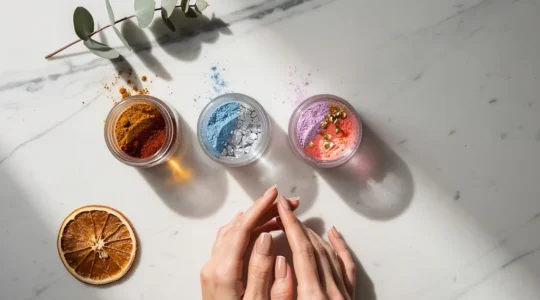
How to Use Seasonal Menus to Book Your Calendar 3 Months Ahead?
Calendar arbitrage allows you to pre-sell January and February appointments during high-demand seasons, eliminating slow periods through strategic pre-commitment psychology. Transform seasonal novelty (glow pigments, chrome trends) into scarcity-driven booking incentives that require advance reservation Bundle maintenance services into 3-month…
Read more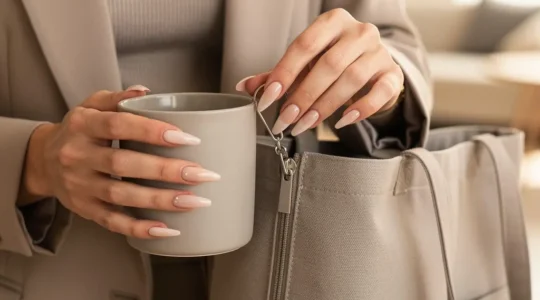
How to Wear 2-Inch Stiletto Nails and Actually Live Your Life: A Functional Guide
Wearing extreme nails isn’t about giving things up; it’s about mastering the art of functional design. Re-engineer your nail’s structure for strength by understanding that a properly placed apex is your greatest asset. Adapt your movements and use tools to…
Read more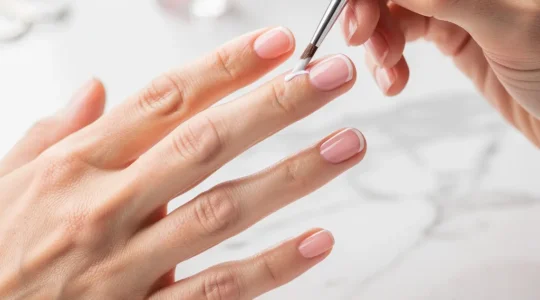
How to Paint a Crisp Smile Line on Your Non-Dominant Hand?
The secret to a flawless French tip on your non-dominant hand isn’t better brush control—it’s abandoning it entirely. The ‘rolling technique’ turns your finger into the moving part, making your non-dominant hand’s only job to hold a brush steady. Tools…
Read more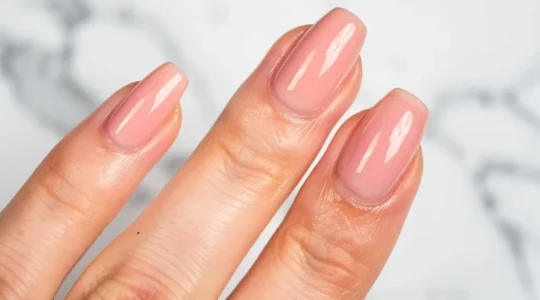
Why Does Your Gel Top Coat Go Dull After 3 Days and How to Fix It?
The frustrating dulling of your gel manicure is rarely the fault of the top coat itself, but a failure to control the microscopic physics and chemistry of its surface. Mechanical abrasion (micro-scratches) and chemical reactions (lotions, sunscreens) degrade the polymer…
Read more