Blog
The world of nail care extends far beyond aesthetic polish and design trends. It represents a fascinating intersection of biology, chemistry, professional technique, and personal health awareness. Whether you’re seeking to understand why your nails chip easily, evaluating the safety of salon products, or aspiring to build a professional portfolio, comprehensive knowledge empowers you to make informed decisions that protect both health and beauty.
This resource connects the essential dots between internal wellness, product formulation, application mastery, and professional standards. From understanding how thyroid function reveals itself through nail appearance to decoding complex chemical acronyms on product labels, these interconnected topics form the foundation of true nail care expertise. Each element influences the others—nutritional deficiencies affect product adhesion, proper technique extends manicure lifespan, and ingredient knowledge prevents long-term damage.
How Internal Health Shapes Nail Quality
Your nails function as remarkably accurate biological indicators, reflecting your internal health status with surprising precision. The nail plate grows approximately 3 millimeters per month, creating a visible timeline of your nutritional intake, hydration patterns, and systemic health over recent months.
Nutritional deficiencies manifest in distinct ways: iron shortage often produces vertical ridges and concave “spoon nails,” while biotin deficiency contributes to brittleness and peeling. Protein inadequacy—nails are composed of keratin, a structural protein—results in weak, slow-growing plates that struggle to maintain integrity under even minimal stress.
Hydration impacts nail flexibility more than many realize. Think of nails like leather: properly moisturized leather bends without cracking, while dried leather becomes brittle and splits. The water content of healthy nails ranges between 10-30%, and chronic dehydration shifts this balance, making nails prone to breakage rather than flexible strength. This explains why washing dishes without gloves or excessive hand sanitizer use—both of which strip moisture—weakens even genetically strong nails.
Several systemic conditions reveal themselves through nail changes:
- Thyroid disorders: Hypothyroidism frequently causes slow growth, brittleness, and lifting from the nail bed, while hyperthyroidism may produce separation and unusual curvature
- Circulation issues: Poor blood flow results in blue-tinged nail beds, temperature sensitivity, and delayed growth
- Chronic stress: Elevated cortisol levels not only trigger nail biting behaviors but also divert nutrients away from non-essential structures like nails, prioritizing vital organs
Professional Standards: Salon Selection and Home Excellence
Achieving professional-quality results—whether at home or in a salon setting—depends entirely on understanding and implementing rigorous standards that protect both health and aesthetic outcomes. The gap between amateur and professional work often comes down to systematic processes rather than expensive products.
Sanitation forms the non-negotiable foundation. When evaluating a salon, observe whether tools undergo three-step processing: cleaning (removing visible debris), disinfection (killing most pathogens), and ideally sterilization (eliminating all microorganisms). Reputable establishments use hospital-grade disinfectants, autoclave sterilizers, or sealed single-use implements. Red flags include tools sitting in unmarked containers, file reuse between clients without sanitization, or foot baths that aren’t properly drained and disinfected between services.
Communication skills dramatically affect satisfaction levels. Professional technicians ask targeted questions before beginning:
- Current medications or health conditions affecting nails (chemotherapy, psoriasis, diabetes)
- Lifestyle factors requiring durability considerations (typing-intensive work, swimming frequency)
- Previous reactions to products or techniques
- Specific concerns about current nail condition
Pricing transparency and realistic time management separate professional operations from problematic ones. Services rushed in half the appropriate time inevitably compromise technique—proper curing times cannot be shortened, cuticle work requires patience, and application precision demands focus. Unusually low prices often signal cut corners in product quality, sanitation protocols, or technician training.
Tipping etiquette varies, but understanding the economic structure helps: in many salons, technicians rent their stations and retain service fees but rely substantially on gratuities. A standard 15-20% tip acknowledges quality work, with adjustments for exceptional service or problematic experiences requiring correction.
Advanced Application Techniques for Long-Lasting Results
Manicure longevity stems from understanding the chemistry of adhesion and implementing specific techniques that address common failure points. Most premature chipping occurs at predictable locations—the free edge and stress points—for preventable reasons.
Capping the free edge represents the single most impactful technique for extending wear. This involves running the brush horizontally across the nail tip after each product layer (base, color, top coat), sealing the vulnerable edge where the three layers of the nail plate are exposed. Imagine waterproofing: you’d pay extra attention to seams where water might penetrate. The free edge is exactly such a seam.
Oily nail beds present a particular challenge because polish is essentially trying to adhere to a slippery surface. The natural oils protecting your nail bed work against product adhesion. Effective solutions include:
- Dehydrator application before base coat to temporarily remove oil and moisture
- Alcohol wipe immediately before base coat (not after, which would remove the base)
- Primer products specifically formulated to create a chemical bridge between oily nails and polish
- Avoiding hand lotion or cuticle oil application for several hours before manicure application
Base coat selection should match your specific nail condition rather than being an afterthought. Ridge-filling bases smooth uneven surfaces for better color application, bonding bases provide extra adhesion for peeling nails, and strengthening bases with nylon fibers support weak or damaged plates. Using the wrong base is like choosing the wrong primer before painting a wall—it affects everything that follows.
Glove usage during wet work and top coat reapplication every 2-3 days can double manicure lifespan. Water is polish’s primary enemy, causing expansion and contraction that breaks the seal. Fresh top coat layers restore the protective shield and high-gloss appearance between full manicure appointments.
Protecting Nail Integrity Through Informed Choices
Long-term nail health requires dispelling persistent myths while implementing evidence-based protective strategies. The balance between enjoying enhancements and preserving underlying nail integrity depends on recognizing damage early and responding appropriately.
The “breathing myth” remains surprisingly prevalent: nails do not respirate through the plate. They receive oxygen and nutrients through the bloodstream at the nail matrix (the growth zone beneath the cuticle). Keratin cells in the visible nail plate are already dead, similar to hair. Polish doesn’t “suffocate” nails—damage comes from improper removal, over-filing, or harsh chemical exposure, not from continuous wear itself.
Recognizing damage requires knowing what healthy nails look like: smooth surface without horizontal grooves (Beau’s lines), slight natural shine, pink nail beds indicating good circulation, and flexibility without brittleness. Warning signs include:
- Persistent whiteness or opacity (potential separation from nail bed)
- Paper-thin flexibility (over-filing damage)
- Green or brown discoloration (possible bacterial or fungal infection)
- Horizontal ridges across multiple nails (indication of systemic stress or illness)
Silk wraps offer an elegant repair solution for splits and tears without resorting to full artificial extensions. Think of them as medical stitches for nails—thin fabric adhered with resin that reinforces the damaged area while new growth emerges. This technique allows you to maintain length during the 3-6 month complete regrowth cycle rather than cutting down to the damage point.
Diet impacts nail integrity directly. Beyond preventing deficiencies, strategic nutrition builds strength: adequate protein intake (0.8 grams per kilogram of body weight), omega-3 fatty acids for moisture retention, and silica from vegetables like cucumbers and bell peppers contribute to flexibility and resistance to breakage.
Safe filing limits prevent irreversible damage. The nail plate typically measures 0.5-0.75 millimeters thick—remarkably thin. Aggressive filing during enhancement removal or overzealous surface smoothing can reduce this by half, creating permanent weakness. File in one direction rather than sawing back and forth, use fine-grit files (180 grit or higher for natural nails), and never file the nail plate surface unless absolutely necessary for specific enhancement adhesion.
Understanding Nail Product Chemistry and Safety
Product ingredient knowledge transforms you from passive consumer to informed decision-maker capable of evaluating safety claims and identifying potentially harmful formulations. The chemistry underlying modern nail products is sophisticated, but certain key concepts deserve universal understanding.
The MMA versus EMA distinction represents perhaps the most critical safety consideration in acrylic systems. Methyl methacrylate (MMA) was widely used in early acrylics but is now banned in many regions for professional use due to severe allergic reactions, difficulty in safe removal, and potential nerve damage. Ethyl methacrylate (EMA) replaced it as the industry standard—safer, more flexible, and easier to soak off without aggressive filing. Warning signs of MMA use include unusually low prices, extremely hard enhancements that require substantial filing for removal, and strong, unusual odors.
Exothermic reactions occur when liquid and powder acrylic components combine, generating heat as the chemical polymerization occurs. This is normal and expected, but excessive heat indicates incorrect ratios or poor-quality products. Clients with thin nail beds or damaged nails may experience discomfort during this brief warming phase—a sensation that should feel warm but never burning.
Solvent evaporation in traditional polish creates the drying effect you observe. The colored pigments and film-forming resins are suspended in volatile solvents (typically ethyl acetate, butyl acetate, or toluene) that evaporate upon air exposure, leaving the solid polish film. This explains why:
- Bottle polish thickens over time as solvents escape even through closed caps
- Thin coats dry faster than thick applications (less solvent to evaporate)
- Quick-dry top coats contain faster-evaporating solvents
- Well-ventilated spaces are essential during application and drying
Photo-initiators in gel systems respond to specific UV or LED wavelengths, triggering the polymerization reaction that transforms liquid gel into solid coating. This technology allows controlled curing—the product remains workable until light exposure, then hardens in seconds. Different gel formulas require specific wavelengths and exposure times; using incompatible lamps results in incomplete curing, leading to premature lifting, sticky residue, and potential skin sensitivity.
Shelf life reality contradicts the “indefinite” lifespan many assume for nail products. Most polish and gel formulas remain optimal for 12-24 months after opening. Separation, color changes, texture irregularities, or difficulty achieving even application signal degradation. Expired products don’t just perform poorly—they may cause unexpected reactions as chemical components break down.
Building Your Manicure Portfolio on Social Media
Visual documentation and strategic social media presence have become essential for nail professionals and passionate enthusiasts seeking to showcase work, attract clients, or build community. Technical excellence in nail artistry means little if presentation fails to capture that quality in digital format.
Lighting setups make the difference between amateur snapshots and professional portfolio images. Natural diffused light—near a window with sheer curtains—provides the most accurate color representation. Artificial alternatives include ring lights positioned to eliminate shadows without creating harsh glare on the shiny nail surface. The goal is even, shadow-free illumination that reveals details like crisp lines, smooth application, and true color accuracy. Overhead lighting creates unflattering shadows; side lighting emphasizes texture and dimension.
Hand posing follows surprising conventions that professional photographers understand intuitively. Fingers slightly separated rather than pressed together, gentle curves rather than rigid straightness, and hand positioning that shows nails at a slight angle rather than completely flat-on all create more aesthetically pleasing compositions. Consider negative space—the background visible between fingers—as important as the nails themselves.
Caption writing transforms pretty pictures into valuable content. Effective captions typically include:
- Brief design description or inspiration source
- Technical details (product brands, technique used, special challenges overcome)
- Relevant hashtags combining popular tags (#nailsofinstagram) with niche-specific terms (#gradientnailart, #gelnails)
- Call to action or question encouraging engagement
Video content dramatically outperforms static images in current social media algorithms. Time-lapse application videos, before-and-after transformations, or quick tutorial clips showcasing specific techniques generate significantly higher reach and engagement. Even simple smartphone videos with natural lighting and steady hands provide valuable content when they demonstrate clear technique or satisfying visual progression.
Bio optimization deserves strategic attention—it’s often the first text people read when deciding whether to follow. Effective bios clearly communicate your niche (gel extensions specialist, nail art enthusiast, natural nail care advocate), location if relevant for client acquisition, and booking or contact information. Many successful accounts use formatting tricks: line breaks for readability, strategic emoji use for visual scanning, and link-in-bio tools to share multiple destinations from the single allowed link.
This comprehensive exploration of nail care reveals a discipline far richer than surface-level aesthetics suggest. From the biological indicators visible in your nail beds to the chemistry occurring during gel curing, each element connects to broader principles of health, safety, and professional excellence. Whether your interest lies in optimizing personal nail health, evaluating salon safety, or building professional expertise, this foundational knowledge empowers informed decisions that honor both beauty and wellbeing.
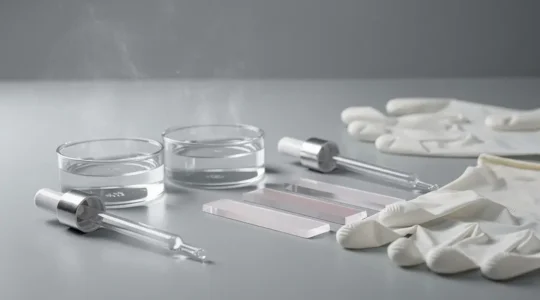
Methacrylates Explained: Why Cheap Monomer Smells Different?
The “strong smell equals danger” intuition fails with methacrylates: methyl methacrylate (MMA) has a lower odor threshold (0.11 ppm) than many safe alternatives, while undercured gels can contain 139 µg/g of reactive monomers without any noticeable scent. Odor intensity correlates…
Read more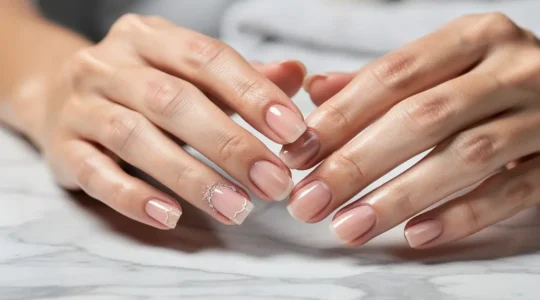
How to Transition from Acrylics to Natural Nails Without cutting Them Short?
Transitioning away from acrylics doesn’t mean sacrificing your nail length. The key isn’t just patience, but an active recovery strategy focused on understanding your nail’s structure. By prioritizing deep hydration, providing structural support for new growth, and learning to manage…
Read more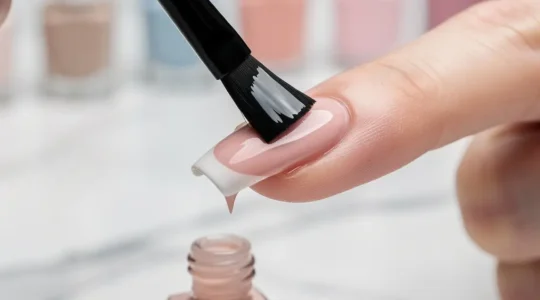
Why Does Your Polish Chip at the Tips Within 24 Hours? An Investigation.
Contrary to popular belief, your manicure isn’t chipping because of bad polish or a clumsy mistake. The real culprit is a series of invisible chemical and physical failures at the microscopic level. Your nail’s natural oil and flexibility are working…
Read more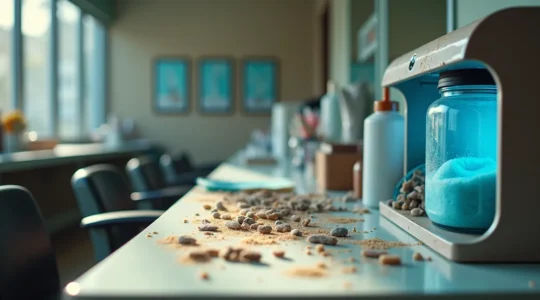
How to Spot a “Chop Shop” Salon Before You Even Sit Down?
A visually clean salon isn’t always a safe one; the most dangerous red flags are often invisible to the untrained eye. Real safety is indicated by proper disinfectant contact times, not just blue liquid in a jar. A state-issued license,…
Read more
Why Are Your Nails Peeling Despite Using Expensive Strengtheners?
Contrary to popular belief, peeling nails are rarely a surface-level issue that a hardener can fix; they are a critical bio-indicator of your internal health. Topical products often mask the real problem, which stems from nutrient malabsorption, hormonal imbalances, or…
Read more