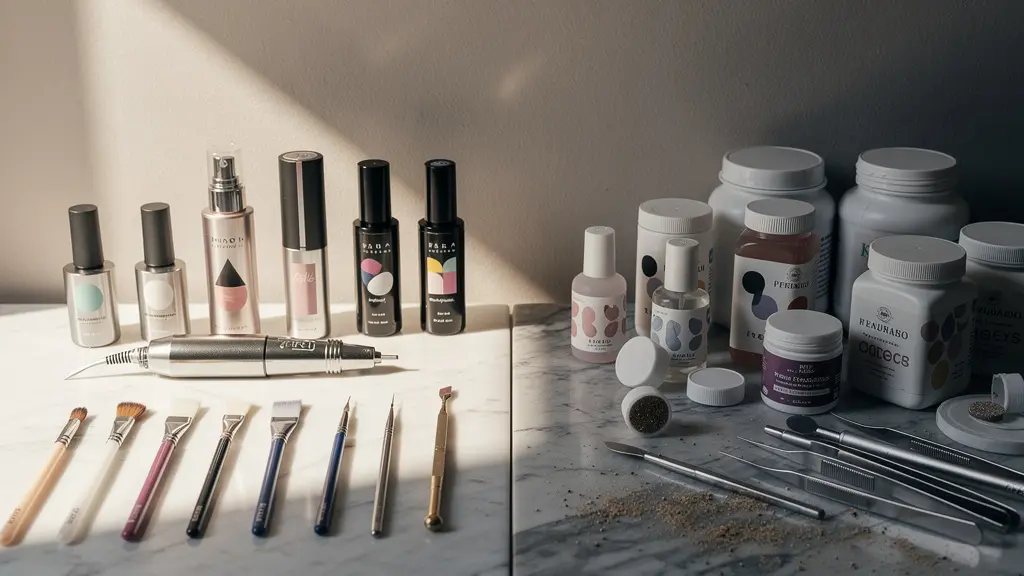
Investing in nail school should build a career, not a mountain of debt from a worthless diploma.
- Diploma mills use inflated kit costs, fake job placement data, and unaccredited online courses to exploit students.
- Verifying instructor licenses, financial aid eligibility (FAFSA), and state-specific hour requirements are non-negotiable investigative steps.
Recommendation: Before enrolling, use our forensic checklists to verify every claim, from supply kits to instructor credentials.
The dream is alluring: transforming a passion for nail art into a thriving, creative profession. You’re ready to invest the time and money. The brochures are glossy, promising state-of-the-art training, high-paying jobs, and a fast track to success. The standard advice echoes in your mind: “check for accreditation,” “read reviews online,” “ask about the curriculum.” But this advice often falls short in an industry where predatory schools have perfected the art of deception.
What happens when the accreditation is from a flimsy, profit-driven agency? When the five-star reviews are fake? When the “job placement assistance” is nothing more than a list of outdated salon phone numbers? Many aspiring technicians find out too late, left with a worthless piece of paper and crippling debt. The truth is, protecting your investment requires more than a casual glance; it demands the mindset of a consumer advocate, a forensic investigator who knows how to spot the con before it starts.
This isn’t about simply choosing a school. It’s about unmasking a diploma mill. Instead of falling for surface-level marketing, you must learn to dissect a school’s financials, verify its faculty’s credentials, and see through the illusion of their promises. This guide provides the investigative framework to do just that. We will move beyond the brochure and equip you with the specific red flags and verification methods needed to differentiate legitimate education from a predatory scam.
This article will guide you through the critical areas where diploma mills hide their deceptions. From analyzing the student kit for financial traps to verifying an instructor’s real-world experience, you will learn the precise questions to ask and the evidence to demand. The following sections provide a comprehensive roadmap to protect your future career.
Table of Contents: How to Forensically Investigate and Expose Nail School “Diploma Mills”
- What Should Be in the Kit: Red Flags in Student Supply Lists
- Do Schools Really Help You Find a Job or Is It Just Marketing?
- Are Online-Only Nail Schools Recognized for Licensing Exams?
- Who Is Teaching You: How to Verify an Instructor’s Experience?
- FAFSA and Grants: Which Nail Programs Qualify for Federal Aid?
- Why Do Hours Required for Licensing Vary so Much by State?
- Retouched Photos: How to Know If an Educator’s Work Is Real?
- Why Mentorship Accelerates Your Career Faster Than Beauty School?
What Should Be in the Kit: Red Flags in Student Supply Lists
The student supply kit is often presented as a convenient, all-in-one package. For a diploma mill, however, it’s a primary profit center disguised as a necessity. While legitimate schools provide professional-grade tools, predatory institutions use the kit to extract maximum value from unsuspecting students through overpriced, low-quality, or proprietary products. The costs are not trivial; tuition can range from $3,000 to $10,000, with kits adding another $200–$300 or more, according to Milady’s guide. This is where your first forensic investigation begins.
A major red flag is a lack of transparency. If a school refuses to provide a detailed, itemized list of the kit’s contents—including brand names—before you enroll, you should be on high alert. They are likely hiding generic, unbranded products that you couldn’t use in a professional salon. Furthermore, examine the enrollment contract for any “replenishment clauses” that lock you into buying refills exclusively from the school’s store at inflated prices. This is a classic tactic to create a captive market.
Case Study: La’ James International College’s Hidden Fee Scheme
The danger of hidden costs was exposed in the case of La’ James International College. This Iowa-based chain was sued by the state’s attorney general in 2014 for deceptive practices, including levying over $631,000 in “overage fees” on students who didn’t graduate on time—an average of nearly $2,500 per student. The subsequent consent judgment forced the school to forgive $2.16 million in student debt and provide clear cost disclosures, highlighting how extra fees, often tied to supplies and program length, can become a significant financial trap.
To protect yourself, you must become a proactive investigator. Don’t just accept the kit as-is. Use a systematic approach to verify its value and legitimacy before signing any contracts.
Your 5-Step Kit Verification Plan
- Request the Full Product List: Before enrolling, demand a complete list and verify each item is from a recognized professional brand (e.g., OPI, CND, Young Nails), not a generic, unbranded product.
- Demand Safety Data Sheets (SDS): Ask if the school provides SDS documents for every chemical liquid. Legitimate schools are legally required to have these on file for safety and compliance.
- Scrutinize the ‘Replenishment’ Clause: Check your enrollment contract for any language forcing you to buy refills exclusively from the school’s store, often at marked-up prices.
- Compare Kit Costs: Price out the contents of the kit (or comparable professional products) at a beauty supply retailer. If the school’s price is more than double the retail cost, it’s a major red flag.
- Interview Current Students: Ask enrolled students if the kit’s products are the same brands used in the professional salons where they hope to work.
Do Schools Really Help You Find a Job or Is It Just Marketing?
One of the most potent marketing claims made by beauty schools is the promise of high job placement rates and lucrative starting salaries. For diploma mills, these promises are a cornerstone of their deception, creating an illusion of a guaranteed return on investment. The reality is often grim. Federal investigators have repeatedly found schools that systematically falsify their placement data to maintain access to federal student aid and lure in new students. They may count dropouts as “still enrolled” or define “placement” as any job, even one outside the industry, to inflate their numbers.
This gap between marketing and reality is stark. The Institute for Justice’s “License to Work” report found that successful cosmetology graduates earn about $26,000 a year on average—less than what many unlicensed workers make. This sobering figure stands in sharp contrast to the “high double or triple digit salaries” often promised in school brochures.

As the image of the empty salon chair suggests, a diploma is not a guarantee of employment. The promise of placement assistance can evaporate the moment you graduate, leaving you with debt and no clear path to a job. The most egregious cases involve outright fraud, as seen with the Marinello Schools of Beauty.
Case Study: Marinello Schools’ Inflated Job Placement Fraud
Operating 56 campuses, Marinello Schools of Beauty was found to have “artificially inflated the placement figures” to defraud taxpayers of over $50 million. Whistleblowers and federal investigators uncovered a scheme where the school made false promises of high salaries and direct career placement. The scam was so extensive that it led to an $11 million settlement paid by the school’s insurer after the U.S. Department of Justice intervened. This case serves as a stark warning: a school’s job placement statistics should be treated with extreme skepticism and require independent verification.
Instead of trusting a school’s self-reported numbers, aspiring technicians should ask for a list of recent graduates they can contact. Ask the school for the names and locations of salons that have hired their alumni in the past year. A legitimate school with strong industry ties will be proud to share this information; a diploma mill will be evasive.
Are Online-Only Nail Schools Recognized for Licensing Exams?
The promise of a fast, cheap, and convenient online-only nail education is a tempting offer, especially for those balancing other commitments. However, this is one of the most dangerous traps for aspiring technicians. In the United States, practicing as a nail technician for pay requires a state-issued license, not just a course-completion certificate. Online-only programs almost never meet the strict requirements for licensure, which are mandated by each state’s Board of Cosmetology. The primary reason is their inability to provide the required number of supervised, in-person practical hours. A guide from Louisville Beauty Academy notes that licensing requirements range from 150 to 750 hours of hands-on training, depending on the state. An online course simply cannot fulfill this critical, legally mandated component.
These online “schools” often exploit students’ confusion between a “certificate” and a “license.” A certificate merely proves you completed a private course; it grants no legal authority to work professionally. A state license is the only credential that allows you to legally perform nail services for money and is the only credential legitimate salons will recognize. The table below breaks down the critical differences you must understand.
| Criteria | Course Certificate | State License |
|---|---|---|
| Issuing Authority | Private school or online platform | State Board of Cosmetology |
| Legal Permission to Work | No — cannot legally perform nail services for pay | Yes — legally required to practice in all U.S. states |
| Practical Hours Required | Often zero or unverified | 150 to 750 hours depending on state |
| Hands-On Exam | Usually none | Written + practical exam in most states |
| Portability / Reciprocity | Not recognized across state lines | Transferable via endorsement in many states |
| Employer Recognition | Rarely accepted by salons or spas | Required by all legitimate employers |
Before enrolling in any program, especially one with an online component, your first step should be to contact your state’s Board of Cosmetology directly. Ask them if the specific school and program you are considering is approved for licensure. Do not rely on the school’s claims. Verification with the state licensing body is the only way to ensure your education will lead to a legal career, not a useless certificate.
Who Is Teaching You: How to Verify an Instructor’s Experience?
The quality of your education is determined by the quality of your instructors. A great teacher brings not only textbook knowledge but also years of real-world, behind-the-chair experience, an understanding of current trends, and a passion for the craft. Diploma mills, however, often staff their classrooms with underqualified or inexperienced instructors. As Rachel Gonzalez of the Institute for Justice states, these schools are notorious for their exploitative practices. In a press release, she noted, ” Cosmetology schools also notoriously overcharge their students and underdeliver on education, leading to poor graduation rates, high debt and dissatisfaction for students, and profits for schools.” A key part of “underdelivering” is hiring subpar instructors.
A common tactic is what can be called “credential laundering”: a school hires its own recent graduates to become instructors immediately after they get licensed. These new “teachers” have zero professional salon experience, meaning they can only teach the same limited, often outdated curriculum they just learned. They lack the client management skills, speed, and problem-solving abilities that only come from working in a real-world setting. You are essentially paying for a novice to teach you, which severely limits your career potential.
Therefore, you must conduct a forensic verification of any potential instructor’s credentials. Don’t be afraid to ask direct questions and demand proof of their experience. A confident, seasoned professional will be happy to share their portfolio and professional history. An instructor at a diploma mill will likely be evasive or defensive.
Forensic Checklist: 6 Steps to Vet Your Instructor
- Verify the License: Ask to see the instructor’s current state cosmetology or nail technology license and use your state board’s online lookup tool to confirm it is active and not expired.
- Request a Recent Portfolio: Ask to see their client portfolio from the last 12 months. If they can’t produce current work, their practical skills are likely outdated.
- Inquire About Salon Experience: Ask how long they worked in a professional salon *outside* the school. Be extremely cautious of instructors who graduated and were immediately hired back to teach.
- Check for Advanced Certifications: Do they hold advanced credentials from respected brands like CND, Young Nails, or Gelish? Or are their only credentials from the school itself?
- Observe a Class: Before enrolling, ask to sit in on a class. Does the instructor perform live demonstrations of techniques, or do they just lecture from a textbook?
- Investigate Their Online Presence: Search the instructor’s name on social media and professional platforms. Active, passionate professionals almost always maintain a visible presence showcasing their art.
The person teaching you is the gatekeeper to your future skills. Ensuring they are a true master of the craft, not just a placeholder, is one of the most important investments you can make.
FAFSA and Grants: Which Nail Programs Qualify for Federal Aid?
The Free Application for Federal Student Aid (FAFSA) is the gateway to grants, scholarships, and federal loans that make education affordable. For a school to be eligible to process this aid (known as Title IV funding), it must meet strict standards set by the U.S. Department of Education, including being accredited by a recognized agency. This makes FAFSA eligibility a powerful indicator of a school’s legitimacy. Diploma mills that cannot meet these standards often resort to two tactics: outright fraud or pushing students toward high-interest private loans. The stress of financing an education can make students vulnerable; a 2024 College Ave survey highlighted in a 2025 report on beauty school financial aid exploitation found that 68% of students find paying for college stressful.
Predatory schools exploit this stress. The most blatant form of fraud involves faking student eligibility for federal aid, as seen in the shocking case of the Marinello Schools of Beauty.
Case Study: Marinello Schools’ Title IV Fraud
The operator of Marinello, B&H Education, was found to have systematically committed Title IV fraud. The school allowed students without a high school diploma to obtain bogus credentials just so they could qualify for federal aid. According to Department of Justice findings, staff gave students unproctored tests and allowed them to retake exams until they passed. This widespread fraud led the Department of Education to terminate Title IV access for the entire 56-campus chain, which closed shortly after. The case resulted in an $8.63 million settlement under the False Claims Act, exposing how deep financial deception can run.
If a school cannot process federal aid, it’s a monumental red flag that it fails to meet basic government oversight standards. These schools will often partner with private lenders to offer high-interest loans with unfavorable terms, trapping students in debt for a worthless education. Your task is to verify a school’s financial legitimacy before you even discuss enrollment.
The 4-Step Federal Aid Eligibility Test
- Verify Accreditation Officially: Use the U.S. Department of Education’s official database (ope.ed.gov) to check the school’s accreditation. Do NOT trust logos on the school’s website.
- Check for a FAFSA School Code: Use the official FAFSA website to look up the school. If it does not have a school code, it is ineligible to process federal grants or loans.
- Review the College Scorecard: Check the school’s data on the government’s College Scorecard website. High cohort default rates are a sign that graduates are not earning enough to repay their loans.
- Beware of Private Loan Pushing: If a school is ineligible for federal aid but aggressively pushes you toward a specific high-interest private loan, consider it a deal-breaker.
Financial aid eligibility is not just about getting help with tuition; it’s a crucial litmus test for a school’s accountability and legitimacy.
Why Do Hours Required for Licensing Vary so Much by State?
One of the most confusing aspects of nail technology education is the wild variation in required training hours from one state to another. A prospective student might see that Virginia requires only 150 hours, while neighboring Delaware requires 300, and Alabama demands a staggering 750 hours. At the extreme end, Alaska reformed its laws to require just 12 hours plus supervised training, while Connecticut requires no license at all. This lack of a national standard is not accidental. According to the Institute for Justice, an organization that advocates against excessive occupational licensing, these high-hour mandates are often the result of protectionist lobbying. In their “Promoting Beauty, Not Barriers” initiative, they state, “In response to lobbying by cosmetology schools, states require up to 2,100 hours in full-service programs, regardless of the services an aspiring beauty professional wants to provide.”
These schools have a financial incentive to keep hour requirements high: more hours mean more tuition. The financial burden can be immense. The same Institute for Justice report notes that for full cosmetology programs, school on average costs more than $16,000, forcing students to borrow over $7,300. While nail programs are shorter, the principle is the same—inflated hour requirements serve the schools’ bottom line, not public safety or student competency.
This patchwork of regulations creates both confusion for students and opportunities for diploma mills. A school in a high-hour state can justify its exorbitant tuition, while students remain unaware that another state deems a fraction of that training sufficient for safe practice. The table below illustrates just how dramatic these differences can be.
| State | Required Nail Tech Hours | Apprenticeship Alternative |
|---|---|---|
| Virginia | 150 hours | Check with state board |
| Florida | 240 hours | Not specified |
| Delaware | 300 hours | Available (600 hours) |
| Alaska | 12 hours (reformed) | Available |
| California | 400 hours | Available |
| Georgia | 525 hours | 2,050 hours apprenticeship |
| Texas | 600 hours | Check with state board |
| Alabama | 750 hours | 1,200 hours apprenticeship |
| Connecticut | No license required | N/A |
As an aspiring technician, understanding this context is crucial. It reveals that the number of hours is often an arbitrary figure influenced by politics and profit rather than a pure measure of educational need. This knowledge empowers you to question high tuition costs and explore more efficient pathways to licensure, such as apprenticeship programs, which are available in many states as an alternative to costly traditional schooling.
Retouched Photos: How to Know If an Educator’s Work Is Real?
In the age of social media, an educator’s portfolio is their primary marketing tool. Crystalline cuticles, impossibly perfect smile lines, and flawless, glowing skin fill Instagram feeds. But how much of it is real skill, and how much is digital manipulation? Predatory educators often rely heavily on Photoshop, FaceTune, and other editing tools to create a portfolio of work they cannot replicate in reality. They sell a fantasy of perfection that their students can never achieve because the standard itself is fake. This sets students up for failure, eroding their confidence when their real-world results don’t match the retouched images they were shown.
Learning to spot the signs of digital alteration is a critical skill for vetting an educator. Real, high-quality nail work is beautiful, but it is not flawless in the way a retouched image is. Authentic photos will show the natural texture of skin—pores, fine lines, and subtle imperfections. The key is to train your eye for “visual forensics.”
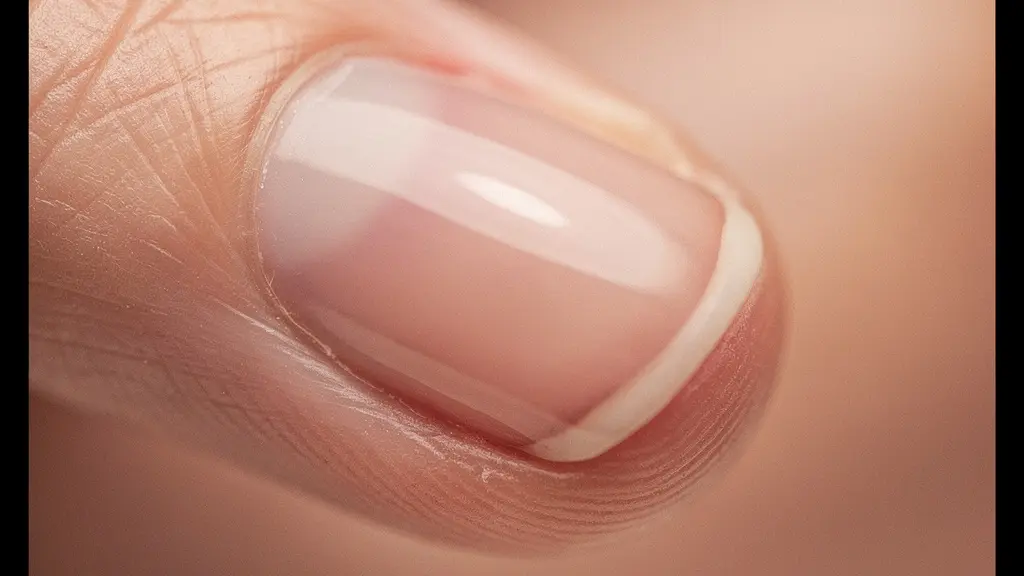
As this macro image demonstrates, real skin has texture. The cuticle area, the most common target for retouching, should look like healthy skin, not smooth, waxy plastic. Look for consistent lighting and natural shadows. Unnaturally even lighting across the entire nail or shadows that don’t match the light source are telltale signs of digital editing. One of the most powerful tools at your disposal is demanding video content. It is incredibly difficult to fake poor technique in a real-time or time-lapse video, which is why many who rely on retouching refuse to post them.
Visual Forensics: 5-Point Checklist to Spot Fake Nail Photos
- Zoom Into the Cuticle: Look for unnaturally smooth or plastic-looking skin. Authentic photos will show pores, fine lines, and natural skin irregularities.
- Analyze Lighting and Shadows: Check for inconsistent lighting. Retouched images often have shadows that don’t match the light source or unnaturally even lighting across the nail surface.
- Demand Video Content: Ask the educator for time-lapse or real-time application videos. Refusal to post video is a major red flag that they may be hiding poor technique.
- Perform a Reverse Image Search: Use Google Lens or TinEye to see if the portfolio images belong to other artists, have appeared in competitions, or are from stock photo sites.
- Check for Portfolio Consistency: Review the educator’s entire feed. If every photo features a different hand model with magazine-quality perfection, the work may be sourced from multiple artists rather than their own.
Your goal is to learn from a master of the craft, not a master of photo editing. Trust educators who proudly show their unretouched, real-world work, complete with the beautiful imperfections of the human hand.
Key Takeaways
- Financial Forensics: A legitimate school is transparent about costs. Inflated kit prices, mandatory in-house refills, and a lack of FAFSA eligibility are major financial red flags.
- Credential Verification: Do not trust claims. Use state board websites to verify a school’s approval for licensure and an instructor’s active license and real-world salon experience.
- Reality vs. Marketing: Treat job placement rates and photo portfolios with extreme skepticism. Demand proof, such as contact info for recent graduates and unretouched video content of the instructor’s work.
Why Mentorship Accelerates Your Career Faster Than Beauty School?
After exposing the myriad ways diploma mills exploit students, a troubling question emerges: is the traditional beauty school model broken? For many, the answer is yes. The statistics are damning. Research from the Institute for Justice reveals that more than 60% of cosmetology students borrow significant amounts and fewer than 30% graduate on time. This system saddles aspiring professionals with debt while often failing to provide the real-world skills needed to succeed. This has sparked a nationwide trend toward a more effective, time-honored model: mentorship and apprenticeship.
Unlike the often-outdated, textbook-driven curriculum of a classroom, a mentorship provides immersive, on-the-job training. An apprentice learns speed, client communication, business management, and advanced techniques directly from a working professional. This model is not only more efficient but also more financially sound, as it often allows the trainee to earn while they learn, avoiding the crushing debt associated with traditional schooling. Legislatures are beginning to recognize this, creating new pathways that bypass the conventional school system entirely.
Case Study: Iowa’s In-House Training Pathway
In 2025, Iowa passed House File 711, creating a groundbreaking “establishment training program.” This allows salons and barbershops to hire and train unlicensed individuals directly, provided the business offers a formal in-house training program. This move follows a larger trend, with states like Alaska dramatically reducing their required hours from 250 to just 12, favoring supervised practical training over expensive institutional programs. These legislative shifts acknowledge that true mastery comes from hands-on practice under the guidance of a seasoned expert.

The power of mentorship lies in its direct, personalized approach. It closes the gap between theory and practice, accelerating a new technician’s career far faster than a traditional program. Instead of spending hundreds of hours and thousands of dollars in a classroom, you are building your skills and your professional network from day one in a real salon environment.
As you plan your career, do not limit your options to the glossy brochures of traditional schools. Investigate apprenticeship and mentorship opportunities in your state. Seek out a successful, passionate nail professional who is willing to teach you the craft. This path may require more initiative, but it is often a faster, more affordable, and ultimately more effective route to becoming the skilled technician you dream of being.