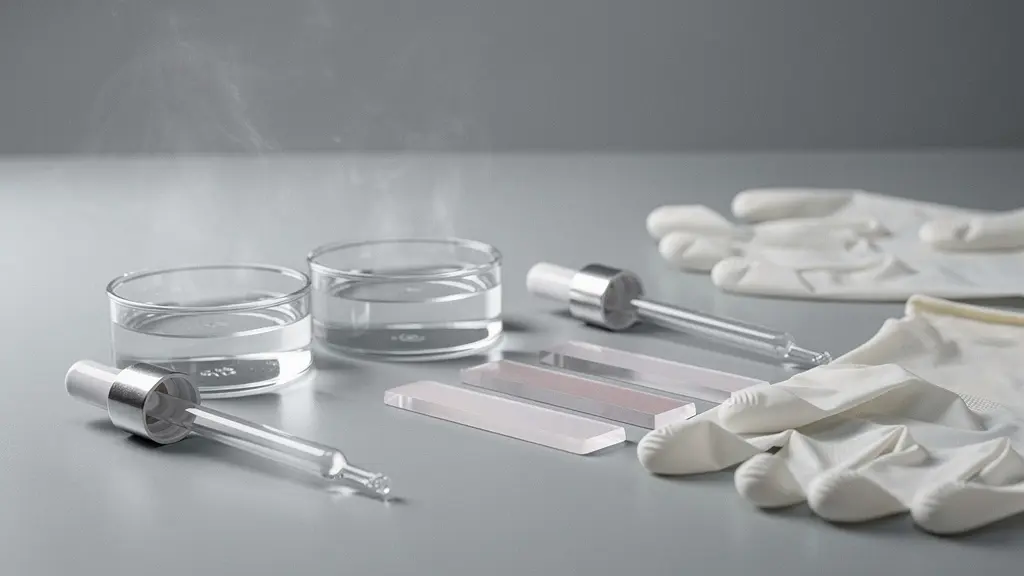
The “strong smell equals danger” intuition fails with methacrylates: methyl methacrylate (MMA) has a lower odor threshold (0.11 ppm) than many safe alternatives, while undercured gels can contain 139 µg/g of reactive monomers without any noticeable scent.
- Odor intensity correlates with volatility, not toxicity—cheap monomers may smell sharp due to dental-acrylic origins while hiding their specific gravity (~0.945).
- Pigmented gels cure less efficiently than clear ones, creating shadow zones where residual monomers trigger immune sensitization.
Recommendation: Before purchasing discounted monomer, verify the Safety Data Sheet for specific gravity (~0.945 indicates MMA) and prioritize neoprene gloves (20-minute breakthrough time) over standard nitrile (5 minutes).
That suspiciously cheap gallon of monomer flashing across your screen promises professional results at a fraction of the cost. The temptation is real—overhead costs crush margins, and the seller swears it’s “just like the brand name.” Your instinct might scream that the sharp, dental-office smell is a dead giveaway of MMA contamination, or conversely, that low-odor formulas must be safer. These olfactory assumptions are chemically bankrupt and potentially hazardous.
Common wisdom suggests trusting your nose to spot dangerous methyl methacrylate, assuming that thicker gels are inherently riskier, or believing that once a gel is hard to the touch, the chemical reaction is complete. These platitudes create a false sense of security while obscuring the real mechanisms of harm. In reality, MMA registers a distinct odor at merely 0.11 parts per million—far below its toxic threshold—while some benign monomers smell stronger. Meanwhile, seemingly “cured” gels can harbor 139 µg/g of residual HEMA, completely invisible and scentless, silently priming the immune system for lifelong acrylate allergies.
The danger lies not in the price tag or the perfume, but in the physics of polymerization exotherms and the biochemistry of skin barrier disruption. This article dismantles the sensory myths that endanger nail technicians and reveals the specific chemical markers—from specific gravity readings to degree of conversion rates—that actually determine whether your product is a professional tool or a chronic toxin. Understanding these molecular realities transforms vague anxiety into precise, protective protocols.
The following video features cosmetic chemist Jim McConnell and industry expert Liz Morris discussing ingredient transparency in nail products. This conversation provides practical context for interpreting Safety Data Sheets and questioning manufacturer claims regarding methacrylate formulations.
Understanding these chemical principles requires navigating specific safety protocols and molecular behaviors. The sections below deconstruct common misconceptions about monomer identification, thermal dynamics, product degradation, and protective measures.
Table of Contents: Methacrylate Chemistry and Safety Protocols
- The Dental Acrylic Danger: How to Test Your Liquid for MMA?
- Why Does Thicker Gel Burn More When Curing?
- Why Did Your Polish Get Gloopy in the Bottle?
- Clear vs. Pigmented: Why Does Black Gel Need Longer to Cure?
- Does Acetone Expire or Just Evaporate?
- HEMA Allergy: How to Recognize the First Signs of Reaction?
- How Undercured Gel Leads to Lifelong Acrylate Allergies?
- Primer, Bonder, or Dehydrator: What Is Actually Essential for Adhesion?
The Dental Acrylic Danger: How to Test Your Liquid for MMA?
The sharp, acrylic scent reminiscent of dental laboratories often triggers immediate suspicion among technicians. While methyl methacrylate (MMA) has been banned in many professional nail products due to its rigidity and adhesion risks, it persists in gray-market supplies. However, relying on smell alone constitutes chemical gambling. MMA possesses a Level of Distinct Odor Awareness (LOA) of merely 0.11 ppm, meaning detection occurs long before hazardous concentrations—but confirms presence through chemistry, not nasal suspicion.
To verify composition objectively, examine the Safety Data Sheet for specific gravity. 0.945 specific gravity at 68°F indicates pure MMA, significantly higher than ethyl methacrylate (EMA) alternatives near 0.91. This density explains why illegal monomers feel “heavier” and penetrate the nail plate aggressively, causing characteristic lifting and cracking associated with dental acrylics.
Regulatory benchmarks provide clearer safety thresholds than sensory guesses. Products containing MMA concentrations greater than 1,000 ppm trigger regulatory scrutiny in jurisdictions like California, distinguishing intentional formulation from trace contamination.
Your MMA Screening Protocol
- Documentation audit: Verify the SDS for methyl methacrylate (CAS 80-62-6) and confirm specific gravity values cluster around 0.945 at 68°F rather than EMA ranges.
- Sensory calibration: Recognize that distinct odor detection occurs at 0.11 ppm, indicating presence but not danger—requiring quantitative verification.
- Physical viscosity test: Compare drop spread rate against known EMA; MMA flows faster due to lower molecular weight.
- Regulatory compliance check: Ensure concentration falls below the 1,000 ppm threshold defined by California DTSC criteria.
- Professional verification: Submit samples for GC-MS analysis if specific gravity testing yields ambiguous results between 0.91 and 0.95.
Recognizing MMA contamination requires abandoning subjective smell tests in favor of quantifiable physical properties. The specific gravity test offers immediate diagnostics while regulatory thresholds clarify the line between trace contamination and hazardous formulation.
Why Does Thicker Gel Burn More When Curing?
That sudden sensation of heat under the lamp—often called “heat spike”—represents the exothermic release of polymerization energy. When methacrylate monomers cross-link into polymers, the reaction generates significant thermal energy. Heat tops out around 105°F but can rise to 150°F during curing, with thicker applications amplifying this effect because the gel acts as thermal insulation, trapping heat against the nail bed while the surface cures first.
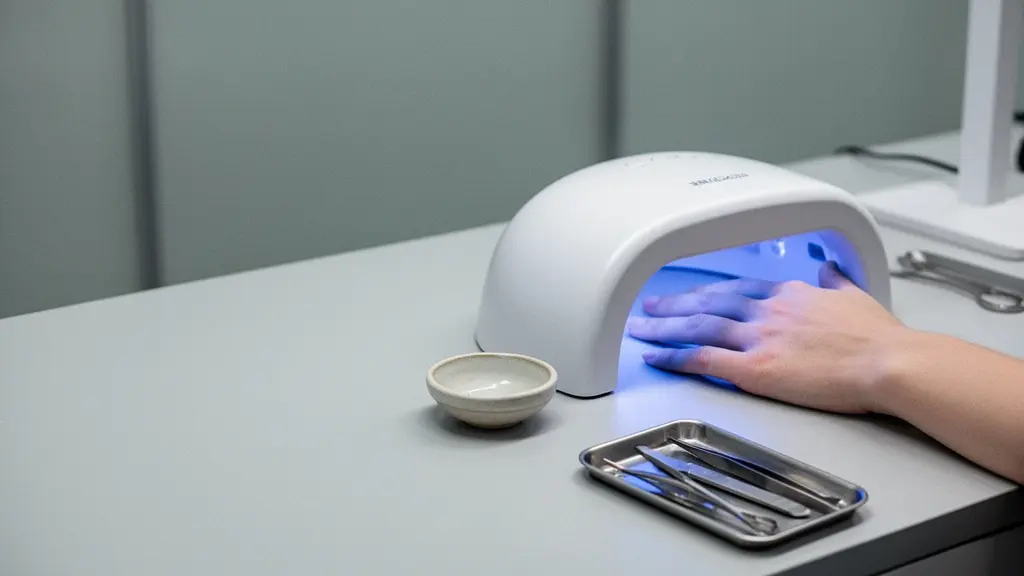
The relationship between viscosity and thermal injury follows predictable physical laws. Dense gel layers restrict heat dissipation, creating a thermal gradient where the nail plate—rich in water and keratin—absorbs and retains energy. This explains why thin, controlled layers remain comfortable while identical formulations in bulk applications cause client distress. The “burn” indicates not defective product, but insufficient thermal management during the phase transition from liquid to solid.
Technicians must view heat spikes as indicators of kinetic energy release rather than product malfunction. Controlling layer thickness and cure intervals dissipates heat effectively, preventing the thermal damage that compromises both client comfort and nail plate integrity.
Why Did Your Polish Get Gloopy in the Bottle?
Viscosity changes in bottled product rarely indicate simple evaporation; they signal chemical degradation or contamination. When monomer liquids thicken prematurely, technicians often mistakenly add thinners—potentially introducing methyl methacrylate (MMA) contamination that alters polymerization kinetics. This practice creates a cascade failure: contaminated thinners reduce final product flexibility while increasing exothermic intensity.
Regulatory standards exist precisely because unscrupulous thinning agents bypass safety protocols. Nail products containing MMA at concentrations greater than 1,000 ppm face regulatory action, with proposed modifications excluding only trace amounts ≤1,000 ppm. Adding industrial solvents or non-cosmetic monomers to restore fluidity risks exceeding these thresholds, converting professional-grade EMA systems into hazardous dental-acrylic analogs.
The “gloopy” texture typically results from premature polymerization initiation—exposure to UV light, oxygen inhibition layers breaking down, or catalytic contamination. Rather than thinning, technicians should consider the product compromised. Attempting to salvage chemically altered monomers introduces unpredictable cross-linking densities and residual monomer levels that compromise adhesion and increase dermatological risks.
Treating viscosity changes as disposal indicators rather than cosmetic inconveniences prevents the introduction of high-MMA contaminants. The cost of replacement bottles pales beside the liability of allergic reactions or structural nail damage from degraded chemistry.
Clear vs. Pigmented: Why Does Black Gel Need Longer to Cure?
Photoinitiators in gel systems require specific light wavelengths to trigger polymerization, yet pigments compete for this same energy. Dark, saturated colors—particularly blacks and deep greens—absorb UV/LED spectra that would otherwise activate cross-linking agents. Recent peer-reviewed research demonstrates that colored materials achieve markedly lower degrees of conversion than clear controls, with some pigments reducing polymerization efficiency by up to 40%. This disparity explains why technicians observe persistent tackiness in dark gels despite standard cure times.
Incomplete polymerization leaves residual monomers trapped within the polymer matrix—specifically (meth)acrylates that remain reactive and capable of penetrating the nail plate and surrounding skin. These uncured molecules act as potent sensitizers, initiating immune responses that manifest as contact dermatitis or lifelong acrylate allergies. Clear gels achieve higher conversion rates because light penetrates deeply throughout the layer, while pigments create shadow zones where monomers remain unreacted.
Technicians must extend cure durations for pigmented products or accept the immunological consequences of undercure. The cosmetic appeal of opaque color should never override the chemical necessity of complete polymerization.
Recognizing pigment-induced cure inhibition requires adjusting technique based on color chemistry rather than universal timing protocols. Darker formulations demand either extended exposure or specific photoinitiator systems designed for high-opacity environments.
Does Acetone Expire or Just Evaporate?
Technicians often question whether that half-empty bottle of acetone has “gone bad” or simply lost volume. The chemical reality involves both pure evaporation and contamination concentration. Acetone exhibits extremely high volatility, with a low boiling point and vapor pressure significantly exceeding water, causing aggressive evaporation at room temperature. This rapid phase change leaves behind non-volatile contaminants: plasticizers from dissolved gels, monomer residues, and dust particles that accumulate with each use.
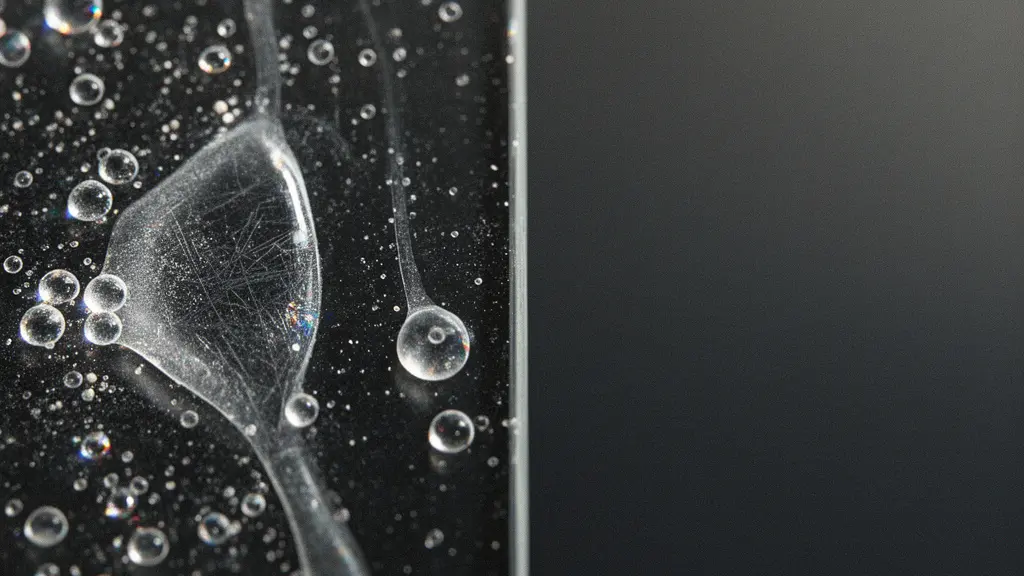
As the solvent volume decreases through evaporation, the concentration of these residual contaminants increases exponentially. A bottle half-full of “used” acetone contains the dissolved byproducts of dozens of soak-offs in a fraction of the original solvent, reducing efficacy while increasing exposure to potentially sensitizing acrylate oligomers. The specific gravity of pure acetone sits well below water at approximately 0.79; deviations indicate dissolved solids contamination.
While pure acetone remains chemically stable indefinitely in a sealed container, opened bottles function more as accumulation chambers for nail debris and dissolved polymers than as stable chemical reservoirs. Regular replacement prevents rubbing saturated, contaminated solvent against client skin during removal procedures.
Acetone does not expire through oxidation like organic oils, but through the inevitable concentration of dissolved industrial byproducts. Treating solvent replacement as a hygiene protocol rather than a cost-saving measure prevents cross-contamination and reduces allergen exposure.
HEMA Allergy: How to Recognize the First Signs of Reaction?
Hydroxyethyl methacrylate (HEMA) serves as the workhorse monomer in gel systems, providing adhesion and flexibility. However, its prevalence exceeds most technicians’ awareness. HEMA was present in nearly 60% of 394 cosmetic nail products; mandatory warnings were missing on 35% (“For professional use only”) and 55% (“Can cause an allergic reaction”) of HEMA-containing products. This labeling failure creates a false sense of security among professionals who assume regulatory compliance equals safety.

Early allergic manifestations appear subtly around the periungual folds—itching, erythema, and slight edema that technicians often dismiss as mechanical irritation from filing. These symptoms represent type IV delayed hypersensitivity reactions where T-cells recognize methacrylate haptens bound to skin proteins. Once sensitized, the immune system maintains permanent vigilance against acrylates, meaning subsequent exposures trigger increasingly severe responses regardless of concentration.
Recognition requires photographing initial symptoms and monitoring for progression beyond the service timeframe. Unlike mechanical irritation that resolves within hours, allergic contact dermatitis persists for days and spreads beyond the immediate contact zone. Identifying these early signs prevents progression to chronic hand eczema that can end careers.
HEMA sensitivity represents an occupational hazard requiring immediate product substitution and medical referral. Continuing exposure after initial symptoms guarantees progression to severe, potentially career-ending dermatitis.
How Undercured Gel Leads to Lifelong Acrylate Allergies?
The assumption that “hard equals fully cured” creates the primary exposure vector for occupational methacrylate allergy. Even visually solid gel layers retain extractable monomers capable of penetrating the skin barrier. Residual HEMA measured in a cured commercial gel film reached 139 µg/g; bulk sample measurements showed HEMA at 15.3% using quantitative extraction methods. These figures reveal that standard curing protocols often leave substantial reactive chemical loads within the product matrix.
The biological mechanism involves hapten formation—small monomer molecules binding to skin proteins to create novel antigens. T-cells recognize these modified proteins as threats, establishing immunological memory that persists indefinitely. Once this sensitization occurs, even minute future exposures trigger inflammatory cascades. The acrylate sink effect means that undercured gel continues leaching monomers for days after application, creating prolonged exposure windows during routine hand washing and nail growth.
Unlike irritant contact dermatitis that resolves when exposure ceases, type IV allergic sensitivity remains permanent. Technicians who develop these allergies face career limitations, as methacrylates appear not only in nail products but also dental materials, orthopedic cements, and adhesives. Prevention through complete polymerization verification offers the only protection against this irreversible condition.
Undercured gel functions as a slow-release delivery system for potent allergens. Only rigorous adherence to manufacturer-specified curing parameters and regular lamp output testing prevents the immunological threshold crossings that result in permanent disability.
Key Takeaways
- Odor detection thresholds (0.11 ppm for MMA) indicate presence but not safety—specific gravity (~0.945) provides objective identification.
- Pigmented gels achieve significantly lower polymerization than clear formulations, requiring adjusted cure protocols to prevent residual monomer exposure.
- Residual monomers persist in “cured” gel at concentrations up to 139 µg/g, creating lifelong allergy risks through continuous skin exposure.
- Protective equipment selection matters: neoprene gloves resist methacrylate penetration for 20 minutes compared to 5 minutes for standard nitrile.
Primer, Bonder, or Dehydrator: What Is Actually Essential for Adhesion?
Product labeling in the nail industry often obscures more than it reveals regarding methacrylate content. Neoprene gloves resisted gel penetration for 20 minutes, while thin nitrile and PVC gloves resisted for only 5 minutes in controlled laboratory analysis of 37 products, 32 of which contained (meth)acrylates with HEMA present in 20 samples. This ubiquity means technicians handle concentrated sensitizers daily, making barrier protection as critical as application technique.
The data reveals stark differences in protective equipment efficacy: barrier compromise occurs mid-service with standard nitrile PPE. Dehydrators and primers containing methacrylates further saturate the work environment, rendering adhesion promotion a potential exposure hazard when using incompatible gloves.
True adhesion requires mechanical etching and compatible surface energy, not merely chemical primers. Dehydrators remove moisture but often deposit residual monomers; bonders improve adhesion but increase allergen load. Essential protocol involves balancing retention needs against immunological safety—prioritizing pH-balancing dehydrators without acrylates and acid-free primers when possible, while upgrading to neoprene barrier protection during filing and application.
Evaluate your current adhesion protocol against the 20-minute protection standard. If your service duration exceeds neoprene resistance windows, implement double-gloving strategies or methacrylate-free bonding systems to prevent the cumulative exposures that trigger permanent allergies.