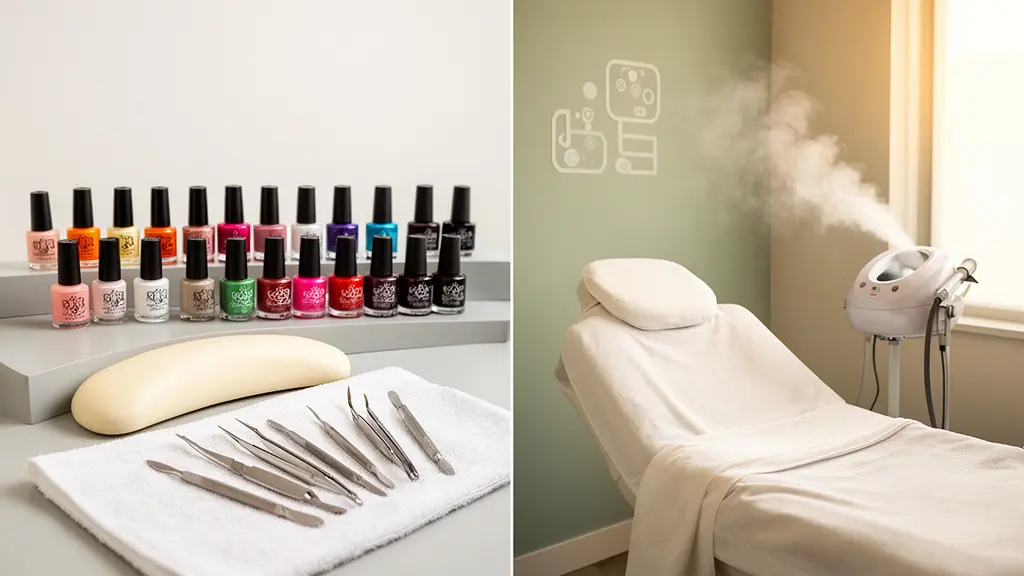
While a nail technician license offers a faster entry to the market, a full esthetics license provides a superior long-term Return on Investment (ROI) through service stacking and physical longevity.
- Esthetics licenses unlock high-margin treatments (facials, lasers) that cannot be performed with a nail license.
- The physical toll of nail tech work results in a shorter career lifespan compared to the ergonomic variety of esthetics.
Recommendation: Prioritize the comprehensive esthetics program if you can finance the upfront time, treating the extra 300 hours as asset diversification for your future earnings.
Choosing a beauty school program is not an artistic decision; it is an investment decision. Prospective students often view the difference between a 300-hour nail technology program and a 600-hour esthetics program merely as a matter of time and tuition cost. This narrow view ignores the fundamental economics of the beauty industry, where scope of practice dictates your earning ceiling.
Standard advice suggests picking what you are passionate about, but passion does not pay for occupational therapy or overcome market saturation. The “nail-only” path often leads to a volume-based business model that is physically unsustainable, whereas a full esthetics license offers a diversified portfolio of services. By expanding your horizons beyond nails, you are not just learning to do facials; you are purchasing insurance against repetitive strain injuries and commoditized pricing.
This analysis breaks down the financial and operational realities of both licenses to help you determine which credential offers the highest compound interest for your career.
text
The following analysis breaks down the financial comparison into eight strategic clusters, guiding you from revenue potential to risk management.
Table of Contents: License ROI Comparison
- How Combining Pedicures with Facials Increases Client Ticket Value?
- Why Estheticians Are Better at Treating Calluses Than Nail Techs?
- Physical Strain: Is Esthetics Easier on the Body Than Nail Tech Work?
- Are Clients More Likely to Switch Nail Techs or Estheticians?
- Equipment Costs: Setting up a Nail Station vs. Esthetics Room?
- Can Nail Techs Legally Perform Waxing or Eyelash Services?
- How Many Clients Do You Need to Pay Off a $1000 Class?
- How to Spot “Diploma Mills” That Overcharge for Basic Nail Education?
How Combining Pedicures with Facials Increases Client Ticket Value?
Combining pedicures with facials increases client ticket value by transforming a transactional maintenance appointment into a holistic wellness experience, allowing you to bill for concurrent value rather than just labor hours. A nail technician is often limited to sequential services—one manicure follows one pedicure. An esthetician, however, can leverage “service stacking,” applying a facial mask or LED therapy while a foot treatment is processing, effectively doubling the revenue generated per minute.
The market is clearly moving toward this integrated model. Industry data reflects this shift, where 55% of salons now offer wellness services like massages and holistic skincare alongside their core beauty services. This is not just about convenience; it is about share of wallet. When you hold a full esthetics license, you capture the spending that your nail client would otherwise take to a separate day spa. You become a one-stop destination, which inherently increases client loyalty.
Furthermore, the psychology of the spend changes when skincare is involved. Clients view nail care as a hygienic necessity but view skincare as a therapeutic investment. Consequently, 3 in 5 beauty clients are willing to pay 25% more for a good experience. By anchoring your menu in high-value esthetics services, the pedicure becomes a premium add-on rather than a low-margin commodity.
Why Estheticians Are Better at Treating Calluses Than Nail Techs?
Estheticians are generally better suited for advanced callus treatment because their curriculum emphasizes the histology of the skin and chemical exfoliation, whereas nail technology focuses primarily on the aesthetic modification of the nail plate. While a nail tech learns to physically file away dead skin, an esthetician understands the cellular turnover process and how to safely use keratolytic agents (acids) to dissolve hyperkeratosis without triggering a defensive overgrowth response from the body.
This depth of knowledge is a direct result of the training disparity. Esthetician programs generally require 600–1,000 clock-hours compared to the 300–600 hours typical for nail technicians. This additional time is not spent on polish application; it is dedicated to anatomy, physiology, and chemistry. This allows the esthetician to treat the root cause of rough skin rather than just the symptom.
Strategic Audit Checklist: Advanced Foot Care Capability
- Points of contact: List every chemical exfoliant (AHA, BHA, Urea) currently in your scope.
- Collecte: Inventory your current understanding of skin contraindications (diabetes, neuropathy).
- Cohérence: Check if your callus removal method relies solely on mechanical friction (filing).
- Mémorabilité/émotion: Evaluate if you can explain why the callus formed to the client.
- Plan d’intégration: Determine if your license permits the use of medical-grade peels on the feet.
The visual difference in approach is stark. A nail tech station is defined by mechanical tools—files and buffers. An esthetician’s toolkit includes chemical solutions that require precise application.
Illustration: The following image highlights the precision required in chemical exfoliation, a hallmark of esthetic practice.
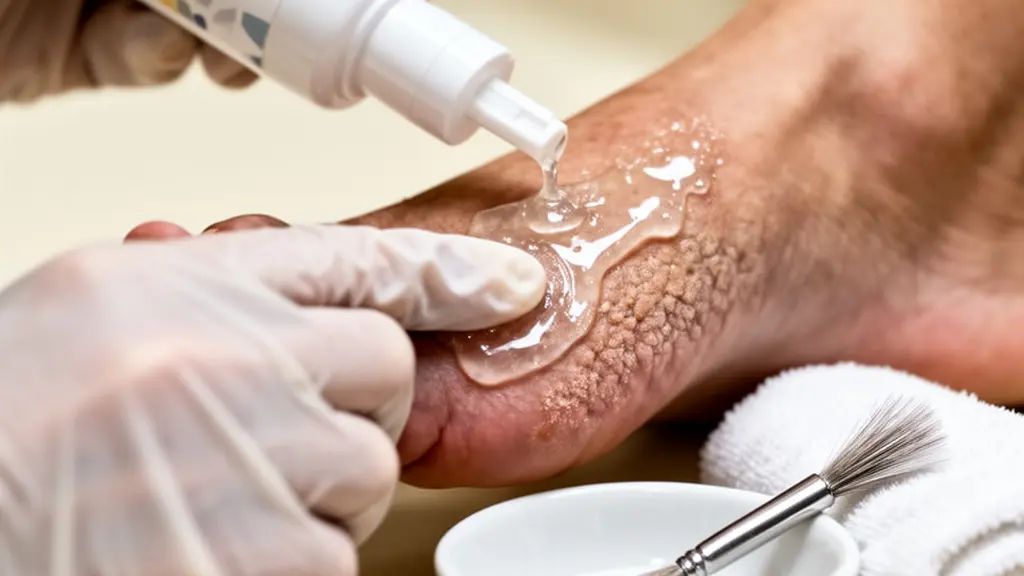
As illustrated, the application of chemical exfoliants is a delicate procedure that relies on texture analysis, distinguishing healthy tissue from the callus. This clinical approach commands a higher price point.
Physical Strain: Is Esthetics Easier on the Body Than Nail Tech Work?
Esthetics is significantly easier on the body over a long career because it allows for a variety of postures and ergonomic movements, unlike nail technology which forces the provider into a static, hunched position. The “nail hunch” is a well-documented occupational hazard. Nail technicians spend hours leaning forward over a manicure table or contorted sideways at a pedicure station, placing immense compressive force on the cervical spine and lower lumbar region.
The statistics regarding injury rates in the nail industry are concerning. It is an alarming reality where 99% of participants report musculoskeletal problems despite having received health and safety training. The repetitive nature of filing and buffing creates a cumulative trauma load on the wrists and elbows, often leading to career-ending conditions within the first decade of practice.
Case Study: The Cumulative Microtrauma of Filing
A 2024 scoping review published in Frontiers in Public Health examined Carpal Tunnel Syndrome (CTS) as an occupational disease. The review highlights that cumulative microtrauma from sustained repetitive motions — directly applicable to nail technicians who file, shape, and polish for hours daily — leads to median nerve irritation and CTS onset over time. The study emphasizes that without significant ergonomic intervention, the interaction of anatomical and biomechanical factors in repetitive hand-work makes injury almost inevitable.
Estheticians, conversely, work primarily around a hydraulic treatment bed. This setup allows them to adjust the client’s height to maintain a neutral spine. The movements in facial massage and device operation involve the full arm and shoulder girdle, rather than just the fine motor tendons of the wrist, distributing the physical load more evenly across the body.
Are Clients More Likely to Switch Nail Techs or Estheticians?
Clients are statistically less likely to switch estheticians compared to nail technicians because the esthetic relationship is built on trust and vulnerability, whereas the nail relationship is often driven by convenience and price. A client may try a new nail salon simply because they have a coupon or couldn’t get a Saturday appointment. However, trusting someone with the skin on their face—their most visible asset—creates a high “switching cost.”
This dynamic is reinforced by the consultative nature of esthetics. An esthetician acts as an advisor, diagnosing skin conditions and prescribing long-term regimens. This establishes an authority gradient that is harder to break. In contrast, the nail industry suffers from a commodity perception.
Illustration: The image below captures the intimate, trust-based atmosphere of an esthetic consultation, contrasting sharply with the busy floor of a nail salon.

As shown, the environment itself fosters a deeper connection. The client is vulnerable, eyes closed, trusting the expert. This bond is a powerful retention tool.
Reputation management is critical in this high-trust environment. Industry data shows that 83% of beauty clients will not book a service after encountering a negative review. Because esthetics is high-stakes, the reputation of the provider is stickier, and satisfied clients become fierce advocates who are reluctant to “risk” trying someone new.
Equipment Costs: Setting up a Nail Station vs. Esthetics Room?
Setting up a nail station requires a lower initial capital expenditure (CapEx) compared to a full esthetics room, but the esthetics setup offers superior operating margins (OpEx) over time due to lower consumable costs per dollar earned. A professional nail station can be established with a modest investment in a table, ventilation, and a high-quality e-file. An esthetics room demands a hydraulic bed, multifunction machines, and significantly more square footage.
However, looking purely at the startup cost is a novice financial mistake. One must look at the revenue potential relative to that cost. Recent analysis indicates an esthetician salary premium of approximately 21% over nail technicians. This suggests that while the esthetics room costs more to build, it generates a higher yield per hour.
To visualize this trade-off, consider the detailed cost breakdown below:
The following table contrasts the startup requirements, revealing the density vs. margin trade-off, as supported by profitability benchmarks.
| Cost Category | Nail Station | Esthetics Room |
|---|---|---|
| Initial Equipment | $2,000–$5,000 (manicure table, UV/LED lamp, ventilation, pedicure chair) | $8,000–$15,000 (treatment bed, facial steamer, magnifying lamp, hot towel cabi) |
| Recurring Consumables (monthly) | $300–$600 (gel polish, acrylic powder, tips, acetone, files, buffers) | $100–$300 (cleansers, masks, serums — high per-unit margin) |
| Physical Footprint | ~40–60 sq ft (compact station at shared salon) | ~100–150 sq ft (private room required for most treatments) |
| Revenue per Sq Ft Potential | Higher density, lower ticket value | Lower density, higher ticket value + product upsell |
| Advanced Equipment Upgrade Path | E-file drill systems ($150–$400), nail art printer ($500–$2,000) | LED light therapy panel ($500–$2,000), microcurrent device ($1,000–$5,000) |
| Gross Profit Margin per Service | 50–65% (high consumable cost offsets lower pricing) | 70–85% (low consumable cost with premium pricing) |
Can Nail Techs Legally Perform Waxing or Eyelash Services?
In most jurisdictions, nail technicians are strictly prohibited from performing waxing, eyelash extensions, or any skin-altering services outside of the immediate hand and foot area. The “Nail Technology” scope of practice is generally confined to the cleansing, cutting, polishing, and beautifying of the nails, and the application of artificial nail products. Attempting to cross this line into hair removal or lash application constitutes the unlicensed practice of cosmetology or esthetics.
This is a critical risk area because many salon owners encourage nail techs to “help out” with waxing during busy periods. This puts the technician’s license and insurance coverage in immediate jeopardy. If a client suffers a burn from wax or a corneal abrasion from lash adhesive, and the provider holds only a nail license, professional liability insurance will almost certainly deny the claim.
To avoid legal exposure, follow this strict verification protocol before adding any service:
Risk Management Protocol: Service Legality Check
- Points of contact: Identify the specific state board website governing your license.
- Collecte: Download the current “Scope of Practice” or “Statutes and Regulations” PDF.
- Cohérence: Search for keywords like “epilation,” “hair removal,” and “eyelash” in the text.
- Mémorabilité/émotion: Verify if the law restricts the service or just the title.
- Plan d’intégration: If prohibited, outline the exact hours needed to upgrade to a full license.
Many technicians are misled by private certification courses. A certificate from a lash brand confirms you attended a class; it does not override state law. A nail license plus a lash certificate does not equal a license to perform lashes in states where that is restricted to estheticians.
How Many Clients Do You Need to Pay Off a $1000 Class?
To determine how many clients are needed to pay off a $1,000 continuing education class, you must calculate the “true profit” per service, not the gross price. If you charge $50 for a new service but the consumables cost $10 and the salon takes a 40% commission (or you have overhead), your actual take-home might only be $20. In this scenario, you need 50 clients just to break even on the tuition, not counting the value of your time.
This math is often sobering for nail technicians. The national median hourly wage remains around $16.66 for manicurists, limiting the speed at which you can recoup educational investments compared to high-ticket esthetics services. An esthetician charging $150 for a chemical peel with $15 in product cost clears the $1,000 debt in fewer than 8 appointments.
Illustration: The flat-lay below symbolizes the tangible tools that represent this educational investment.
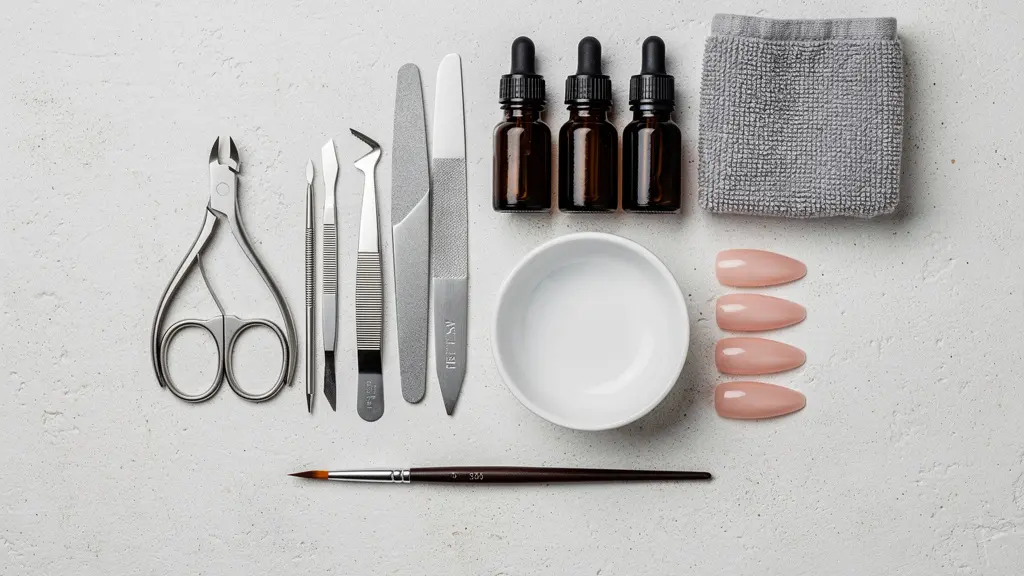
As seen above, the tools are pristine, representing potential. But potential only converts to profit through a rigorous pricing strategy that accounts for the cost of acquisition.
How to Spot “Diploma Mills” That Overcharge for Basic Nail Education?
Diploma mills in the beauty industry are unaccredited or predatory institutions that charge exorbitant tuition for education that barely meets state minimums, often leaving graduates with debt that far exceeds their earning potential. These schools prey on the desire for a quick career start. They often market “advanced” or “master” nail courses that are legally meaningless, driving up the cost of a program that should be affordable.
The financial trap is real. Research indicates that graduates often carry approximately $7,100 in debt while entering a field with an average starting salary of roughly $26,000. This debt-to-income ratio is unsustainable. A legitimate school will be transparent about accreditation (such as NACCAS) and will price their program based on clock-hours, not on hype or proprietary product kits they force you to buy.
If a school promises you can “work anywhere” or perform medical-grade services with a simple nail license, they are selling a fantasy. Always cross-reference the curriculum with your state board’s requirements. If they are charging university-level prices for a vocational curriculum available at a community college for a fraction of the cost, walk away.
Key Takeaways
- Esthetics licenses provide a broader scope of practice, enabling “service stacking” and higher ticket values.
- The physical toll of nail technology is significantly higher, reducing career longevity compared to esthetics.
- Always verify the legal scope of practice with your state board before investing in additional certifications.
Frequently Asked Questions about Beauty Licensing
Is a “nail certification” the same as a nail technician license?
No. A certification is issued by a private organization or manufacturer and validates a skill. A license is issued by your state government and grants you the legal right to practice professionally. Most states require a license, and a certification alone does not authorize you to perform services for pay.
Can a continuing education “Master Certificate” expand my legal scope of practice?
Generally no. Continuing education certificates from private companies do not change or expand your legal scope of practice. Only your state-issued license (and the specific category of that license) determines what services you can legally perform. A “Master” certificate may enhance your skills but grants no new legal rights.
How do I verify if a beauty school is legitimate before enrolling?
Start by checking if the school is listed as an approved institution on your state board of cosmetology’s official website. Verify its accreditation status with NACCAS or another recognized accrediting body. Compare its required hours and tuition against the state minimum requirements. Be wary of schools that promise unrealistically fast completion or require you to buy proprietary brand kits.
Revisiting the Core Strategy: The License as Leverage
We have analyzed the costs, the risks, and the revenue potential. The conclusion is that while a nail license is a valid entry point, it functions best as a stepping stone rather than a final destination. The limitations on your body and your billing capacity are real constraints that will eventually cap your growth.
Think of the esthetics license not as a career change, but as a career expansion. It diversifies your income streams and protects your physical health. Ideally, you want to reach a point where your hands are options, not your only tools.
Evaluate your local schools today and compare the tuition difference against the 21% salary premium to make your final decision.