The most profitable nail course isn’t about its format (online vs. in-person); it’s the one with the highest “feedback loop velocity” and a clear path to a quantifiable service price increase.
- Prioritize foundational, high-retention skills with proven market demand (like Russian Manicures) over trendy, low-margin art for stable, high-ticket income.
- Vet educators by analyzing unedited video and tagged student work, not just their polished photos, to verify authentic skill.
Recommendation: Before enrolling in any course costing over $500, calculate its break-even point by dividing the course fee by the projected price increase per service. If you can’t recoup the cost within 30-40 clients, reconsider the investment.
You’re scrolling through Instagram, seeing flawless, impossibly clean manicures, and a masterclass ad pops up. It’s $500. Or maybe $1,000. The instructor’s work is stunning, and the promise of elevating your craft is tempting. The internal debate begins immediately. Can you afford the time off for an in-person class? Is an online course just as good? The question isn’t just “can I afford this?” but the far more critical, “will this actually pay off?”
The conversation around professional development often gets stuck on the obvious: online offers flexibility, while in-person provides hands-on guidance. This binary choice focuses on convenience and learning styles, but it completely misses the point for a professional technician. You are not a hobbyist; you are a business. Every dollar and every hour you spend on education must be treated as a capital investment, not a personal expense. The traditional framework for choosing a class is a trap that leads to wasted money and stalled career growth.
But what if the true key to a successful investment wasn’t the format, but the quantifiable ROI? This guide reframes the decision entirely. It’s not about online versus in-person. It’s about a strategic analysis of which course, regardless of its delivery method, offers the fastest, most predictable return on investment. It’s about moving from a vague hope of “getting better” to a concrete business plan for increasing your hourly rate.
We will break down exactly how to calculate your payback period, develop a forensic eye for an educator’s real skill, choose a specialization that guarantees new, high-ticket clients, and structure your pricing to consistently earn your target income. This is your blueprint for making an informed investment, not just another purchase.
This article provides a complete framework for analyzing nail masterclasses as a business investment. Below is a summary of the key strategic pillars we will cover to help you make a profitable decision.
Summary: Online vs. In-Person: Which Masterclass Improves Your Speed More?
- How Many Clients Do You Need to Pay Off a $1000 Class?
- Retouched Photos: How to Know If an Educator’s Work Is Real?
- Russian Manicure or Nail Art: Which Certificate Brings More New Clients?
- Taking Classes in Russian/Korean: Is Visual Learning Enough?
- Why You Should Only Choose Classes That Offer Feedback Groups?
- CEUs: How to Maintain Your License Without Repeating Basics?
- The “Trust Me” Service: How to Convince Clients to Let You Freestyle?
- How to Price Your Nail Art to Earn $50/Hour as a Freelancer?
How Many Clients Do You Need to Pay Off a $1000 Class?
The first question when evaluating a high-ticket course shouldn’t be about the price, but about the break-even point. How quickly will this new skill pay for itself? This simple calculation cuts through the marketing and forces a focus on tangible returns. The decision to invest becomes a clear business case, not an emotional purchase. You need to shift your mindset from “cost” to “investment timeline.”
First, establish your baseline. According to the Bureau of Labor Statistics 2024 data, the average manicurist wage is around $16.66 per hour. A $1,000 course represents over 60 hours of work at that rate. The goal of an advanced class is to shatter that average, not just supplement it. The right skill should enable a significant price increase per service, which is the key variable in your ROI calculation.
The formula is simple: Course Fee ÷ Price Increase Per Client = Number of Clients to Break Even. For a $1,000 course, if you can confidently raise your prices by $40 per service, you need 25 clients to pay off the investment. If you see 5 of these clients a week, you’ve achieved full ROI in just 5 weeks.
Case Study: NYC Russian Manicure ROI Analysis
A prime example of this model in action is the return on Russian manicure training. An analysis of the New York City market shows that techs specializing in this service can increase prices by an average of $40 per client. A technician taking four clients daily generates an additional $160 in daily revenue. Under this model, the $1,000-$2,000 course investment is recovered in as few as 14 working days. This demonstrates how specialized training creates immediate ROI through premium pricing, fundamentally changing the technician’s earning potential without needing to increase client volume.
By calculating the break-even point, you transform a daunting expense into a manageable, strategic investment. If the path to profitability isn’t clear and quantifiable, the course is likely not the right fit for your business goals, regardless of how impressive the instructor’s work appears.
Retouched Photos: How to Know If an Educator’s Work Is Real?
In the age of social media, an educator’s portfolio is their primary marketing tool. However, it’s also where reality is most easily distorted. Heavily retouched photos showing poreless skin and unnaturally perfect cuticles are a major red flag. They sell a fantasy, not a replicable skill. Investing in a course based on doctored images is like buying a business plan based on fraudulent accounting. To make a sound investment, you must become a forensic analyst of an educator’s “proof of work.”
Authentic, high-level work has a distinct texture. You should be able to see the natural ridges of the skin, the micro-details of the cuticle seal, and the way light reflects off a truly smooth but real nail surface. Retouching smooths these details into a plastic-like finish, hiding potential flaws in technique like microscopic ledges or uneven application. Relying on these images sets you up for failure, as the standard they present is literally unachievable in a real-world salon environment.
This is where your due diligence becomes crucial. You must look past the curated feed and seek out unedited evidence. Here are the key verification methods:
- Request 4K Macro Video: Static photos are easy to edit. Ask for high-resolution video demonstrations, especially close-ups of the cuticle area. Video reveals the true texture of the skin and the integrity of the work in real-time.
- Check the “Tagged” Section: An educator’s main feed is their highlight reel. Their “Tagged” section on platforms like Instagram is the raw footage. Look at photos posted by students immediately after a class to see unfiltered, unedited results.
- Find Live Demonstration Recordings: Look for saved “Live” videos or webinar recordings where editing is impossible. This is the most honest representation of an educator’s speed, precision, and problem-solving skills.
- Analyze Before-and-After Shots: Scrutinize before-and-after pictures from multiple students. Look for consistency in lighting and angles. Inconsistent lighting can be used to hide flaws or exaggerate improvements.
This paragraph introduces the concept of authentic nail work. To better understand what to look for, the image below highlights the difference between retouched perfection and authentic, high-quality skill. The presence of natural skin texture is a sign of an honest portfolio.
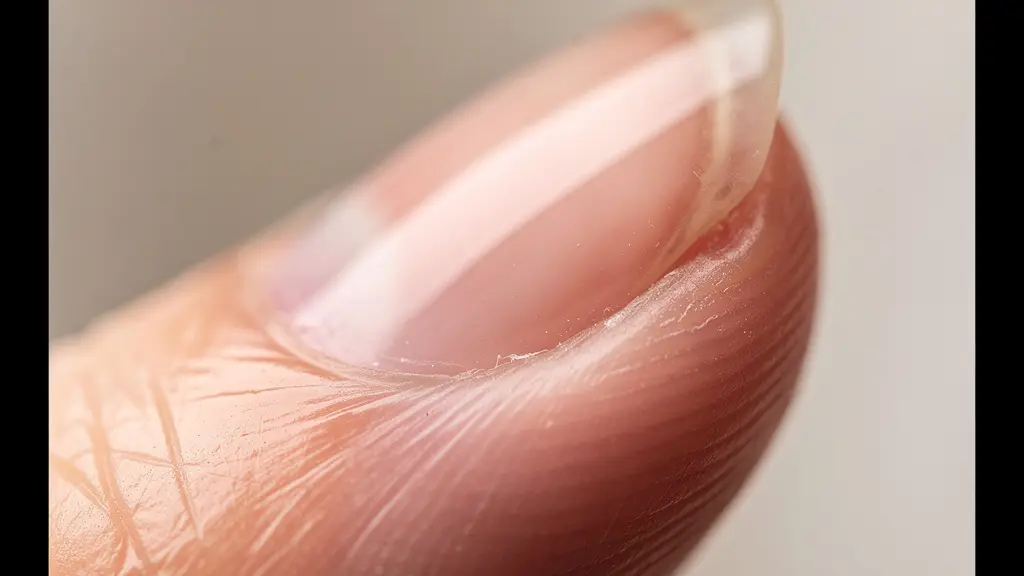
As you can see, real mastery isn’t about hiding imperfections; it’s about achieving such a high level of precision that there are very few to hide. By training your eye to spot real skill, you protect your investment and ensure you’re learning from a true master, not just a Photoshop expert.
Action Plan: Auditing an Educator’s Authenticity
- Contact & Request: Directly message the educator asking for a short, unedited 4K video of them performing a key technique (e.g., cuticle work, apex building).
- Collect Tagged Evidence: Go to their Instagram “Tagged” tab and screenshot 5-10 examples of recent student work. Inventory the quality.
- Assess Consistency: Compare the tagged photos to the educator’s main feed. Note any major discrepancies in skin texture, lighting, or overall finish.
- Evaluate Mémorability: Does the work show a unique, signature technique, or does it look like generic, filtered content common across the platform?
- Plan for Integration: If the evidence is solid, proceed. If not, cross them off your list and move on, saving your investment for a verifiable expert.
Russian Manicure or Nail Art: Which Certificate Brings More New Clients?
Once you’ve verified an educator’s skill, the next strategic question is which skill to acquire. The choice between a foundational technique like the Russian Manicure and a creative one like complex Nail Art is a critical business decision. While nail art is eye-catching and drives social media engagement, it often represents a trend-dependent, lower-margin service. A Russian Manicure, however, is a high-ticket, recurring-revenue service that builds a loyal, quality-focused clientele.
From an ROI perspective, the choice is clear. Nail art is often an add-on, subject to client whims and fast-moving trends. What’s popular today might be irrelevant in six months. A Russian Manicure, on the other hand, is a premium core service. Clients seek it out for its flawless appearance and, most importantly, its longevity. Due to the meticulous prep work, Russian manicures are known for lasting 3-4 weeks, which is a powerful client retention tool. A client who gets an extra week of perfect wear is a client who will rebook and refer.
This positions you as a premium provider, attracting clients who value quality over a cheap price. This is the foundation of a sustainable, high-income nail business. The following table breaks down the business impact of each specialization, highlighting why one is a more stable long-term investment.
| Factor | Russian Manicure | Nail Art |
|---|---|---|
| Average Price Increase | $40-60 per service | $20-30 per service |
| Client Retention | High-ticket recurring bookings | Variable, trend-dependent |
| Service Time | 90-120 minutes | 60-90 minutes |
| Market Position | Premium, medical-adjacent | Creative, Instagram-friendly |
| Client Type | Quality-focused, loyal | Trend-following, varied |
While mastering nail art has its place for creative expression and upselling, building your business on a foundation of technical mastery like the Russian Manicure provides a more reliable path to financial success. It allows you to command higher prices, build a recurring client base, and position yourself as an elite technician in your market.
Taking Classes in Russian/Korean: Is Visual Learning Enough?
The global leaders in advanced nail techniques often teach in their native languages, such as Russian or Korean. This presents a challenge: can you truly master a highly precise, tactile skill through visual learning alone? While video can demonstrate the “what,” it often fails to convey the “how” and “how much”—especially when it comes to the critical element of pressure.
E-file work, in particular, is a game of millimeters and grams of force. Too little pressure and the bit skips; too much and you risk damaging the nail plate or surrounding tissue. This is a sensation that cannot be fully felt or understood by simply watching a video. A purely visual course without any mechanism to translate this tactile information is a high-risk investment. You may learn the steps, but you won’t learn the feel of the technique, which is where true mastery and safety lie.
However, the best international educators have developed innovative methods to bridge this gap. They understand the limitations of visual learning and build their curriculum to compensate for the lack of physical feedback. This is a key differentiator between a great online course and a mediocre one.
Case Study: Mars Nails School E-File Training Methodology
Leading institutions like Mars Nails School directly address the “pressure problem” of online learning. They emphasize that working on dry nails with an e-file requires an understanding of vibration and pressure that is lost in video. Their solution involves teaching students to recognize proper pressure through other senses. They train students to watch for subtle visual cues, like the slight blanching or movement of the skin around the bit, and to listen for changes in the sound of the e-file as it works on the nail plate. This methodology translates the invisible feeling of pressure into observable and audible signals, compensating for what visual-only learning lacks and making the technique safer to learn remotely.
The takeaway is that the language of instruction is less important than the quality of the curriculum design. A well-designed course from a non-English-speaking instructor that explicitly teaches you how to interpret visual and auditory cues for pressure is far more valuable than a native-language course that fails to address this critical element. Before investing, ask how the course teaches the *feel* of the technique, not just the look of it.
Why You Should Only Choose Classes That Offer Feedback Groups?
The single most important factor determining your success in a masterclass is not the content itself, but the speed and quality of the feedback you receive. Passive learning—simply watching videos—is notoriously ineffective for skill acquisition. Active learning, where you practice, submit your work, and receive targeted corrections, is where real growth happens. This is why a dedicated feedback group or submission process is a non-negotiable feature of any high-value course.
The data on this is stark. Studies on learning retention show that passive methods like watching a video result in as little as 20% knowledge retention. In contrast, active learning models that involve practice and feedback loops can skyrocket that figure. As one prominent nail academy notes, active submission-based feedback in nail training forces 90% retention. This 70% difference is the gap between wasting your money and transforming your career. The “feedback loop velocity”—how quickly and effectively you can get corrected—is the true engine of skill development.
A well-run feedback group does more than just point out mistakes; it provides critical, personalized diagnosis that you cannot get on your own. Here are the essential benefits you should look for:
- Micro-correction of Ergonomics: Instructors and peers can spot subtle issues with your hand grip, posture, or finger anchoring. Correcting these small mistakes early not only improves your work but also prevents long-term injuries like carpal tunnel syndrome and dramatically increases your working speed.
- Personalized Bottleneck Diagnosis: Feeling slow but not sure why? A feedback community can pinpoint the exact step in your process that’s creating a bottleneck, offering specific solutions rather than generic “practice more” advice.
- Ongoing Post-Course Support: Mastery doesn’t happen the day a course ends. Having access to instructors and a community for questions after the initial training ensures continuous improvement as you refine your skills on real clients.
When you’re evaluating a $500 or $1,000 course, you are not paying for videos; you are paying for an expert’s time and attention. A course without a robust feedback mechanism is essentially an expensive e-book. Insist on a format that guarantees your work will be seen, critiqued, and corrected.
CEUs: How to Maintain Your License Without Repeating Basics?
For licensed technicians, Continuing Education Units (CEUs) are a mandatory, recurring cost of doing business. Too often, techs default to the cheapest, most basic courses available—like repeating a sanitation module—just to check the box. This is a massive missed opportunity. Viewing CEUs as a chore to be completed cheaply, rather than as a strategic investment, keeps your skillset and income stagnant.
The ROI-focused approach is to practice “credential stacking.” This means selecting advanced, career-propelling courses that also happen to be CEU-accredited. Instead of paying for two separate things—one to maintain your license and one to grow your income—you achieve both with a single, strategic investment of time and money. You “double-dip” by satisfying a legal requirement while simultaneously acquiring a new, high-margin skill.
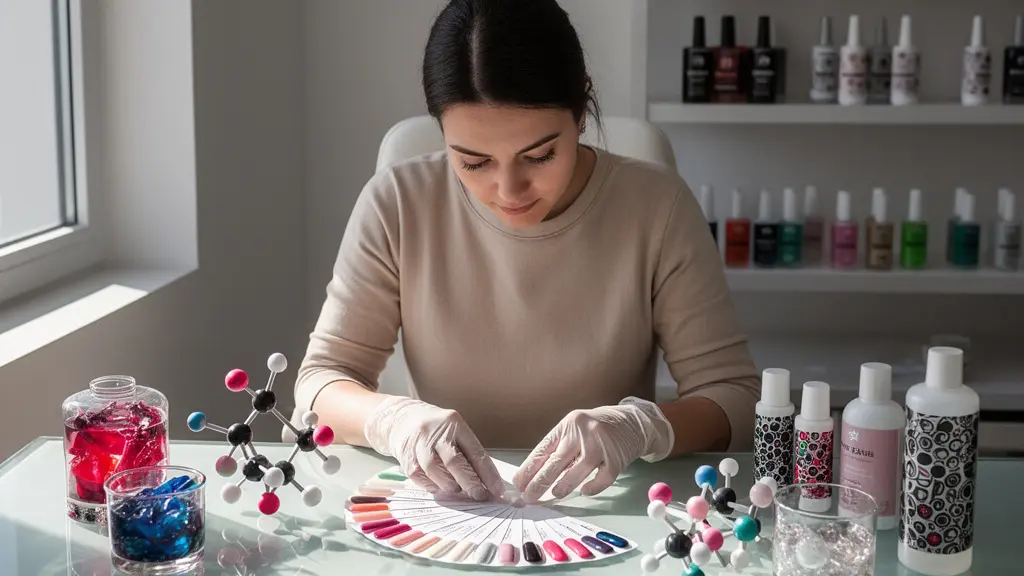
This paragraph explains the strategy of choosing advanced CEU courses. The illustration below symbolizes this shift, moving from basic application to a deeper, scientific understanding of the craft, which is the goal of high-level continuing education.
By choosing a CEU-accredited masterclass in a technique like Russian E-Filing or podiatry-grade pedicures, you transform a compliance expense into a revenue-generating activity. You’re not just learning; you’re investing in a skill that will directly translate to higher service prices and a more specialized market position.
Case Study: The “Double-Dipping” CEU Strategy
Top training schools actively promote this strategy. For example, Mars Nails School recommends choosing advanced technique courses that are CEU-accredited. This allows technicians to learn premium skills that directly increase service pricing by $40-$60 per client while simultaneously satisfying their state’s licensing requirements. Instead of spending money on a basic sanitation refresh that adds no value to their service menu, they invest in an asset that pays for itself and fulfills their legal obligations.
Before you enroll in your next basic CEU course, stop and search for an advanced masterclass that offers the same credits. The initial cost may be higher, but the long-term return on investment will be exponentially greater. Don’t just maintain your license; leverage it to build your income.
Key takeaways
- Course ROI is calculated by dividing the fee by your new service price increase; aim for a break-even point of 40 clients or less.
- Verify an educator’s authenticity by demanding unedited 4K video and analyzing their “tagged” student work, not just their polished feed.
- Prioritize foundational, high-retention skills like the Russian Manicure over trend-based nail art for a stable, high-ticket income stream.
The “Trust Me” Service: How to Convince Clients to Let You Freestyle?
The pinnacle of technical mastery and client trust is the “freestyle” or “artist’s choice” service. This is where a client gives you a budget and creative freedom, trusting your expertise to deliver a stunning result. This “Trust Me” service is not just an artistic expression; it’s a powerful business tool. It commands the highest prices, eliminates time-consuming consultations, and positions you as an in-demand artist, not just a service provider.
However, convincing a client to relinquish control can be challenging. They often have valid concerns. The key to successfully selling this premium service is to proactively address their fears and reframe the offer not as a risk, but as a luxury convenience. The first hurdle is the fear of a style mismatch. A client may worry, “How can I be sure the freestyle design will match my style?” The solution is a quick, pre-appointment visual intake. A simple quiz with images of different nail aesthetics (e.g., minimalist, bold, dark, whimsical) allows you to instantly gauge their boundaries and preferences without a lengthy discussion.
The second major concern is time and cost. “What if the freestyle service takes too long or costs more than I expect?” This is best managed by structuring the service into guaranteed time blocks with fixed prices. Offering something like “The 90-Minute Mix” or “The 2-Hour Artist’s Set” ensures you never run over schedule, maintains your profitable hourly rate, and gives the client cost certainty. Finally, you must frame the value correctly. Don’t ask, “Do you want to take a risk?” Instead, position it as an exclusive experience that eliminates decision fatigue. The message should be: “Let me handle the creative work so you can relax. This is a luxury service that saves you mental energy.”
By anticipating and solving these client concerns, you transform a potentially intimidating offer into an irresistible, high-value experience. It becomes the ultimate testament to your skill and the trust you’ve built, solidifying your status as a top-tier professional.
How to Price Your Nail Art to Earn $50/Hour as a Freelancer?
Acquiring advanced skills is only half the battle; the other half is pricing them effectively to reach your income goals. Aiming for a $50/hour rate is an excellent target for a skilled freelancer, but achieving it requires a strategic pricing model that values your expertise, not just your time or materials. This is a significant leap from the industry average, but entirely possible with the right approach. While data shows that even top earning nail technicians can reach $32.21 per hour, breaking the $50 barrier requires moving beyond traditional pricing.
Many technicians fall into the trap of outdated pricing structures that make it nearly impossible to earn a high hourly wage. Models like charging per crystal or a flat fee per nail for art are fundamentally flawed because they don’t scale with your increasing speed and skill. You end up being punished for getting faster.
To consistently earn $50/hour or more, you must adopt a model that reflects the true value you provide. The following table compares common pricing structures and their impact on your actual hourly rate, making it clear which models support a high-income goal.
| Pricing Model | Structure | True Hourly Rate Impact |
|---|---|---|
| Per-Crystal | $1-3 per embellishment | Varies widely, often under $30/hour |
| Price-Per-Minute | $0.83/minute base rate | Guaranteed $50/hour if efficient |
| Speed Premium | Raise prices as speed improves | $50-75/hour for fast technicians |
| Value-Based | Charge for result, not time | $60-100/hour potential |
The most effective models are Price-Per-Minute and Value-Based. A price-per-minute model (e.g., $0.83/minute to hit $50/hr) is transparent and directly rewards efficiency. The faster you become, the more you can accomplish within a set time, or the sooner you finish, increasing your effective rate. Value-based pricing is even more advanced, where you charge a flat fee for a complex result (like a full freestyle set) based on the value and artistry, completely decoupling your income from the clock. This is where hourly rates can climb to $100 or more, but it requires significant client trust and a reputation for excellence.
Stop charging for rhinestones and start charging for your expertise. By adopting a modern pricing model, you align your income with your skill, making a $50/hour freelance career not just a dream, but a mathematical certainty.
Frequent questions on The ‘Trust Me’ Service: How to Convince Clients to Let You Freestyle?
How can I be sure the freestyle design will match my style?
Use a quick visual intake quiz showing different nail styles before the appointment to gauge boundaries and preferences without lengthy consultations.
What if the freestyle service takes too long?
Structure freestyle sets by guaranteed time blocks (like ‘The 90-Minute Mix’) to ensure you never run over schedule and maintain profitable hourly margins.
Why should I choose freestyle over selecting a specific design?
Position it as luxury convenience that saves mental energy and eliminates decision fatigue, not as an artistic risk.