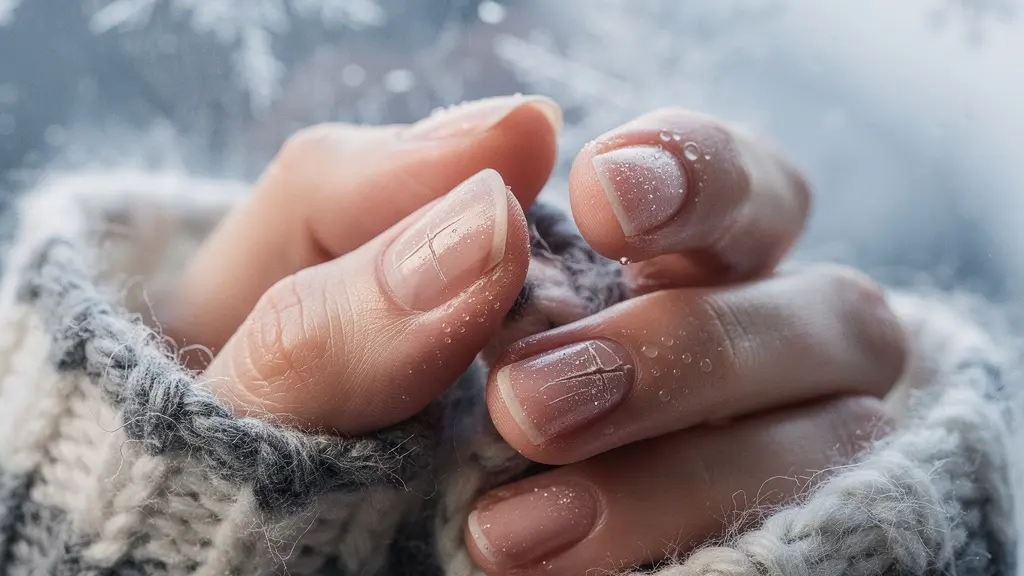
You think wearing gloves is enough to protect your nails in winter, but the real culprits are often invisible forces working against your nails’ structural integrity. This guide reveals the hidden mechanisms—like the ‘sponge effect’ of water exposure and the paradoxical damage from so-called hardeners—that cause brittleness. The key isn’t just superficial protection, but a comprehensive strategy that addresses nail structure, chemistry, and biology to build true resilience from the inside out.
The first crisp day of winter arrives, and you’re prepared. You’ve dug out your warmest coat, your favorite scarf, and a trusty pair of gloves. You’re diligent about protecting your hands from the biting cold, yet, you notice the familiar, frustrating trend: your nails start to peel, split, and snap. It’s a disheartening cycle that leaves many wondering what they’re doing wrong. If protection from the cold isn’t the whole story, what is?
The common advice—moisturize, avoid harsh chemicals, and eat well—is a good starting point, but it often fails to address the root causes of seasonal nail fragility. These suggestions treat the symptom, not the underlying condition. They don’t explain the complex interplay of environmental exposure, internal chemistry, and the very products we use to “help” our nails. The problem is far more intricate than just a drop in temperature.
But what if the solution wasn’t just about adding more cream or a different supplement? What if the true key to unbreakable winter nails lies in understanding the hidden stressors that compromise their very structure? This is where we move beyond the platitudes. We need to explore the microscopic battles being waged on your nail plate every single day, from the way your nail cells react to water to the paradoxical effects of strengthening treatments.
This article will guide you through the science behind winter nail brittleness. We will dissect the environmental and biological factors that weaken your nails, compare the products meant to protect them, and build a truly effective, holistic strategy for restoring their strength and flexibility. It’s time to end the cycle of breakage and build resilient nails that can withstand any season.
To navigate this deep dive into nail health, here is a complete overview of the topics we will cover. Each section is designed to build upon the last, providing a clear path from understanding the problem to implementing the solution.
Summary: Understanding and Conquering Winter Nail Brittleness
- The “Sponge Effect”: How Water Cycles Weaken Intercellular Bonds?
- How Does Acetone Dehydrate the Plate to the Point of Brittleness?
- Why Do Nails Become More Brittle After Menopause?
- Ridge Fillers vs. Strengtheners: Which Protects Brittle Nails Better?
- The Role of Omega-3 Fatty Acids in Restoring Nail Flexibility
- Winter Gloves: Why Fabric Choice Matters for Skin Barrier Retention?
- The Risk of Over-Hardening: Why Do Treated Nails Snap at the Base?
- How to Restore Hardness to Nails That Bend Like Paper?
The “Sponge Effect”: How Water Cycles Weaken Intercellular Bonds?
One of the most significant yet overlooked culprits in winter nail damage is not the cold, but water. Your nails are far more porous than they appear. Composed of layers of keratin cells called onychocytes, the nail plate acts like a dense sponge. When you wash your hands, shower, or even handle wet laundry, these cells absorb water and swell. Then, as they dry in the low-humidity winter air, they contract. This constant cycle of expansion and contraction puts immense physical stress on the delicate bonds holding the nail cells together.
This isn’t a slow process; the damage begins almost immediately. Think of it as a form of structural micro-trauma. As Dr. Dana Stern, a board-certified dermatologist specializing in nail health, explains, this repetitive strain is a primary driver of weakness:
When water enters the nail cells (onychocytes), they expand. After water immersion, these cells contract, putting significant strain on the onychocytes and making them more prone to weakening, peeling, and breakage.
– Dr. Dana Stern, Assistant Clinical Professor of Dermatology at The Mount Sinai Hospital
This microscopic “sponge effect” is dramatically amplified in winter. The dry indoor heat and cold outdoor air create an environment of extreme humidity fluctuations, accelerating the drying-out phase and making the contraction more abrupt and damaging. The visual result is nails that peel at the tips and split along the edges, as the intercellular “glue” simply gives way under the relentless strain.
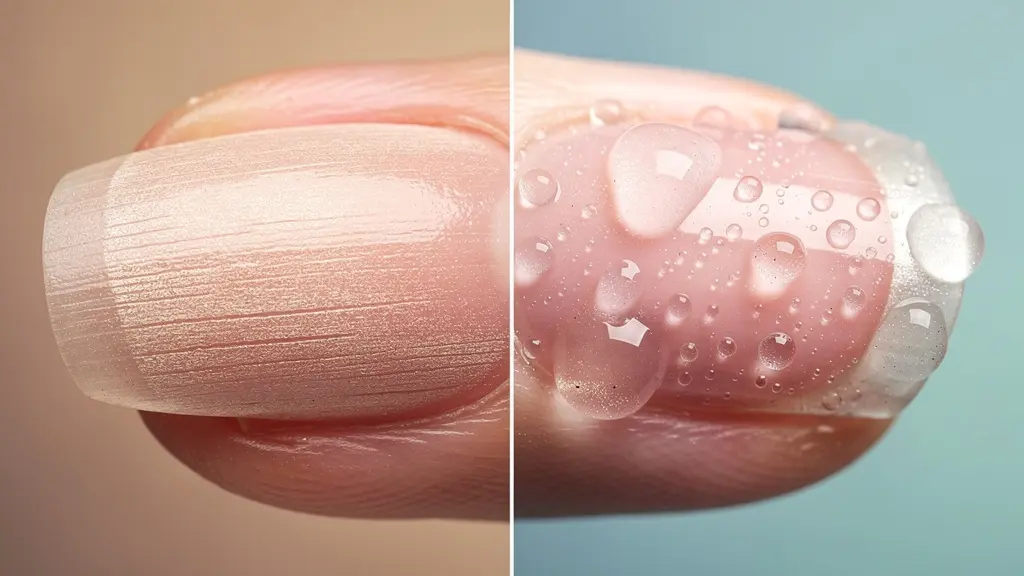
Understanding this mechanism is crucial. It reframes the problem from simply “dry nails” to nails suffering from cyclical moisture stress. The solution, therefore, isn’t just about adding moisture back in with creams, but about minimizing these damaging water absorption cycles in the first place and protecting the nail’s inherent lipid barrier, which acts as a natural water-repellent seal.
How Does Acetone Dehydrate the Plate to the Point of Brittleness?
While water is a hidden environmental aggressor, some of the most intense damage comes from products we willingly apply. Acetone, the go-to solvent for removing nail polish, is a powerful degreaser. Its effectiveness lies in its ability to rapidly dissolve oils and lipids. Unfortunately, the very properties that make it an excellent polish remover also make it devastating to the structural integrity of the nail plate.
The nail plate isn’t just a hard, dry surface; it contains essential natural oils and lipids that provide flexibility and act as a moisture barrier. When you apply acetone, it doesn’t just remove the polish; it strips away this vital lipid layer. This leaves the keratin cells exposed and severely dehydrated, making them rigid and prone to shattering. It’s a chemical assault that mimics the worst effects of a dry environment, but in a highly concentrated and rapid form. The link between frequent manicures, which often involve acetone, and nail damage is not just anecdotal; a clinical study published in PubMed found 3.23 times greater odds of having brittle nails among participants who regularly received professional manicures.
The Paradox of Hardening Agents
The problem extends beyond simple removers. As dermatological research from Dr. Cynthia Bailey shows, many products marketed as “hardeners” contain chemicals like formaldehyde and alcohol. These ingredients create a temporary feeling of strength by cross-linking keratin proteins, but they simultaneously dry out the nail’s natural oils. This creates a dangerous paradox: the nail becomes harder but also significantly more brittle. Over time, this chemical alteration leads to a loss of natural flexibility, causing the nail to split and crack under pressure instead of bending.
In winter, when the ambient air already has low humidity, using acetone is like pouring gasoline on a fire. You are stripping away the nail’s last line of defense against a dehydrating environment. This is why switching to an acetone-free remover is one of the most impactful changes you can make during colder months. While they may work more slowly, they preserve the essential lipid barrier that is your nail’s best friend in the fight against winter brittleness.
Why Do Nails Become More Brittle After Menopause?
Environmental factors and product choices are significant, but they don’t tell the whole story. For many, the battle with brittle nails intensifies with age, particularly during and after menopause. This isn’t a coincidence; it’s a direct result of hormonal shifts that fundamentally alter the body’s ability to produce the building blocks of a strong, flexible nail.
Estrogen plays a crucial role in regulating the body’s production of lipids and maintaining water balance in tissues, including the nail matrix where nail cells are born. As estrogen levels decline during menopause, the production of these essential fats and oils slows down. This directly impacts the nail’s natural lipid barrier, which is responsible for sealing in moisture and maintaining flexibility. Without this protective layer, nails become inherently drier, more porous, and less able to withstand the micro-traumas of daily life.
This internal, biological dryness is then compounded by the external environmental dryness of winter, creating a perfect storm for breakage. Furthermore, circulation can become less efficient with age, meaning fewer nutrients are delivered to the nail matrix, slowing down growth and repair. It’s a multi-faceted problem where the nail’s internal support system is weakened just as external stressors are at their peak. While genetics can also play a role, the hormonal changes of menopause are a powerful independent factor in the onset of brittle nails.
Addressing post-menopausal nail brittleness requires a shift in strategy from simple external moisturization to internal and external lipid replenishment. The goal is to compensate for the body’s reduced ability to produce these essential components. A targeted approach should include:
- Dietary Intervention: Focusing on foods rich in healthy fats, such as Omega-3s found in fish and flaxseed, and cholesterol-building foods like eggs and avocados to support the nail matrix.
- Topical Lipid Replacement: Using nail treatments specifically formulated with ceramides and natural oils to externally replace the lipids that are no longer being produced in sufficient quantities internally.
- Gentle Care: Avoiding water-based products that can exacerbate the “sponge effect” and opting for oil-based care to nourish and protect the already compromised nail plate.
Ridge Fillers vs. Strengtheners: Which Protects Brittle Nails Better?
When faced with peeling, brittle nails, the instinct is to reach for a product that promises strength. This leads us to a critical crossroads in the nail care aisle: should you choose a “nail strengthener” or a “ridge filler”? In the context of winter brittleness, the choice is not just a matter of preference—it’s a matter of physics. The wrong choice can actually make your nails more prone to snapping.
Traditional nail strengtheners often contain ingredients like formaldehyde or other hardening resins. As we’ve learned, these chemicals create a rigid, inflexible layer. While this feels strong to the touch, it creates a brittle structure that has lost its natural ability to bend under pressure. This leads to what’s known as the “fulcrum effect”—the stiff nail tip acts as a lever, concentrating any force at the nail’s stress point (the free edge or base), causing it to snap cleanly.
Ridge fillers, on the other hand, work on a different principle. Their primary goal is not to make the nail harder, but to make it smoother and more resilient. They are typically formulated with flexible ingredients like silk proteins or keratin that fill in uneven surfaces and create a pliable, protective shield. This shield doesn’t prevent the nail from bending; it helps it bend without breaking. By maintaining the nail’s natural flexibility, a ridge filler acts as a shock absorber, distributing force evenly across the nail plate rather than concentrating it at a single point.
This table breaks down the fundamental differences and why one is clearly superior for winter care, a conclusion supported by experts from the Cleveland Clinic.
| Feature | Ridge Fillers | Nail Strengtheners |
|---|---|---|
| Flexibility | Maintains natural flex | Creates rigid structure |
| Key Ingredients | Silk proteins, keratin | Formaldehyde, hardening resins |
| Risk of Breakage | Low – allows bending | High – creates fulcrum effect |
| Removal Process | Gentle, non-drying | Often requires acetone |
The advice from dermatologists aligns with this science. Dr. Rosemary Keskinen of the Cleveland Clinic recommends a specific, gentle approach for the winter months. Her insight emphasizes protection through coating, but with a crucial caveat about the type of product and manicure style.
Find a formaldehyde-free clear polish that you can apply and leave on for a week. It’s smarter to skip the gel or, at a minimum, avoid gel manicures in the winter when nails are driest.
– Dr. Rosemary Keskinen, Dermatologist, Cleveland Clinic
The Role of Omega-3 Fatty Acids in Restoring Nail Flexibility
While topical treatments and protective measures are crucial, building truly resilient nails starts from within. No amount of cuticle oil can compensate for a deficiency in the essential building blocks your body needs to construct a healthy nail plate. Among the most important of these are Omega-3 fatty acids, the powerhouse nutrients renowned for their role in everything from brain health to reducing inflammation.
Omega-3s contribute to nail health in two primary ways. First, they are a fundamental component of the body’s natural oil production. These fatty acids are incorporated into the cells of the nail matrix, helping to form the crucial lipid barrier that locks in moisture and gives the nail its natural flexibility and sheen. When your diet is deficient in Omega-3s, your nails are literally built with inferior materials—they are more porous, less flexible, and far more susceptible to drying out and breaking.
Second, Omega-3s are powerful anti-inflammatory agents. Chronic inflammation in the body, even at a low level, can disrupt the healthy functioning of the nail matrix, leading to irregularities in nail growth, ridges, and weakness. By helping to regulate the body’s inflammatory response, Omega-3s create a healthier environment for nail cells to be produced. As nutritional research from Hollywood Institute shows that omega fatty acids reduce nail bed inflammation while providing essential moisture, contributing to longer, stronger, healthier growth.
From Deficiency to Flexibility: A Supplementation Story
Clinical observations have consistently shown a strong link between Omega-3 deficiency and increased nail brittleness, especially during winter. In informal studies, individuals supplementing with fish oil or flaxseed for a period of 8-12 weeks reported measurable improvements in nail flexibility and a significant reduction in splitting. These results were most pronounced when the supplementation was part of a holistic approach that also ensured adequate intake of other nail-supportive nutrients like biotin and iron, demonstrating that internal chemistry is a cornerstone of external strength.
Incorporating Omega-3s into your diet is a long-term investment in your nail’s structural integrity. Excellent sources include fatty fish like salmon and mackerel, as well as plant-based options like flaxseeds, chia seeds, and walnuts. For those who struggle to get enough through diet alone, a high-quality fish oil or algae-based supplement can provide a concentrated dose of these essential nail-building fats.
Winter Gloves: Why Fabric Choice Matters for Skin Barrier Retention?
We started with the premise that even with gloves, nails can become brittle. This begs the question: are all gloves created equal? The answer is a definitive no. Simply creating a barrier against the cold is not enough. The wrong type of glove can, at best, be ineffective and, at worst, contribute to the very problem you’re trying to solve. The key to effective protection lies in managing the micro-climate around your hands and nails.
The primary issue with many common glove materials, like simple cotton or certain synthetic knits, is moisture management. Cotton, for instance, is highly absorbent. If your hands sweat even slightly, or if the glove gets damp from snow or rain, that moisture is held directly against your skin and nails, triggering the damaging “sponge effect” we discussed earlier. You are essentially creating a personal, localized damp environment inside your glove, which is then followed by rapid drying when you take them off—the worst possible scenario for nail health.
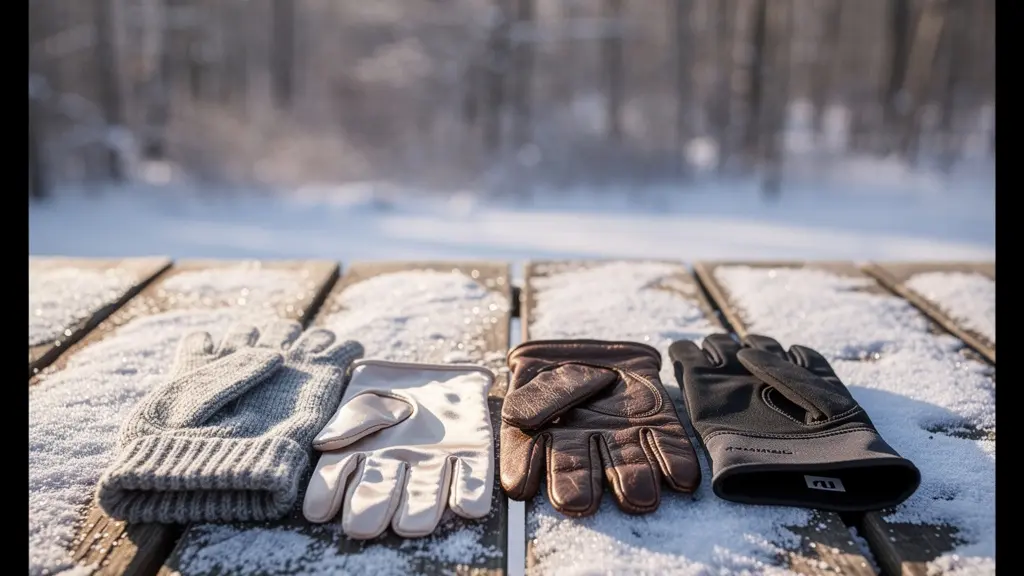
Conversely, non-breathable materials like basic vinyl or rubber can trap all moisture, leading to sweaty hands that, once exposed to the air, become rapidly chilled and dehydrated. This is why material choice is paramount. The ideal glove system focuses on two principles: wicking moisture away from the skin and providing thermal insulation. This is a concept perfected by mountaineers and cold-weather athletes who understand that staying dry is as important as staying warm. A significant factor in winter nail damage is that winter nail care experts note that frequent temperature changes between cold outdoors and warm indoors cause nails to expand and contract, weakening their structure.
Adopting a strategic approach to your gloves can transform them from a simple cold barrier into an active part of your nail protection strategy. This means thinking in layers and choosing materials for their performance, not just their appearance.
Action Plan: The Mountaineer’s Two-Glove System for Nail Protection
- Moisture-Wicking Base Layer: Start with thin liner gloves made of silk or polypropylene. These materials pull sweat and moisture away from your skin and nails, keeping them dry.
- Insulating Outer Layer: Add a second, insulated glove on top. Leather, wool, or technical fabrics with a waterproof/windproof membrane provide the best thermal protection against the cold and wind.
- Maintain Redundancy: Keep multiple pairs of gloves. Have a set in your car, your coat pocket, and your bag. This ensures you are never caught unprotected.
- Practice Glove Hygiene: If you wear liners frequently, wash or replace them regularly. A damp, enclosed environment can become a breeding ground for bacteria.
- Enforce a Dry Glove Policy: If your gloves (either layer) become wet from snow or rain, change them immediately. Prolonged exposure to a damp glove is one of the most damaging winter habits.
Key Takeaways
- Winter nail brittleness is caused more by moisture fluctuations (the “sponge effect”) and chemical exposure than by cold alone.
- Traditional nail “hardeners” containing formaldehyde often increase brittleness by reducing flexibility, making nails more likely to snap.
- A holistic approach combining internal nutrition (like Omega-3s), gentle products (ridge fillers), and strategic protection (proper glove layering) is most effective.
The Risk of Over-Hardening: Why Do Treated Nails Snap at the Base?
There’s a deep-seated belief in nail care that “harder is better.” We associate hardness with strength and durability. This intuition, however, leads to one of the most common and frustrating forms of nail damage: the clean, painful snap at the base or stress point. This phenomenon is a classic example of a biochemical paradox, where the pursuit of strength leads directly to catastrophic failure.
The problem lies in a misunderstanding of material science. A healthy nail is not a rigid, rock-like substance; it is a marvel of bio-engineering, designed to be both strong and flexible. This flexibility allows it to absorb and distribute the force of everyday impacts, bending slightly rather than breaking. When we apply aggressive hardening treatments, particularly those containing formaldehyde, we fundamentally alter this property. These chemicals create strong cross-links between the keratin proteins in the nail, transforming the pliable plate into a stiff, brittle sheet.
This creates a dangerous junction point. The new nail growth emerging from the matrix is naturally flexible, while the treated portion of the nail is rigid. This interface between the flexible and rigid materials becomes an area of immense structural stress. Any pressure applied to the tip of the over-hardened nail doesn’t get absorbed; instead, the force travels down the nail and concentrates directly at this junction. The result is predictable and devastating.
An Engineer’s View of Nail Failure
When examined through the lens of material science, the failure mechanism becomes clear. Formaldehyde-based hardeners create what engineers call a “rigid-flexible junction.” This is a known weak point in any composite material. When force is applied to the hardened tip, the nail can no longer bend. The energy has to go somewhere, and it concentrates at the first point of weakness: the line where the flexible new growth meets the rigid, treated nail. This is why treated nails don’t just chip or peel; they often snap cleanly at or near the cuticle, which is a far more damaging type of break.
To avoid this, you must shift your mindset from seeking hardness to cultivating resilience. A resilient nail is one that balances strength with flexibility. This means ditching the aggressive hardeners and embracing products and practices that support the nail’s natural structure, allowing it to bend, flex, and withstand the pressures of daily life without catastrophic failure.
How to Restore Hardness to Nails That Bend Like Paper?
While over-hardening is a significant risk, the opposite problem can be just as frustrating: nails so soft and thin they bend and tear at the slightest touch. This condition, often described as “paper-thin,” indicates a deep-seated issue with the nail’s structure and the health of the nail matrix where it is formed. Restoring these nails requires a comprehensive, two-pronged strategy that addresses both the internal production and external protection—a “root and branch” approach.
The “root” of the problem lies in the nail matrix. If it isn’t receiving the right nutrients, it cannot produce a strong, dense nail plate. This is not a problem that can be fixed with a topical coat alone. Restoration must begin with a diet rich in the specific building blocks of keratin, the primary protein in nails. This includes biotin, vitamin E, and especially the amino acids cysteine and methionine, which are crucial for forming strong keratin bonds.
The “branch” is the visible nail plate that has already grown. While you cannot change the structure of the nail that has already been formed, you can protect it and provide temporary support while the stronger, healthier nail grows in from the root. This involves using gentle, nourishing treatments that reinforce the existing structure without making it brittle. Hydrolyzed proteins and silk-amino acids are excellent for this, as they can temporarily patch and strengthen the weak keratin.
Finally, it’s crucial to remember that even as you work to restore strength, the nail remains vulnerable, especially to water. Even a brief soak can be damaging. In fact, nail science research indicates that nail plates remain susceptible to damage for up to an hour after being soaked for more than 60 seconds. This underscores the need for constant, vigilant protection throughout the restoration process. The following protocol integrates these principles into a daily and weekly routine:
- Internal Root Treatment: Commit to daily consumption of biotin-rich foods (like eggs and nuts), vitamin E sources (spinach, broccoli), and protein sources rich in cysteine and methionine (fish, sunflower seeds).
- Matrix Stimulation: Improve nutrient delivery to the “root” by performing a gentle two-minute cuticle massage twice daily with a nourishing oil. This simple action boosts blood circulation to the nail matrix.
- External Branch Reinforcement: Apply a treatment containing hydrolyzed keratin or soy protein to the visible nail plate once a week to add temporary strength and fill in weak spots.
- Protective Shielding: Always wear a silk-protein enriched base coat. This acts as a flexible shield, preventing bending and tearing while the new, stronger nail grows out from the cuticle.
By understanding the complex science behind nail health and adopting this holistic approach, you are no longer passively reacting to damage. You are actively building a foundation of resilience. This winter, you can finally break the cycle of brittle nails, not by just hiding them in gloves, but by empowering them with the strength, flexibility, and nourishment they need to thrive in any season. Begin implementing these strategies today to cultivate nails that are not only beautiful but structurally sound.