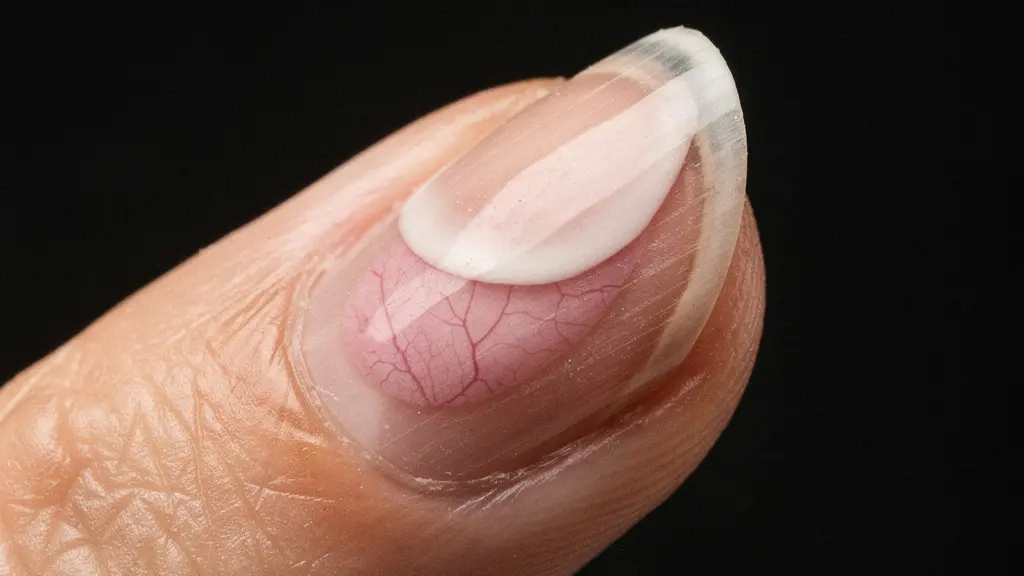
If you’ve ever slammed a finger in a door, you understand the fear of permanent nail damage. The anxiety stems from a simple truth: the nail matrix isn’t just tissue; it’s the biological blueprint for your entire nail. Damage to this delicate ‘factory’ is often irreversible because it corrupts the master plan for cell production. This guide moves beyond simple fixes to explain the anatomy, helping you understand that prevention and protecting this blueprint is the only true path to healthy nail regrowth.
The sharp, throbbing pain of slamming a finger in a door is often followed by a more lasting worry: “Will my nail ever look the same again?” This concern is entirely valid and deeply rooted in the complex anatomy of our fingertips. We often think of the nail as the hard plate we see, but its health and appearance are dictated by a hidden, highly sensitive structure known as the nail matrix. Many common nail care tips focus on the visible nail plate, offering superficial solutions for a much deeper problem. They might suggest oils, hardeners, or specific filing techniques, but these rarely address the source of true, long-lasting deformities.
The fundamental misunderstanding is treating a manufacturing defect as a finished-product issue. Imagine a car factory with a dent in the main press; every car that rolls off the line will have that same dent. Polishing the finished car won’t fix the problem. The key to understanding why matrix damage is so persistent lies in this very concept. Instead of asking how to ‘fix’ a damaged nail, we must ask: how can we protect the ‘factory’ that builds it?
This article will take you on a deep dive into the microscopic world of the nail matrix. We will explore its precise location, how seemingly innocent actions can inflict permanent harm, and how to read the signs your nails are sending you. By shifting our focus from the nail plate to its origin, we can finally grasp the principles of preventing irreversible damage and fostering the growth of strong, healthy nails from their very foundation.
To guide you through this essential anatomical lesson, we will explore the critical aspects of the nail matrix, from its basic structure to the practical ways you can protect it from harm. This comprehensive overview will equip you with the knowledge to safeguard your nails for a lifetime.
Table of Contents: Why Is Damage to the Matrix Often Irreversible?
- Where Exactly Is the Matrix Located and How Deep Is It?
- How Does Pushing the Proximal Fold Too Hard Deform the Matrix?
- Beau’s Lines: What Does a Horizontal Depression Say About Your Matrix Health?
- Calcium or Trauma: What Really Causes Leukonychia Spots on the Matrix?
- Orange Stick vs. Metal Pusher: Which One Damages the Matrix Less?
- Does Massage Actually Stimulate the Matrix to Produce Cells Faster?
- Massage Techniques to Boost Blood Flow to the Matrix for Faster Growth
- How to Transition from Acrylics to Natural Nails Without cutting Them Short?
Where Exactly Is the Matrix Located and How Deep Is It?
To understand why the nail matrix is so vulnerable, we must first know where it resides. It is not the visible white “moon” (the lunula) at the base of your nail; that is merely the visible front edge of the matrix. The majority of the matrix is a delicate crescent of tissue tucked away beneath the skin at the base of the nail, extending back under the proximal nail fold (what is commonly, and incorrectly, called the “cuticle”). Think of it as the root of the nail. This strategic placement provides some protection, but it’s far from invulnerable.
This structure is the nail’s sole generation center. It is a highly active area where specialized stem cells, called keratinocytes, are constantly produced. These new cells push older ones forward, which then die, flatten, and compact to form the hard nail plate we see. The matrix, therefore, contains the complete biological blueprint for your nail’s shape, thickness, and texture. Its depth is only a few millimeters, but its role is monumental. A severe impact, like a slammed door, can crush this delicate tissue against the underlying bone (the distal phalanx), causing irreparable harm.
The fragility of this area cannot be overstated. It is a soft, living tissue responsible for a lifetime of nail production. As experts in nail anatomy emphasize, its delicate nature is central to nail health. As noted by the educators at NailKnowledge.org, this sensitivity is a key factor in nail disorders.
The nail matrix is an exceptionally delicate structure, and any damage inflicted upon it can have various repercussions on the overall health and appearance of the nail.
– NailKnowledge.org, Nail Matrix – NailKnowledge
How Does Pushing the Proximal Fold Too Hard Deform the Matrix?
While a major trauma like slamming a finger is an obvious cause of matrix damage, a far more common—and insidious—culprit is the over-vigorous pushing of the proximal nail fold. Many people, in an attempt to achieve a “cleaner” look, use metal tools or even their own fingernails to aggressively push back the skin at the base of the nail. This action transfers direct, focused pressure through the soft tissue and onto the delicate matrix lying just beneath.
This pressure can physically deform the matrix. Returning to our factory analogy, this is like taking a hammer to the master press. A temporary dent might cause a temporary flaw, but repeated, forceful pressure can create a permanent warp in the “mold.” This leads to the nail plate being produced with a permanent ridge, groove, or depression. The cells are still being made, but the blueprint they follow has been corrupted. This is why nails can develop permanent ridges after years of improper manicures.
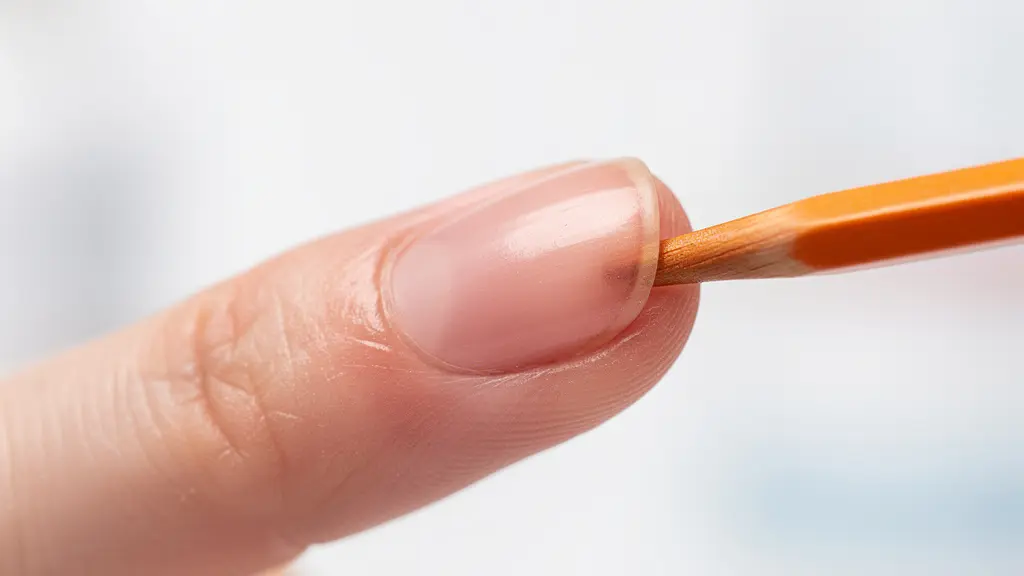
As the illustration above demonstrates, the force applied to the visible skin does not simply stop there; it is transferred directly to the underlying generative tissue. A severe instance of this can cause lasting damage, as seen in clinical cases.
Case Study: Permanent Damage from Aggressive Pushing
In a case reported in NAILS Magazine, a patient who used a metal instrument to forcefully push back her cuticles caused a significant injury to the proximal (rearmost) part of her nail matrix. This self-inflicted trauma was severe enough to result in permanent damage to the nail plate, creating a lifelong deformity that grew out with the nail.
Action Plan: Auditing Your Nail Care Habits
- Identify Contact Points: List all tools and habits that involve contact with your proximal nail fold (e.g., metal pusher, orange stick, other fingernails, teeth).
- Collect Evidence: For one week, observe your nail care routine. Note the amount of pressure you use. Is the skin turning white or red? This indicates excessive force.
- Check for Coherence: Compare your habits to the core principle: the proximal fold is a guardian, not an enemy. Are you trying to “remove” it or gently care for it?
- Assess Sensation: Pay attention to what you feel. Proper cuticle care should be painless. If you feel any pain or sharp pressure, the technique is too aggressive and risks damaging the matrix.
- Create an Integration Plan: Based on your audit, replace aggressive tools with softer alternatives (like a rubber-tipped pusher) and substitute forceful pushing with gentle massage and moisturizing.
Beau’s Lines: What Does a Horizontal Depression Say About Your Matrix Health?
If the nail matrix is the factory, Beau’s lines are the tell-tale sign of a temporary production shutdown. These are horizontal (transverse) depressions or grooves that run across the nail plate. They are not an injury in themselves but rather a historical record of a systemic shock or a direct, but temporary, interruption of matrix function. When you see a Beau’s line, you are looking at a moment in the past—typically a few weeks to months ago—when your nail matrix briefly stopped or slowed down its production of keratinocytes.
The cause of this shutdown can be systemic, such as a high fever, a serious illness, a period of major emotional stress, or even chemotherapy. During such an event, the body diverts its energy and resources away from non-essential activities, like nail growth, to fight the more immediate threat. The matrix essentially pauses. When the body recovers and normal function resumes, the matrix starts producing cells again, but a thinner, weaker section of nail has already been formed. As the nail grows out, this thin section becomes visible as a groove.
Beau’s lines can also be caused by direct, acute trauma to the matrix that isn’t severe enough to cause permanent damage but is enough to temporarily stun it. A sharp but not crushing blow to the base of the nail could create a single Beau’s line. The key takeaway is that these lines indicate a temporary disruption, not a permanent change to the blueprint. The factory was paused, not broken. The width of the line can even give a clue as to the duration of the illness or event that caused it. The line will eventually grow out and disappear as a new, healthy nail forms behind it.
Calcium or Trauma: What Really Causes Leukonychia Spots on the Matrix?
One of the most persistent myths in nail care is that the small white spots that appear on nails, a condition known as leukonychia, are a sign of calcium or zinc deficiency. While severe nutritional deficiencies can affect nail health, these common, isolated spots are almost always the result of something far simpler: minor trauma to the nail matrix. They are, in essence, microscopic bruises within the nail plate itself, not a sign of what you had for lunch.
When the matrix suffers a minor knock or bump, its cell production process is disturbed. Instead of creating perfectly flat, translucent keratinocytes that lie flush with each other, the trauma causes a small cluster of cells to be formed imperfectly. These cells, known as parakeratotic cells, are plump and still contain nuclei, unlike normal, flattened nail plate cells. Because they are misshapen, they reflect light differently, making them appear opaque and white. They are not a different substance; they are simply incorrectly manufactured nail cells.
As one expert explains, the location of the injury on the matrix determines the type of flaw. An injury to the part of the matrix responsible for the middle layers of the nail plate is what causes these distinct white spots. A more severe injury could cause the entire nail to appear white or lead to other deformities. The delay between the incident (like knocking your finger on a table) and the appearance of the spot is due to the nail’s growth cycle. It takes time for the damaged section of the nail to be produced and grow far enough to become visible from under the proximal fold. In fact, for fingernails, this can be a surprisingly long time. The visible defect is a ghost of a past injury.
An injury to the middle third of the matrix, which manufactures the middle layers of the nail plate, is visible as white spots, known as leukonychia.
– The Nail Doctor, NAILS Magazine
Orange Stick vs. Metal Pusher: Which One Damages the Matrix Less?
When it comes to manicure tools, the choice between a wooden orange stick and a metal pusher is not merely a matter of preference—it’s a critical decision for the long-term health of your nail matrix. Given that the matrix is a delicate, living tissue protected only by a thin layer of skin, the principle of “do no harm” should be paramount. The verdict is clear: a wooden orange stick is significantly safer and less likely to cause damage.
A metal pusher is rigid, unforgiving, and capable of exerting immense, focused pressure. It’s easy to slip, press too hard, or use it at an aggressive angle, inadvertently bruising or deforming the underlying matrix. Its sharp, unyielding edge can also easily abrade or cut the eponychium and proximal fold, breaking the natural seal that protects the matrix from bacteria and fungi. This breach of the nail’s natural defenses is a primary risk factor for infections like paronychia (an infection of the skin around the nail).
An orange stick, by contrast, is made of soft wood. It has a degree of flexibility and its tip softens slightly when damp, making it far more forgiving. It allows for gentle nudging of the cuticle tissue rather than aggressive scraping. While it is still possible to cause damage with an orange stick if used improperly, the potential for harm is drastically reduced. The best practice is to wrap the tip in a small piece of cotton, dip it in cuticle remover or oil, and use it to gently ease back any dead tissue that has adhered to the nail plate, never forcefully pushing on the living proximal fold itself.
Case Study: The Protective Seal
The skin fold at the base of the nail, often mistaken for the cuticle, forms a vital protective seal for the matrix. Clinical observations published by the National Center for Biotechnology Information confirm that removing this seal during manicures is a primary cause of nail infections. An aggressive tool like a metal pusher is more likely to break this barrier, leaving the vulnerable matrix exposed to contamination and subsequent infections like paronychia, which can further damage matrix function.
Does Massage Actually Stimulate the Matrix to Produce Cells Faster?
The idea that you can significantly speed up nail growth through massage is a tempting one, but it requires a nuanced understanding. The matrix’s production rate is largely determined by genetics, age, and overall health. On average, fingernails grow about 3 to 4 millimeters per month. Massage cannot fundamentally alter this genetically programmed “factory speed.” You cannot make the matrix produce cells twice as fast simply by rubbing the area.
However, what massage *can* do is optimize the conditions for healthy growth by improving blood circulation to the fingertips. The nail matrix, like any active biological tissue, requires a rich supply of oxygen and nutrients, all delivered via the bloodstream. Poor circulation can hinder the matrix’s ability to function at its peak potential, potentially leading to slower or weaker growth. Gentle massage of the fingers and hands can help stimulate blood flow to the area, ensuring the matrix is well-nourished and able to perform its function as efficiently as possible.
Therefore, massage is not a “growth accelerator” but rather a “growth optimizer.” It ensures the factory has all the raw materials it needs to run smoothly at its designated speed. It’s important to note that the massage must be gentle. Aggressive rubbing directly over the matrix area can be counterproductive and risks causing the very trauma we aim to avoid. The focus should be on stimulating overall circulation to the hand and fingers rather than trying to directly manipulate the matrix itself.
Massage Techniques to Boost Blood Flow to the Matrix for Faster Growth
While we cannot fundamentally change the speed of nail growth, we can certainly encourage a healthier, more robust growth process by enhancing blood flow to the matrix. This is not about aggressive rubbing but about gentle, strategic movements that support the intricate vascular network of the fingers. The goal is to ensure a steady supply of oxygen and nutrients reaches the keratinocyte-producing cells. This is best achieved with the use of a good quality cuticle oil, which serves as a lubricant to prevent friction and nourish the surrounding skin.
One of the most effective techniques is to gently massage the sides of the fingers, along the paths of the digital arteries. This encourages circulation throughout the entire fingertip. Another beneficial method is a “press-and-release” or pumping motion on the proximal nail fold. This should be a very gentle pressure, held for a few seconds and then released, which can help to stimulate local blood flow without putting direct, harmful force on the matrix itself. Even a general palm massage can be beneficial, as it improves overall circulation to the hand, which in turn benefits the fingers.
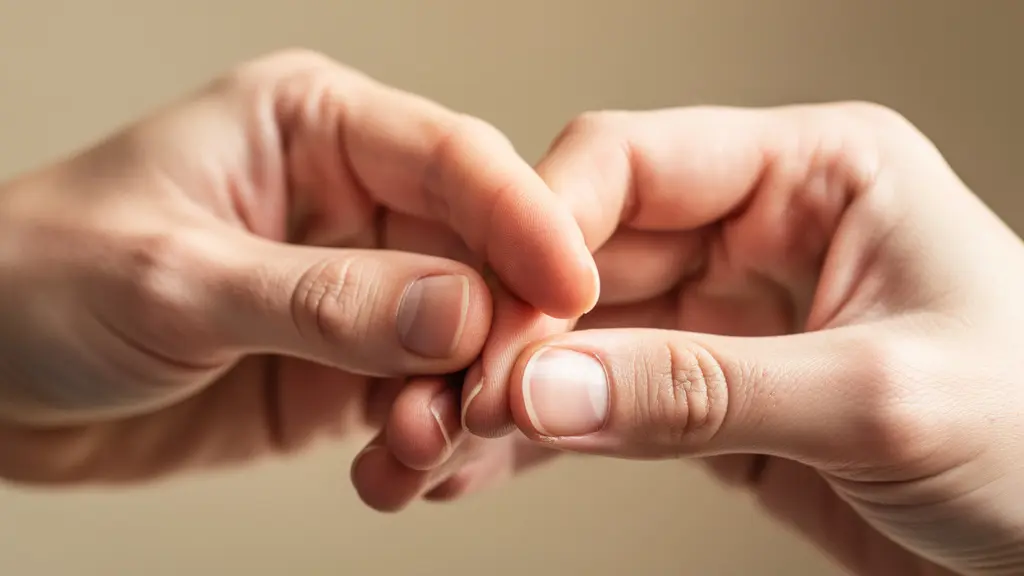
Conversely, one technique to avoid is applying direct, sustained pressure over the lunula or the skin just behind it. This area is directly over the delicate matrix, and such pressure carries a high risk of causing trauma, leading to Beau’s lines, white spots, or other permanent damage. The following table, based on an analysis of nail anatomy and care techniques, summarizes the benefits and risks of different approaches.
| Technique | Target Area | Benefit | Risk Level |
|---|---|---|---|
| Digital Artery Massage | Sides of fingers | Increased blood flow | Low |
| Press & Release | Proximal fold | Local circulation boost | Low |
| Direct Matrix Pressure | Matrix area | None | High – can damage |
| Palm Massage | Hand palm | Overall circulation | Very Low |
Key Takeaways
- The nail matrix is the nail’s ‘biological blueprint’; damaging it corrupts the plan for all future growth.
- Common white spots (leukonychia) are not from calcium deficiency but from minor, past trauma to the matrix.
- Aggressive cuticle pushing with hard tools is a primary cause of permanent nail ridges and deformities.
How to Transition from Acrylics to Natural Nails Without cutting Them Short?
Transitioning away from acrylics presents a unique challenge for the nail matrix. The process of applying, infilling, and especially removing acrylics can be harsh. Aggressive filing and the use of electric drills can easily inflict trauma on the natural nail plate, sending shockwaves of pressure to the already stressed matrix. This can leave natural nails thin, weak, and ridged. The goal during this transition is not to “fix” the already grown, damaged nail, but to create a protected environment for the matrix to recover and begin producing a healthy, strong nail from a “clean” blueprint.
Cutting the nails short is often recommended because the damaged, acrylic-covered portion is weak and prone to breaking. However, if you wish to maintain some length, the focus must shift to protection and patience. The key is to provide a supportive scaffold for the new nail growth while shielding the recovering matrix from further stress. This involves avoiding any aggressive manicure techniques, keeping the nails and surrounding skin intensely moisturized with oils and creams, and applying a high-quality, breathable nail strengthener. This strengthener acts as a temporary shield, preventing the thin nail from bending or breaking, which would put more strain on the matrix.
This recovery is a long-term project that aligns with the nail’s natural growth cycle. It’s a period of letting the inflammation from past procedures subside so the matrix can reset. As experts from Silcare note, it’s about giving the matrix a chance to “reboot.”
The transition period is critical for letting inflammation subside so the matrix can ‘reboot’ and begin using its original, healthy ‘blueprint’ again.
– Silcare Beauty Experts, Damaged nail matrix treatment guide
Following a structured protocol can make this transition successful. The following steps provide a timeline for matrix recovery:
- Week 1-2: After professional removal of acrylics, apply protective gels or special dressings to shield the thin nail plate and recovering matrix from impact.
- Week 3-4: Switch to a breathable nail strengthener, reapplying as directed, to act as a temporary scaffold for the new growth.
- Week 5-8: Maintain a rigorous daily routine of moisturizing the nails and proximal folds with high-quality cuticle oil to keep tissues flexible.
- Week 9-12: Continue to avoid aggressive tool use. Refrain from heavy 3D decorations or any style that adds weight and strain to the nail.
- Week 13+: Support the matrix from within by ensuring a balanced diet rich in biotin, zinc, and vitamins A and E to provide the building blocks for strong keratin.
Armed with this anatomical knowledge, you now have the power to protect your nails at their source. Your nail matrix is a resilient but delicate factory, and treating it with the respect it deserves is the only path to a lifetime of strong, beautiful nails. Apply these principles of gentle care and protection, and you will be investing in the health of every nail you grow from this day forward.