In summary:
- Weak nails post-acrylics suffer from broken internal keratin bonds, which superficial treatments cannot fix.
- True restoration relies on bond-building technology that penetrates the nail plate to repair its structural integrity from within.
- Traditional hardeners (like formaldehyde) create a rigid surface, increasing brittleness and breakage risk.
- Effective care involves understanding the difference between cosmetic fillers and structural strengtheners, and choosing ingredients that can penetrate the nail.
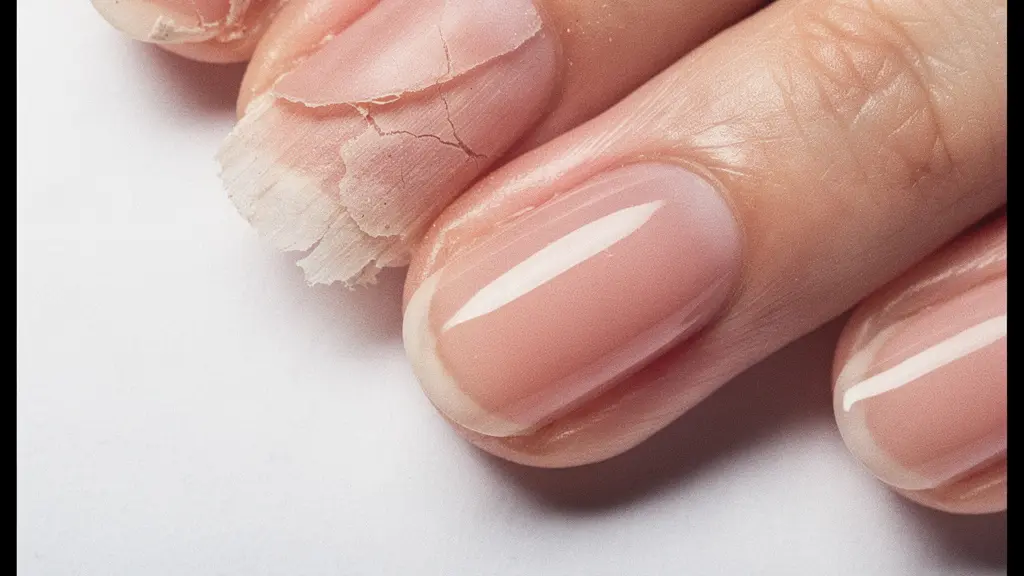
The moment of truth arrives after the last trace of acrylic is filed away. Instead of strong, healthy nails, you’re left with a discouraging reality: nails so thin and flexible they bend at the slightest pressure, feeling more like paper than protective plates. For anyone recovering from long-term wear of acrylics or gels, this weakness is a familiar and frustrating cycle. The common advice—moisturize, take biotin, be patient—feels inadequate when the damage feels so profound. These remedies often address nail health from a nutritional or surface-level perspective, failing to target the core of the problem.
The damage from acrylics is not superficial; it is structural. Aggressive filing and chemical exposure break down the very architecture of your nails: the intricate network of keratin chains. Therefore, a successful recovery requires a shift in perspective. But what if the key wasn’t simply waiting for new growth or coating the nail in a temporary shield? What if we could actively rebuild the damaged internal structure? This is where a more scientific approach becomes essential, moving beyond simple care to genuine molecular repair.
This guide will function as your biological recovery plan. We will move away from myths and explore the science of nail restoration. We will analyze how modern bond-builders work at a molecular level, compare the safety and efficacy of different hardeners, and explain the critical risks of improper treatment. By understanding the science behind each step, you can finally move from masking the problem to building a foundation of true, resilient strength.
To navigate this scientific journey, here is a breakdown of the key structural challenges and solutions we will explore. This roadmap will guide you through the mechanisms of nail repair, helping you make informed decisions for lasting results.
Summary: A Structural Guide to Rebuilding Damaged Nails
- How Do Bond Builders Repair Keratin Chains in Damaged Nails?
- Formaldehyde vs. Dimethyl Urea: Which Hardener Is Safer for Long-Term Use?
- The Risk of Over-Hardening: Why Do Treated Nails Snap at the Base?
- Does Soaking in Rice Water Actually Strengthen Keratin Bonds?
- How Many Weeks of Treatment Are Needed to See Real Keratin Repair?
- How Many Layers of Keratin Do You Remove with a 240 Grit File?
- Ridge Fillers vs. Strengtheners: Which Protects Brittle Nails Better?
- Oil or Serum: Which Penetrates Deeper Into the Nail Plate?
How Do Bond Builders Repair Keratin Chains in Damaged Nails?
When nails are damaged by mechanical stress from filing or chemical processes, the keratin protein chains that form their backbone are broken. Think of it as severing the rungs of a ladder, compromising the entire structure. Traditional hardeners work by adding a rigid coating on top, but this does not fix the underlying weakness. Modern bond builders, however, operate on a fundamentally different principle: molecular repair. These advanced treatments are formulated with molecules small enough to penetrate the nail plate and work from within.
The technology functions through biomimicry—imitating the body’s natural processes. As explained by Dr. Eric Pressly, a materials science expert, revolutionary treatments can use just two key ingredients, synthetic ethyl acetate and diethylhexyl maleate, to repair broken cross-linked bonds in the nail’s keratin. Instead of painting over damage, these ingredients create new bonds, effectively rebuilding the keratin network and restoring the nail’s innate strength and flexibility. It is a paradigm shift from cosmetic concealment to genuine structural reconstruction.
The results of this approach are quantifiable. For example, treatments using OPI’s patented Ulti-Plex technology have been shown to achieve up to 99% nail keratin repair while also protecting existing protein from further damage. This focus on rebuilding the structural integrity of the nail is what sets bond builders apart as a true solution for nails weakened by acrylics, offering a path to recovery rather than a temporary fix.
Formaldehyde vs. Dimethyl Urea: Which Hardener Is Safer for Long-Term Use?
For decades, formaldehyde was the gold standard in nail hardeners. Its effectiveness comes from its ability to act as a potent cross-linker for keratin proteins. By chemically linking the keratin chains on the nail’s surface, it creates an exceptionally hard, rigid shield. However, this rigidity is a double-edged sword. It makes the nail less flexible and more prone to snapping under pressure. Furthermore, concerns over its safety and potential for causing irritation and allergic reactions have led the industry to seek safer, more modern alternatives.
Enter ingredients like dimethyl urea. As noted by the OPI Research Team, the industry has actively explored alternatives such as glyoxal and dimethyl urea. These compounds also function as keratin cross-linkers but are generally considered gentler and safer for long-term use than formaldehyde. Dimethyl urea, for example, hardens the nail by forming a polymer network within the upper layers of the nail plate, but it does so without the excessive rigidity and potential for brittleness associated with formaldehyde. It offers a balance between hardness and flexibility, which is crucial for preventing breakage.
This evolution in chemistry reflects a deeper understanding of nail biology. While formaldehyde provides a powerful but crude hardening effect, newer cross-linkers like dimethyl urea, and especially bond-building technologies, represent a more sophisticated approach. They aim to enhance the nail’s natural structure rather than simply encasing it in a brittle shell. For someone recovering from acrylic damage, choosing a formaldehyde-free hardener is a critical step toward fostering flexible, resilient strength and avoiding further damage.
The Risk of Over-Hardening: Why Do Treated Nails Snap at the Base?
The paradox of nail care is that in the quest for strength, it is possible to make nails *too* hard. This phenomenon, known as over-hardening, is a common side effect of misusing traditional hardeners, particularly those containing formaldehyde. These products create an extremely rigid surface layer, but they do not improve the nail’s underlying flexibility. When a nail is overly rigid, it loses its ability to bend and absorb shock. Instead of flexing upon impact, it snaps cleanly, often at its most vulnerable point.
This breakage typically occurs at the “smile line” or the base of the nail tip, which is a natural stress-concentration point. When force is applied to the tip of an over-hardened nail, all the stress is transferred to this junction. Because the nail cannot flex to dissipate the energy, a fracture occurs. This is a classic example of brittle failure in material science. The nail becomes like glass: hard, but fragile. With professional-strength treatments becoming more common, it’s a risk to be aware of.
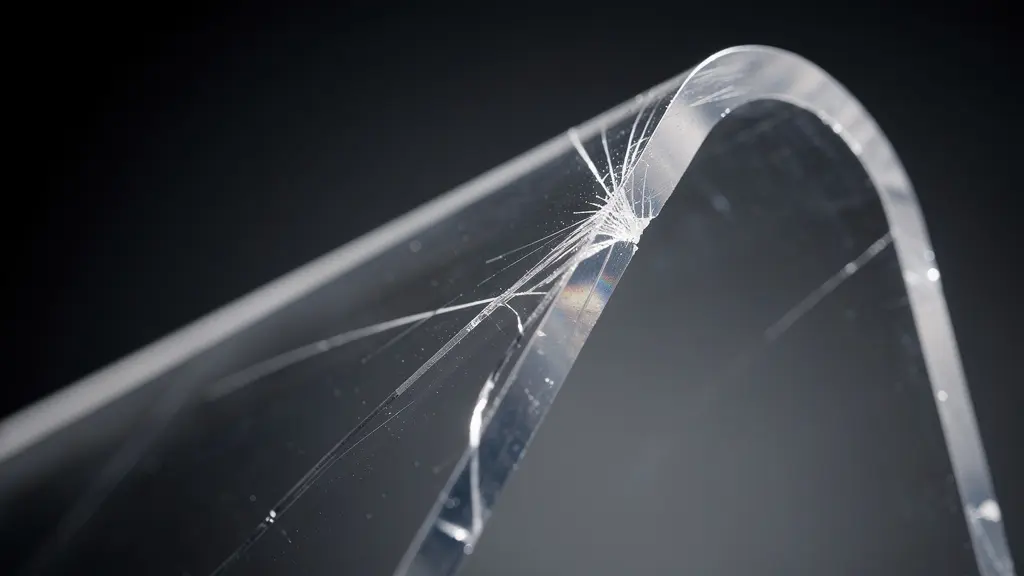
As this visualization shows, the stress concentrates where the nail plate lifts from the nail bed. A healthy nail has enough tensile strength and flexibility to withstand this pressure. An over-hardened nail does not. For those recovering from acrylics, whose nails are already thin and compromised, the risk is even greater. The goal should not be rock-hard nails, but rather nails that have a healthy balance of strength and flexibility—resilience is the true measure of health.
Does Soaking in Rice Water Actually Strengthen Keratin Bonds?
The allure of natural, DIY remedies is strong, and soaking nails in rice water is a popular trend purported to strengthen them. The theory is that the starches and vitamins in the water nourish the nail. However, from a biological and chemical standpoint, this method is fundamentally flawed. The primary obstacle is the very nature of the nail plate itself: it is a highly effective barrier designed to keep substances out. The nail is composed of dense layers of keratin and is lipophilic, meaning it repels water.
Scientific analysis confirms this challenge. The chemical composition and thickness of nails are significant obstacles for treatments. Studies published on PubMed Central highlight that the penetration of products from the nail plate into its deeper structures is a persistent issue. The large molecules found in a simple water-based soak, like rice water, cannot effectively pass through the dense keratin layers to deliver any meaningful benefits. At best, a soak might temporarily hydrate the very top surface, but it cannot repair broken keratin bonds or contribute to long-term structural integrity.
Instead of relying on ineffective soaks, focusing on scientifically-validated topical treatments offers a more reliable path to recovery. These methods use ingredients formulated to overcome the nail’s natural barrier.
Your Action Plan: Evidence-Based Strengthening Alternatives
- Apply plant-based keratin treatments: Use formulas with at least a 10% concentration of hydrolyzed keratin, whose smaller molecules can penetrate for deep nourishment.
- Use biotin (Vitamin B8) supplements: Support the body’s natural keratin production from the inside out to improve the quality of new nail growth.
- Apply AHAs and gluconolactone: These gentle exfoliants support cell renewal and help the nail plate maintain essential hydration and flexibility.
- Incorporate silicon treatments: Topical silicon can improve nail flexibility and boost moisture retention, preventing brittleness.
- Use Vitamin C topically: As an antioxidant, Vitamin C can help protect the nail structure from environmental stressors and free radical damage.
How Many Weeks of Treatment Are Needed to See Real Keratin Repair?
Patience is a virtue in nail recovery, but “be patient” is not an actionable strategy. When using scientifically-formulated treatments, it is possible to establish a more concrete timeline for observing real, structural improvement. Unlike waiting for the entire nail to grow out, which can take four to six months, targeted repair technologies can yield measurable results in a much shorter period. The key is consistent application as prescribed by the product’s protocol.
The timeline for visible repair depends directly on the technology being used. For advanced bond-building treatments, the effects are not gradual but cumulative and relatively rapid. As the OPI Education Team explains regarding their Repair Mode serum, a specific protocol delivers maximum efficacy. Their recommendation is clear:
Repair Mode must be applied twice daily for six days (12 applications) on bare nails to get maximum efficacy and full bond restoration. After that, you can use the product once daily or when needed. Repair Mode penetrates and repairs nails, creating smoother, stronger nails resistant to damage in just six days.
– OPI Education Team, BeautyEQ
This six-day intensive treatment period is designed to fully saturate the nail with the bond-building molecules, allowing them to penetrate and rebuild the damaged keratin network. While the nail will continue to feel stronger and more resilient with ongoing use, this initial phase is what establishes the foundational repair. It’s crucial to understand that this timeline applies to internal keratin repair. The nail will *feel* stronger and less prone to bending quickly. Complete recovery, meaning the growth of an entirely new, undamaged nail, still follows the natural biological timeline.
How Many Layers of Keratin Do You Remove with a 240 Grit File?
Filing is an essential part of nail care, but it is also a process of controlled abrasion that removes layers of keratin. For someone with already thin, compromised nails, understanding the impact of different file grits is not just a technical detail—it is crucial for preventing further damage. The grit number on a file refers to the number of abrasive particles per square inch; a lower number means a coarser file, and a higher number means a finer, gentler file. Using a file that is too coarse can quickly thin the nail plate and weaken its structure.
A 240-grit file is generally considered the standard for shaping natural nails. It strikes a balance, being effective enough to shape the nail without being overly aggressive. However, it still removes a significant amount of material. While the nail is composed of approximately 100 layers of keratinocytes, a 240-grit file can remove between 10-20 microns of thickness with each pass. This affects the dorsal (top) layer of the nail, which is the densest and most protective part. Aggressive or frequent filing, even with a 240-grit file, can quickly compromise this vital layer.
To put this into context, it’s helpful to compare different file grits and their recommended uses. The following data clarifies the impact each type of file has on the nail’s structure.
| File Grit | Microns Removed | Nail Layer Affected | Recommended Use |
|---|---|---|---|
| 100-180 Grit | 20-30 microns | Dorsal layer | Artificial nail shaping only |
| 240 Grit | 10-20 microns | Dorsal layer partial | Natural nail shaping |
| 400+ Grit | 5-10 microns | Surface polish | Buffing and smoothing |
For individuals with paper-thin nails, the recommendation is clear: use a file with a grit of 240 or higher, and file with a light touch in one direction to minimize stress and keratin removal. The goal is to shape the nail, not to reduce its thickness. This data from sources like professional nail publications underscores the importance of choosing the right tool for the job to preserve the nail’s structural integrity.
Ridge Fillers vs. Strengtheners: Which Protects Brittle Nails Better?
In the aisle of nail treatments, “ridge filler” and “strengthener” are often placed side-by-side, yet they serve fundamentally different purposes. Confusing the two can hinder recovery, especially for brittle, damaged nails. A ridge filler is primarily a cosmetic product. It contains silk fibers or other bulking agents that settle into the grooves and indentations on the nail surface, creating a smooth, even canvas for polish application. It acts like a primer for paint, masking imperfections but offering little to no structural support. It does not penetrate the nail or repair its internal structure.
A true nail strengthener, on the other hand, is a therapeutic treatment designed to improve the nail’s mechanical properties. As discussed, these products work in one of two ways: by cross-linking keratin on the surface (hardeners) or by rebuilding bonds from within (bond builders). Their goal is to increase the nail’s resistance to bending and breaking. For brittle nails, which lack both strength and flexibility, a modern bond-building strengthener is far more beneficial as it restores the nail’s innate resilience.
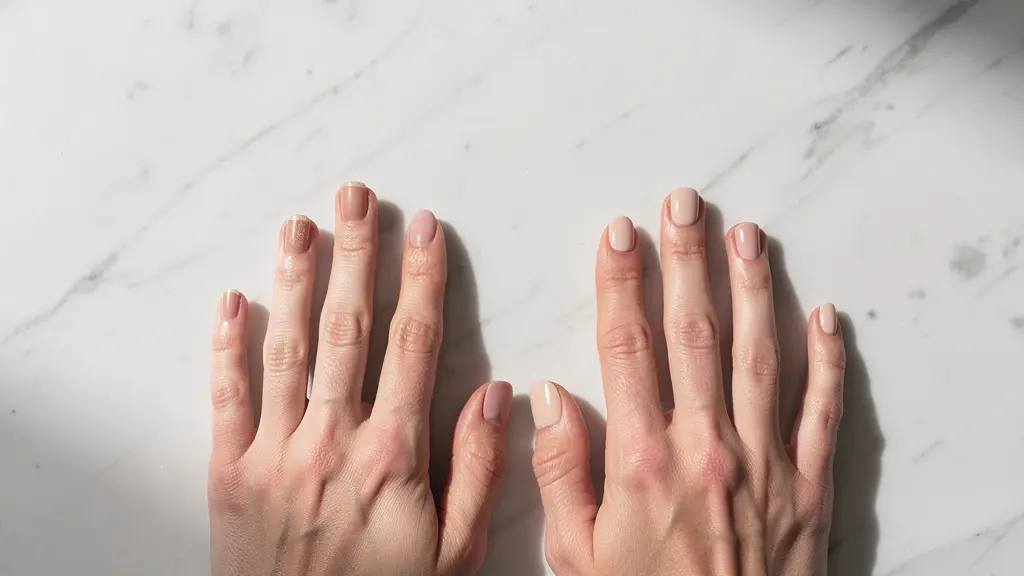
The visual difference is clear: one creates a superficial layer, while the other enhances internal structure. Professional nail technicians, who account for the vast majority of treatment usage, understand this distinction well. They use professional-grade strengtheners to deliver superior, lasting results because they address the root cause of weakness. While a ridge filler can be a useful cosmetic tool, it should be seen as an adjunct to, not a replacement for, a genuine strengthening treatment. For true protection of brittle nails, the choice is unequivocally a strengthener that targets structural repair.
Key Takeaways
- True nail strength comes from a balance of hardness and flexibility, not just rigidity. Over-hardening leads to brittleness.
- Molecular repair with bond-building technology is the most effective method for reversing structural damage from acrylics.
- Understanding the tools and products you use—from file grit to the active ingredients in a serum—is critical to avoid causing further harm.
Oil or Serum: Which Penetrates Deeper Into the Nail Plate?
Moisturizing is a cornerstone of nail care, but the effectiveness of a product hinges on its ability to penetrate the dense nail plate. This is where the debate between oils and serums becomes critical. Traditional nail oils, like jojoba or vitamin E oil, are composed of large molecules. They are excellent at conditioning the cuticle and providing an occlusive layer on the nail surface. This layer helps lock in moisture and improves the nail’s flexibility, making it less prone to chipping. However, their large molecular size limits their ability to penetrate deep into the nail plate itself.
Serums, by contrast, are typically water-based or have a lighter formulation designed for deep penetration. They are engineered to carry smaller, active molecules that can traverse the keratin layers. As dermatologist Dr. Zalka explains, specific ingredients are chosen for their ability to influence the nail structure. For a product to be truly effective at deep repair, its formulation is key. Ingredients like hydrolyzed keratin, peptides, and certain vitamins have smaller molecular weights, allowing them to be carried by a serum deep into the nail structure.
According to Dr. Zalka’s insights shared in Vogue, ingredients like hydrolyzed keratin strengthen the nail’s structure directly, while calcium and peptides enhance flexibility. An oil can deliver some of these if they are oil-soluble, but a well-formulated serum is specifically designed as a delivery system for these potent, reparative ingredients. Therefore, for deep structural repair, a serum is superior. An oil is an essential complementary product, perfect for maintaining surface flexibility and cuticle health. The ideal routine incorporates both: a serum to repair from within, and an oil to protect and condition from without.
To begin your structural recovery, the first step is to discard ineffective myths and commit to a scientifically-backed approach. Start by assessing the true nature of your nail damage and choosing a treatment, like a bond-building serum, that is designed for deep molecular repair. Consistent, informed care is the only path to rebuilding resilient, healthy nails from the inside out.