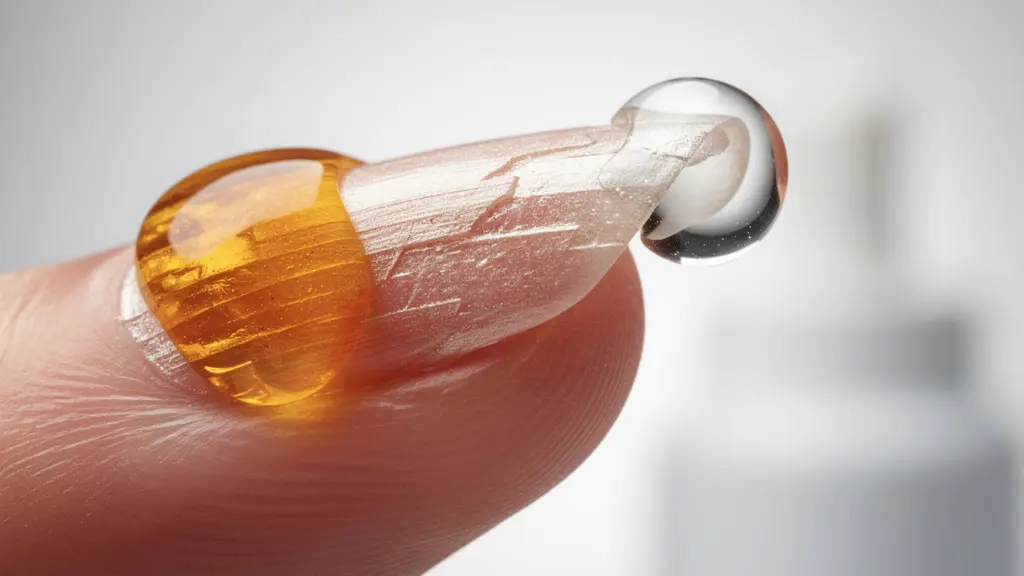
The true key to treating brittle nails isn’t choosing oil versus serum, but understanding their fundamentally different delivery systems: water-based serums can penetrate the nail plate for deep hydration, while oils primarily condition the surrounding skin.
- Serums utilize small, water-soluble molecules like hyaluronic acid and panthenol to bind moisture within the nail’s keratin layers.
- Oils are lipophilic (fat-loving) and their large molecules cannot effectively penetrate the dense, water-based nail plate, but excel at softening the cuticle and sealing moisture on the skin’s surface.
Recommendation: For deep nail repair, apply a targeted serum directly to bare nails. Use a cuticle oil afterward on the surrounding skin to protect and soften the eponychium.
The debate between nail oils and serums often feels like a matter of personal preference. One person swears by a luxurious, golden oil for shine and cuticle health, while another praises a lightweight, fast-absorbing serum for transforming their brittle nails. While both have their place in a comprehensive nail care routine, the idea that they perform the same function is a fundamental misunderstanding. As a formulation specialist, my focus isn’t on the texture or scent, but on the molecular reality: what can actually get past the nail’s formidable defenses?
The nail plate is not like your skin. It is a dense, multi-layered structure of hardened keratin, designed to be a barrier. To truly address issues like peeling, brittleness, and dehydration, a product must have the right chemical properties to penetrate this barrier. This is where the science of delivery systems becomes paramount. It’s not about oil versus serum in a general sense; it’s about a lipid-based delivery system versus a water-based one, and which is engineered to carry active ingredients to where they are needed most.
This article will deconstruct the science behind nail plate penetration. We will move beyond marketing claims to explore the molecular mechanics of how ingredients are absorbed. We will start by examining the nail’s “command center”—the matrix—to understand what we are trying to protect. Then, we will analyze the distinct roles of oils and serums, clarify which ingredients can actually make a difference, and establish a routine that leverages each product for its intended, scientifically-backed purpose. Forget what you think you know; it’s time to understand what’s really happening at a microscopic level.
To fully grasp how these treatments work, we’ll break down the science behind nail health, from the inside out. This guide explores the critical role of the nail matrix, how to hydrate from within, and the specific functions of different topical ingredients.
Summary: Oil or Serum: Understanding True Nail Plate Penetration
- Why Is Damage to the Matrix Often Irreversible?
- How to Rehydrate Brittle Nails From the Inside Out in 2 Weeks?
- Tocopherol in Cuticle Oil: Does It Really Heal Micro-Cuts?
- Hyaluronic Acid for Nails: Does It Plump the Plate Like It Does Skin?
- Which Serum Ingredients Target Peeling Layers Specifically?
- When to Apply Water-Based Serums in Your Manicure Routine?
- The “Micro-Dosing” Technique: Why Applying Serum 3 Times a Day Works Best?
- Can You Make an Effective Nail Serum with Aloe Vera and Vitamin E?
Why Is Damage to the Matrix Often Irreversible?
Before discussing any topical treatment, we must start with the nail’s origin: the matrix. Located under the skin behind the cuticle, the nail matrix is the small area of living tissue that generates the cells that become the nail plate. Think of it as the nail’s factory and command center. It is responsible for producing the keratinocytes that differentiate, harden, and grow out to form the hard nail you see. The health, shape, and thickness of your entire nail are predetermined by the condition of your matrix.
This is where the concept of “irreversible damage” becomes critical. Unlike the nail plate, which is dead keratin, the matrix is a delicate, living system. Any significant trauma to this area—such as a severe crush injury, aggressive cuticle cutting that exposes it, or a chronic infection—can permanently damage the cells responsible for nail production. If these specialized cells are destroyed, they cannot regenerate. Research on nail anatomy highlights that the matrix’s integrity is absolutely essential for normal nail growth and morphology. Damage can result in permanent ridges, splits, or even a complete cessation of nail growth.
The nail matrix is comprised of stratified squamous epithelial cells which are held together by long rete ridges and sparse dermis. Mitosis in the basal layer of the nail matrix constantly replaces the matrix.
– Research team, PMC – Understanding the Nail Barrier
This is why protecting the lunula (the white, half-moon shape at the base of your nail, which is the visible part of the matrix) and the surrounding eponychium is non-negotiable for long-term nail health. While serums and oils can improve the condition of the existing nail plate, they cannot fix a damaged matrix. The damage is done at the source, and any nail that grows from that point onward will reflect that flaw. Understanding this limitation is the first step toward a realistic and effective nail care strategy.
How to Rehydrate Brittle Nails From the Inside Out in 2 Weeks?
While protecting the matrix is crucial for future growth, what can be done for the brittle, dry nail plate that already exists? The promise of rehydrating nails in just two weeks is appealing, but it requires managing expectations with biological reality. First, we must understand that new nail growth is slow. Clinical measurements show that fingernails grow at a rate of about 3 millimeters per month. Therefore, a “2-week fix” will not involve growing a new, healthier nail; it must focus on improving the condition of the existing nail plate and supporting new growth from within.
The “inside out” approach is about providing your body with the essential building blocks for strong, resilient keratin. Dehydration is a key factor, but nutritional deficiencies are often the root cause of chronic brittleness. To support the matrix in producing better-quality cells, a focus on diet is essential. Key nutrients include:
- Protein: Since nails are made of keratin, a protein, low dietary protein intake can lead to weaker nail structures.
- Essential Fatty Acids: A lack of linoleic acid is directly linked to splitting and flaking of the nail plates. Incorporating sources like flaxseed, walnuts, and fatty fish can help.
- Iron: Iron deficiency is a classic culprit for thin, brittle, or spoon-shaped nails (koilonychia). It compromises the oxygen-carrying capacity of blood, which is vital for the health of the nail matrix.
In two weeks, you won’t grow a new nail, but you can significantly improve the hydration and flexibility of the existing plate with topical treatments (which we’ll discuss next) while simultaneously starting the internal nutritional support. The dietary changes will lay the foundation for the stronger nail that will become visible in the coming months. This two-pronged attack—topical rehydration for the present and nutritional support for the future—is the only realistic way to achieve lasting results.
Tocopherol in Cuticle Oil: Does It Really Heal Micro-Cuts?
Now we turn to the first part of our topical debate: oils. Cuticle oils, often rich in Tocopherol (Vitamin E), are marketed as healing and strengthening elixirs. But to understand their true function, we must distinguish between the nail plate (dead keratin) and the cuticle/eponychium (living skin). The term “cuticle” is often used to describe the eponychium, which is the small rim of living skin at the base of the nail. Its purpose is to form a protective seal, preventing pathogens from entering the nail matrix area.
When this seal is broken—through cutting, biting, or extreme dryness—it can lead to micro-fissures and inflammation. Tocopherol is a powerful antioxidant and moisturizer. Its role in a cuticle oil is not to “heal” the nail plate itself, but to condition and support the health of the eponychium. By keeping this skin flexible and hydrated, it helps maintain that crucial protective seal and supports the natural healing process of the living tissue. It helps prevent the tiny tears that can lead to hangnails and infections like paronychia.
So, does Tocopherol heal micro-cuts? On the living skin of the eponychium, yes, it supports the healing environment. On the nail plate, no. An oil’s primary benefit is occlusive and emollient. Its large, lipid-loving molecules are too big to penetrate the dense keratin of the nail. Instead, they sit on top of the nail and surrounding skin, softening the tissue and, most importantly, creating a barrier that slows the evaporation of water. This is why oils give a beautiful, healthy shine and make cuticles look instantly better—they are excellent surface conditioners.
Hyaluronic Acid for Nails: Does It Plump the Plate Like It Does Skin?
If oils primarily condition the surface, how do we achieve deep hydration *within* the nail plate? This is where water-based serums, and specifically ingredients like Hyaluronic Acid (HA), enter the picture. In skincare, HA is famous for its ability to hold up to 1000 times its weight in water, acting as a humectant to plump and hydrate the skin. Its function in nail care is similar but adapted to a different structure.
A nail plate isn’t plumped in the same way as soft skin tissue, but it absolutely requires water to maintain its flexibility. When a nail’s water content drops, it becomes brittle and prone to splitting. A standard HA molecule can be too large to effectively penetrate the nail’s dense keratin structure. This is why advanced nail serums use low-molecular-weight Hyaluronic Acid or modified versions. These smaller molecules can travel between the keratin layers, drawing in and holding moisture from the environment and the underlying nail bed.
Case Study Highlight: The Efficacy of Water-Based HA Strengtheners
The power of this approach is not just theoretical. A clinical evaluation of 60 patients with brittle nails tested a water-based nail treatment containing both hyaluronic acid and Pistacia lentiscus. Using objective methods like optical coherence tomography, the study demonstrated significant improvements in nail integrity and hydration. This provides strong evidence that a well-formulated, water-based serum can deliver active ingredients deep into the nail plate to produce measurable results.
So, while HA doesn’t “plump” a nail in the aesthetic sense, it performs a more critical function: it acts as an internal moisturizer, restoring the flexibility and resilience of the keratin structure. This is the fundamental difference between a serum and an oil. The serum’s water-based delivery system is designed to carry humectants *into* the plate, while the oil’s lipid-based system is designed to seal and condition the *surface*.
Which Serum Ingredients Target Peeling Layers Specifically?
Peeling nails, a condition known as onychoschizia, is a clear sign of compromised nail plate integrity. It occurs when the layers of keratin delaminate, often due to a lack of moisture or the intercellular “glue” that holds them together. As scientific research indicates that brittle nails appear when water content is reduced to less than 16%, the primary goal of a repair serum is to restore hydration and reinforce this layered structure. This requires a multi-pronged attack with specific ingredients.
A high-performance serum goes beyond simple moisturizers. It uses a synergistic blend of ingredients that work on different aspects of nail repair. Some key players include:
| Ingredient | Function | Mechanism |
|---|---|---|
| Cationic Hyaluronic Acid | Hydration & Adhesion | Positive charges allow longer retention on nail surface |
| Panthenol (Pro-Vitamin B5) | Repair & Moisture | Acts as humectant and improves nail plate cohesion |
| Ceramides | Intercellular binding | Mimic natural lipid binders between keratinocytes |
| Hydrolyzed Keratin | Structural reinforcement | Fills gaps between peeling layers |
The inclusion of ingredients like Cationic Hyaluronic Acid is a perfect example of advanced formulation. As one research team noted, this modified HA has a “very high adhesive capacity, due to its positive charges,” which allows it to bind more effectively to the negatively charged nail surface for sustained hydration. Similarly, Panthenol is a small molecule that can penetrate the nail to impart moisture and improve flexibility, while hydrolyzed keratin proteins can help fill in the gaps between the delaminating layers. This is a level of targeted repair that a simple oil cannot achieve.
When to Apply Water-Based Serums in Your Manicure Routine?
Having a potent serum is only half the battle; applying it correctly is essential for maximizing its penetration and efficacy. Because serums are designed with water-based delivery systems, their application timing is fundamentally different from that of an oil. The cardinal rule is: serum must be applied to clean, bare nails. Any barrier—be it polish, a base coat, or even a layer of oil—will block the serum’s small, water-soluble molecules from reaching the nail plate.
The ideal moment for application is right after washing your hands. The nail plate will be slightly more permeable when it has absorbed some water, allowing for enhanced penetration of the active ingredients. Think of it like applying moisturizer to damp skin. Once applied, gently massage the serum into the entire nail plate, the tip, and the surrounding cuticle area. This not only aids absorption but also stimulates blood flow to the matrix.
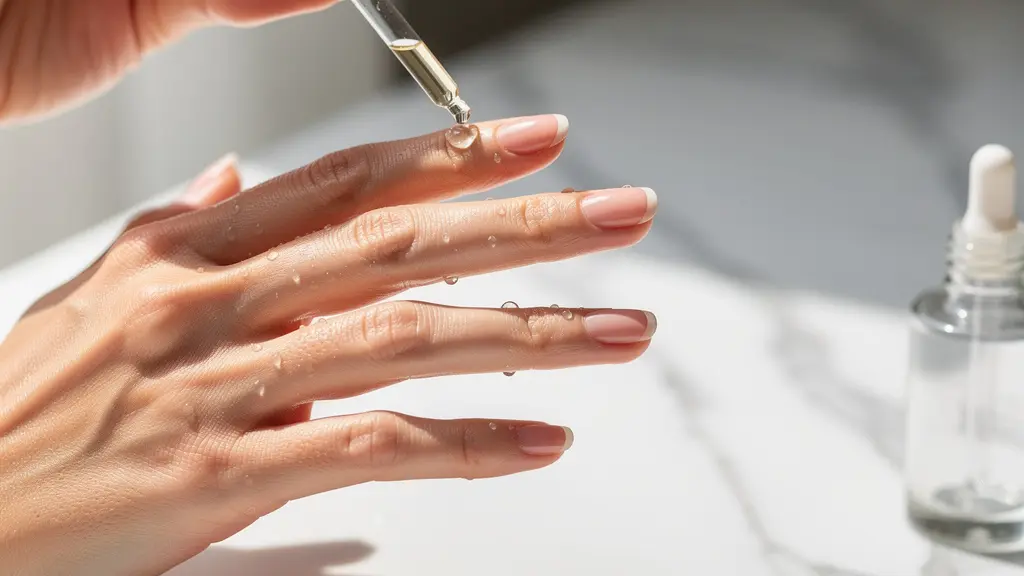
The most critical step is to allow the serum to absorb completely before applying any other product. This can take anywhere from 5 to 15 minutes. Once the nail feels dry to the touch, you can then apply a cuticle oil. In this sequence, the oil performs its proper function: it seals in the hydration provided by the serum and conditions the surrounding skin. Applying oil before the serum is counterproductive, as the occlusive lipid layer will prevent the serum from ever reaching its target.
The “Micro-Dosing” Technique: Why Applying Serum 3 Times a Day Works Best?
The term “micro-dosing” has become popular in beauty, but in the context of nail serums, it can be misleading. It doesn’t necessarily mean applying the product with extreme frequency, like three or more times a day. Rather, it refers to the principle of using a small, targeted amount consistently over time. The nail plate can only absorb so much product at once. Drenching your nails in serum is wasteful; a single, well-massaged drop per nail is sufficient.
The optimal frequency depends on the severity of the nail damage and the product’s formulation. While some intensive treatments might suggest twice-daily use initially, most maintenance routines benefit from a single, dedicated application per day. Nighttime is often ideal, as the serum can work uninterrupted for several hours while your body is in its natural repair cycle. The key is not frequency, but unbroken consistency. A clinical study on a water-soluble nail strengthener found significant improvements with just a once-daily application over 84 days. This demonstrates that sustained, long-term use is more important than high frequency in the short term.
Action Plan: Effective Serum Application
- Start with a clean canvas: Ensure nails are completely bare, free of polish, oils, or creams for maximum absorption.
- Use a minimal amount: Apply just one or two drops of serum per hand. This is enough to cover all ten nails.
- Massage for absorption: Gently massage the serum into each nail plate and the surrounding cuticle area until it feels dry to the touch. This stimulates circulation.
- Allow for drying time: Wait at least 10-15 minutes before washing your hands or applying any other products like oil or hand cream.
- Be consistent: Apply the serum at least once daily, preferably at night, to establish a consistent treatment routine for cumulative results.
Therefore, the “micro-dosing” technique for nails is about being efficient and consistent. It’s about respecting the product’s formulation and the nail’s biology, understanding that a little bit, applied correctly and every day, yields far better results than a lot, applied sporadically.
Key Takeaways
- The nail matrix is the living factory of the nail; severe damage to it is often permanent and cannot be fixed by topical products.
- True nail hydration comes from within (diet) and from water-based serums that can penetrate the keratin layers, not from oils.
- Oils are excellent surface conditioners for the cuticle (living skin) and for sealing in moisture, but their molecules are too large to deeply hydrate the nail plate itself.
Can You Make an Effective Nail Serum with Aloe Vera and Vitamin E?
With the rise of DIY beauty, a common question is whether one can replicate a professional serum at home using simple ingredients like aloe vera and Vitamin E. Understanding the formulation science we’ve discussed provides a clear answer: it’s incredibly difficult. The core challenge lies in the fundamental incompatibility of the key ingredients. Aloe vera is water-based, while Vitamin E is an oil, or lipid-based.
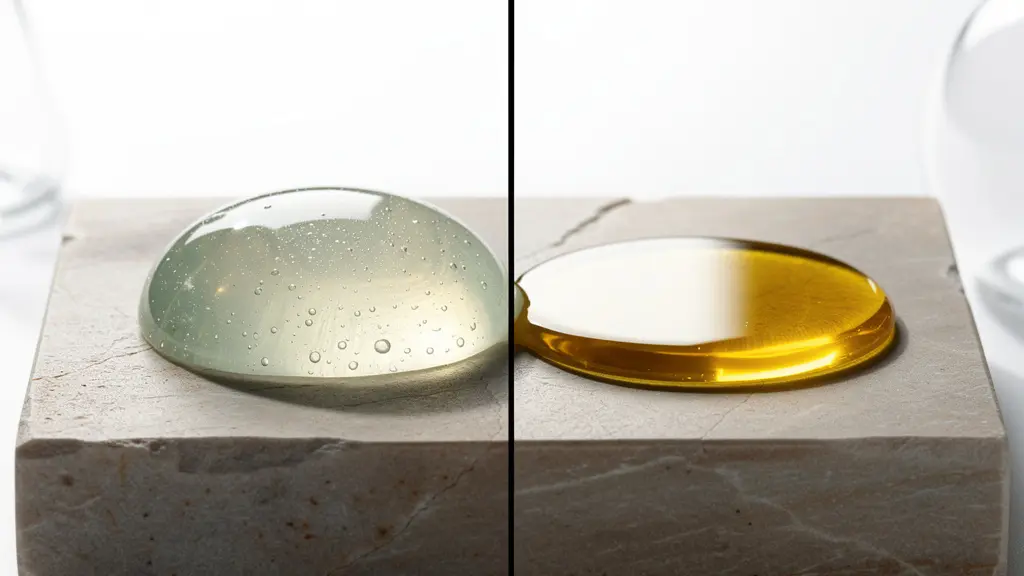
As anyone who has made a vinaigrette knows, oil and water don’t mix. When you combine aloe vera gel and Vitamin E oil, you will not get a homogenous serum. You will get a separated mixture that cannot deliver both components effectively. To combine them, you would need an emulsifier, a sophisticated ingredient that binds water and oil molecules together. This is the first hurdle where DIY recipes fail. Without an emulsifier, you are essentially applying one ingredient followed by another, not a unified product.
Furthermore, the effectiveness of Vitamin E relies on a carrier oil to be properly absorbed by the skin. As one holistic guide points out, “Carrier oils protect your skin from getting too much concentration from the oil at once… They also act as a bonding agent… so that it can be properly absorbed for maximum benefit.” In a DIY mixture, the concentrations are uncontrolled. More importantly, the aloe vera component cannot act as an effective delivery system for the oil-soluble Vitamin E to penetrate the nail plate. You are left with a formula that can’t decide if it’s a hydrator or an occlusive, and it ends up doing neither job well. While the individual ingredients have benefits, their simple combination does not create an effective, bio-available serum.