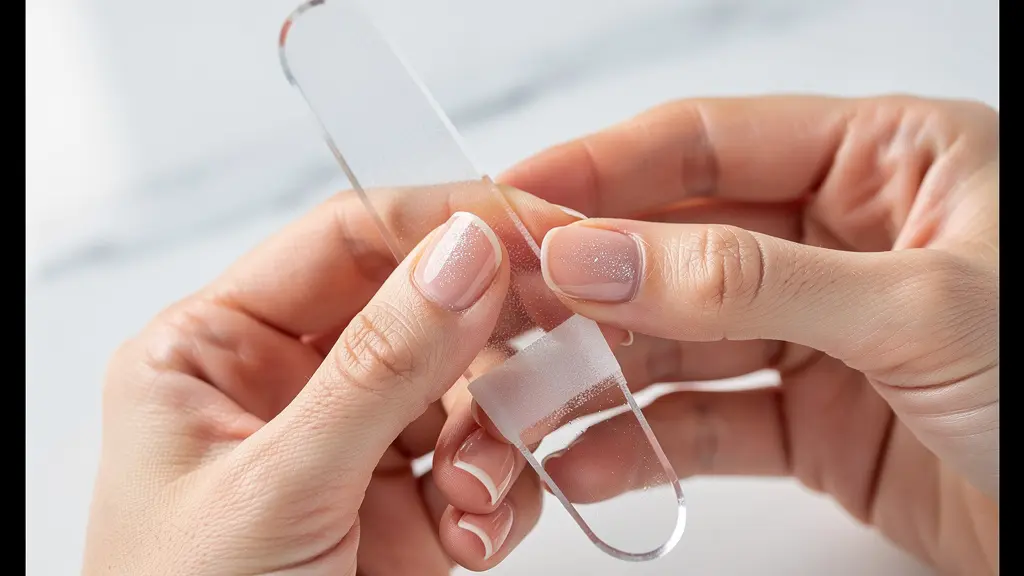
The cycle of splitting and peeling nails isn’t your fault—it’s a direct result of using inferior tools that inflict damage with every use.
- Emery boards and metal files operate by tearing and creating microscopic fractures along the nail edge, leading to inevitable weakness.
- A true etched Czech glass file works by sealing the nail’s keratin layers as it shapes, promoting strength and integrity from the edge inward.
Recommendation: Switch to a Czech glass file to transform filing from a damaging necessity into a restorative, precision-driven ritual.
For anyone who meticulously cares for their natural nails, the experience is all too familiar: you spend weeks nurturing length and strength, only to have it undone by a snag, a split, or a peel. The culprit is often the very tool you use to shape them. The conventional wisdom of disposable emery boards and harsh metal files has created a cycle of damage, where the act of filing introduces microscopic trauma that weakens the nail structure over time. You are not failing your nails; your tools are failing you.
This isn’t merely about finding a “gentler” file. It’s about a fundamental paradigm shift in nail care. It requires moving away from the concept of aggressive abrasion and embracing the principles of material science. The discussion must be elevated from simple brand comparisons to the physics of how a tool interacts with the delicate, layered structure of a natural nail. The goal is to stop treating nail filing as a chore of maintenance and start viewing it as an act of deliberate, restorative sculpting.
This guide abandons the platitudes. We will delve into the precise, scientific reasons why a Czech glass file is not just an alternative, but a superior instrument. By understanding the meaning of an “etched surface,” the mechanics of “micro-shattering,” and the principles of non-porous hygiene, you will be equipped to make an informed choice. This is the connoisseur’s approach: appreciating a tool not just for its function, but for the intelligence of its design and the quality of its results.
To fully appreciate this evolution in nail care, we will explore the core principles that distinguish a truly fine instrument from a mere abrasive. This structured journey will dissect the science, the technique, and the long-term benefits of making this essential switch.
Summary: The Czech Glass File: A Connoisseur’s Guide to Ending Nail Damage
- What Does “Etched Surface” Mean and Why Does It Seal the Layers?
- How to Clean and Sanitize a Glass File to Last a Lifetime?
- Metal vs. Glass: Why Metal Files Cause Micro-Shattering at the Edge?
- How to Use a Glass File in Both Directions Without Damage?
- How to Protect Your Glass File From Breaking in Your Bag?
- How to File the Side Walls Without Cutting into the Stress Point?
- How Many Layers of Keratin Do You Remove with a 240 Grit File?
- How to Achieve a “Wet Look” Shine Using Only a Chamois Buffer?
What Does “Etched Surface” Mean and Why Does It Seal the Layers?
The term “etched” is the single most important distinction for a high-quality glass file, separating a precision instrument from a mere novelty. Unlike cheap imitations where an abrasive material is sprayed or glued onto a glass stick, an authentic Czech glass file has its abrasive surface created directly within the glass itself. This is achieved through a controlled chemical process that creates a permanent, uniform topography of peaks and valleys on the file’s surface.
This uniform texture is the key to its effectiveness. When you file your nail, this surface doesn’t rip or tear. Instead, it gently grinds the nail tip into a fine powder, a process of controlled abrasion. As the file moves across the edge, the heat from the minimal friction and the precise texture work in concert to meld the nail’s delicate keratin layers together. This creates a smooth, sealed edge that is far more resilient to peeling and splitting.
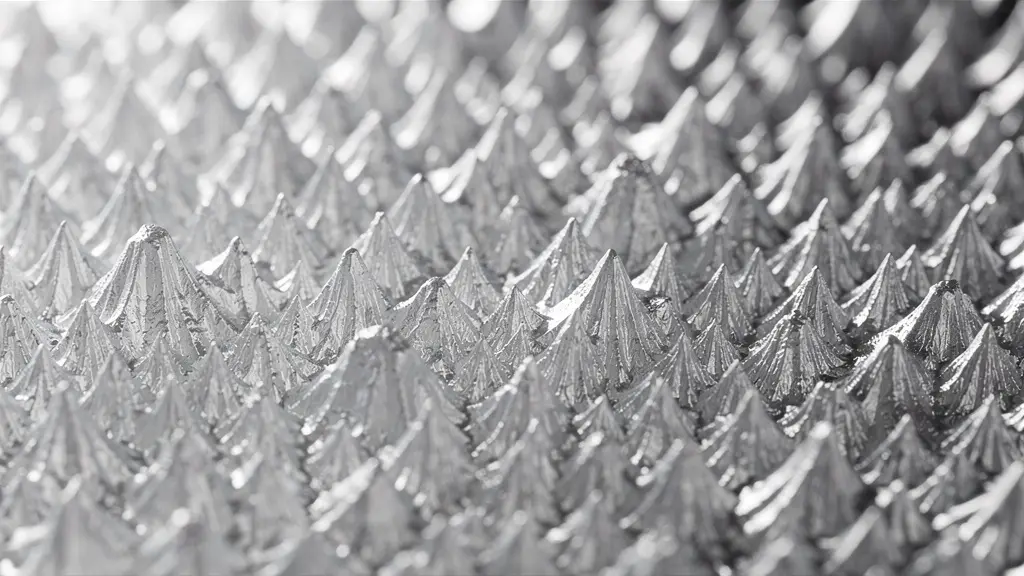
Think of your nail as a book with many thin pages. A traditional file rips the edges of the pages, leaving them frayed and open to damage. The etched glass file, however, presses and seals the edges of the pages together, creating a solid, unified block. A detailed scientific analysis confirms that the 50-100 keratin layers that compose each nail are effectively sealed by this process, preventing moisture from getting between them and causing weakness. This sealing action is what allows the nail to grow stronger and longer, as its integrity is maintained, not compromised, during shaping.
How to Clean and Sanitize a Glass File to Last a Lifetime?
A significant advantage of a well-crafted glass file is its non-porous nature. Unlike emery boards that trap dead skin and bacteria, or metal files with crevices that are difficult to clean, glass offers a perfectly smooth, impenetrable surface. This intrinsic material integrity makes it the most hygienic option available, capable of being sanitized to a medical-grade standard, ensuring it can truly last a lifetime with proper care.
For personal use, cleaning is remarkably simple: a quick wash with antibacterial soap and warm water, followed by a thorough rinse, is sufficient to remove any nail dust and keep it pristine. The file can then be air-dried or wiped with a clean cloth. Because there are no pores or absorbent materials, there is nowhere for bacteria or fungus to hide and proliferate. This is a stark contrast to disposable files, which should be discarded after a single use in a professional setting due to their inability to be properly sanitized.
The tool’s resilience extends to more rigorous professional sanitization protocols. A 2023 industry study on salon hygiene noted that glass files, alongside metal e-file bits, were the only common tools capable of withstanding all levels of professional sterilization without any degradation. This durability makes it a responsible, one-time investment, eliminating the recurring cost and waste of disposable files while offering unparalleled peace of mind regarding hygiene.
The following table outlines the various methods for cleaning and sanitizing your glass file, demonstrating its versatility for every level of hygiene required, from daily home use to professional salon environments.
| Sanitization Level | Method | Process | Time Required | Best For |
|---|---|---|---|---|
| Home Use | Soap & Water | Wash with antibacterial soap, rinse, dry thoroughly | 2-3 minutes | Personal daily use |
| Hygiene-Conscious | 70% Isopropyl Alcohol | Soak file for 10 minutes, air dry completely | 15 minutes | Shared household use |
| Professional-Grade | Barbicide Solution | Submerge in hospital-grade disinfectant for 10+ minutes | 10-15 minutes | Salon use between clients |
| Medical-Grade | Autoclave Sterilization | High pressure steam sterilization (if glass is tempered) | 20-30 minutes | Medical facilities |
Metal vs. Glass: Why Metal Files Cause Micro-Shattering at the Edge?
The primary reason users of emery boards and metal files experience splitting and peeling is a phenomenon known as micro-shattering. Metal files, and to a similar extent coarse emery boards, are aggressively abrasive. Their surfaces, composed of sharp, irregular particles, act like a saw on the nail’s edge. Instead of smoothly shaping, they catch and tear at the keratin layers, creating countless microscopic fissures and fractures along the nail’s free edge.
This damage is often invisible to the naked eye, but its cumulative effect is disastrous for nail health. These tiny cracks compromise the sealed edge of the nail, allowing water and oils to penetrate between the keratin layers, weakening the bonds and leading to delamination—what we see as peeling. Under a microscope, the difference is stark: microscopic analysis reveals that metal files create a ‘frayed rope’ appearance, while glass-filed nails show a smooth, solid, and completely sealed wall.
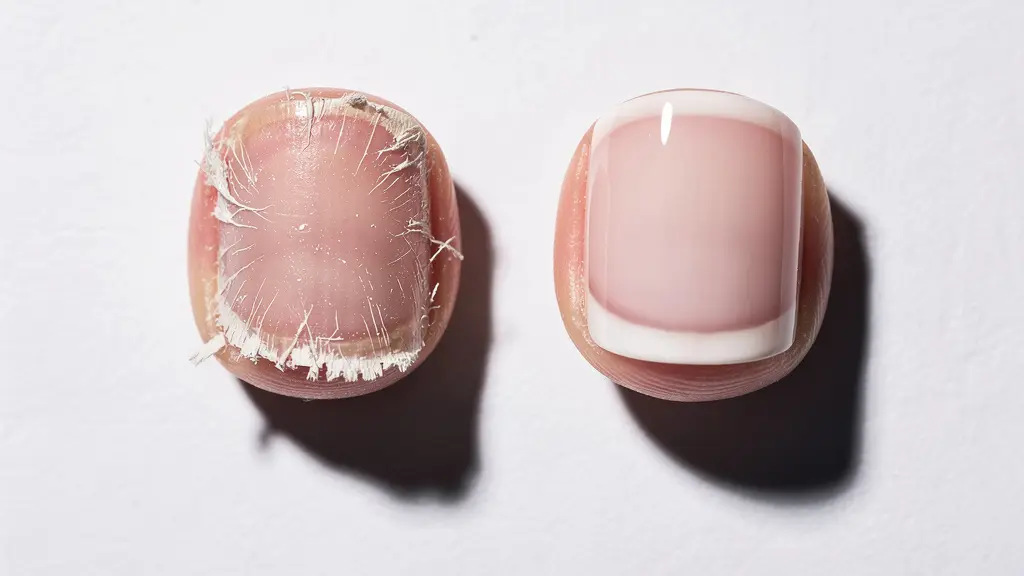
A glass file, with its uniform etched surface, prevents this damage entirely. As leading nail expert Dr. Dana Stern explains when describing her precision tool:
Unlike traditional emery boards that can cause microscopic tears and fraying, this high-tech glass file features precision-etched grit that gently contours the nail’s edge while sealing and strengthening the nail’s keratin layer
– Dr. Dana, Dr. Dana Precision Glass Nail File product description
This sealing action is not a secondary benefit; it is the primary function that sets the tool apart. By eliminating micro-shattering, the glass file doesn’t just shape the nail—it actively reinforces its structure, turning a potentially damaging act of maintenance into a therapeutic step towards stronger, healthier nails.
How to Use a Glass File in Both Directions Without Damage?
The long-held rule of “file in one direction only” is a direct consequence of the damaging nature of traditional files. With an emery board, filing in a back-and-forth motion lifts and tears the abrasive grit particles, and more importantly, lifts and tears the keratin layers of the nail itself, exacerbating the micro-shattering effect. A glass file, however, renders this rule obsolete. Its unique surface texture allows for safe and effective bi-directional filing, a feature that enhances both efficiency and precision.
Because the abrasive surface is uniform and part of the glass itself, there are no particles to tear off. The file’s texture is the same in every direction. This means you can gently glide the file back and forth across the nail tip without any risk of causing the fraying or splitting associated with lesser tools. This capability is not just a convenience; it is a testament to the superior engineering of the file’s surface.
This feature has been a game-changer for professionals. A 2024 survey of nail technicians found that bi-directional filing with glass files could reduce filing time by up to 40% while simultaneously improving the precision of their shaping work. The technique allows for more fluid, controlled movements, making it easier to achieve perfectly symmetrical shapes, whether you prefer square, oval, or almond. To master this technique:
- Start with dry, clean nails to ensure a clean filing surface.
- Hold the file at a slight angle (around 45 degrees) to the nail.
- Use gentle, controlled strokes in both directions. There’s no need to apply heavy pressure; let the file’s surface do the work.
- For curving corners, the bi-directional motion allows you to smoothly blend the shape from the center to the sides without creating harsh angles.
How to Protect Your Glass File From Breaking in Your Bag?
While a Czech glass file is an instrument of remarkable strength and longevity, it is, at its core, still glass. Its durability comes from a specialized manufacturing process. Authentic files are made from tempered glass, which, according to manufacturing specifications, undergoes a thermal hardening process at high temperatures. This makes the file shock-proof and far more resistant to drops and impacts than standard glass. However, like any fine tool, it deserves proper care and protection to ensure it lasts a lifetime.
The primary risk to a glass file is not from filing, but from improper storage. Tossing it unprotected into a purse or a drawer with other hard objects can lead to chipping or, in a worst-case scenario, a full break from a sharp impact or being bent under pressure. Fortunately, protecting your investment is simple and inexpensive. Most high-quality glass files are sold with a protective case designed for this exact purpose.
These protective sleeves or cases are essential for portability. They prevent the file from coming into direct contact with keys, cosmetics, or other items that could cause a high-impact collision. A hard case offers the ultimate protection against shocks and pressure, making it ideal for travel or carrying in a packed bag. For those who appreciate aesthetics as much as function, a velvet or suede sleeve provides excellent scratch prevention while adding a touch of elegance.
The choice of storage is a small but critical part of owning a glass file. It reflects a connoisseur’s respect for their tools and ensures that this one-time purchase truly serves for decades. The right case makes it a reliable travel companion, always ready for a quick touch-up without the risk of damage.
| Storage Type | Protection Level | Portability | Price Range | Best For |
|---|---|---|---|---|
| Hard Plastic Tube | Excellent shock absorption | Compact, fits in small bags | $2-5 | Daily carry in purses |
| Velvet/Suede Sleeve | Good scratch prevention | Ultra-thin profile | $1-3 | Makeup bags, desk drawers |
| Rigid Magnetic Case | Maximum protection | Slightly bulkier | $5-10 | Travel, professional kits |
| DIY Alternative | Variable | Depends on choice | Free | Cleaned mascara tube, pen case |
How to File the Side Walls Without Cutting into the Stress Point?
One of the most common and damaging filing mistakes is being too aggressive on the side walls of the nail. This often leads to filing into the “stress point”—the area on each side where the free edge of the nail meets the nail bed. Weakening this critical structural point is a primary cause of breaks and tears, especially as nails grow longer. A glass file’s precision is ideal for this delicate work, but the correct technique is paramount.
The goal is to straighten the side wall (or “lateral edge”) without removing the supporting structure. This requires isolating the nail edge from the surrounding skin to gain clear access. A professional technique, often called the “pinch and pull,” is perfect for this. It involves using the thumb and index finger of your opposite hand to gently pull the skin of the finger pad away from the side of the nail. This exposes the entire edge that needs to be filed, allowing you to work with precision without touching the delicate skin or the vital stress point.
Once the edge is exposed, the file should be held parallel to the direction of nail growth. Use light, deliberate strokes, moving from the cuticle area towards the tip. Avoid a see-saw motion perpendicular to the nail, as this is how you inadvertently file down the stress point. The fine, controlled abrasion of the glass file is perfectly suited for this task, removing minimal material with each stroke and allowing you to refine the line with unparalleled accuracy. Mastering this technique not only creates a more elegant and slender nail shape but also preserves the architectural integrity of the nail, preventing future breaks.
Your 5-Point Checklist for Flawless Sidewalls
- Expose the Edge: Gently pinch the finger pad and pull the skin away from the nail’s side wall. Can you see the entire lateral edge clearly?
- Align the Tool: Position your glass file perfectly parallel to the nail’s growth line, not angled or perpendicular.
- Control the Angle: Ensure you are using a very shallow angle to the nail plate, never digging into the corner where the stress point lives.
- Perfect the Stroke: Use gentle, directional strokes, moving from the back of the nail towards the free edge. Avoid aggressive back-and-forth sawing.
- Respect the Boundary: Visually confirm you are only filing the free edge and not venturing past the point where the nail is attached to the nail bed.
How Many Layers of Keratin Do You Remove with a 240 Grit File?
The question of how many keratin layers a file removes is rooted in a misunderstanding of both nail structure and how a glass file functions. The concept of “grit,” typically a number like 240, refers to the density of abrasive particles glued onto a surface. A glass file, however, operates on a completely different principle. As the experts at Germanikure succinctly put it:
Glass nail files have no grit because there is nothing glued to them—the filing surface is so fine and uniform that it actually polishes the edge of your nail
– Germanikure, Glass Files vs. Metal Files comparison guide
This is a crucial distinction. The nail’s keratin “layers” are not like sheets of paper that can be peeled off one by one. They are tightly bonded protein structures. A glass file’s “240 grit equivalent” doesn’t remove a discrete number of layers. Instead, its uniformly etched surface works by grinding the keratin into microscopic dust particles, a process measured in microns, not layers.
Research into the mechanics of nail filing reveals that the goal is controlled material removal. The “grit” of a glass file is fine enough to provide this control, efficiently shaping the nail while being too fine to accidentally gouge or tear the keratin structure. Unlike a coarse emery board that can remove a chunk of nail in one misplaced stroke, the glass file offers a safety net. Its consistent surface ensures that you remove material evenly across the entire edge. This prevents the creation of thin spots, which are weak points that inevitably lead to breaks. Therefore, the glass file removes precisely the amount of keratin material needed to achieve the desired shape—and nothing more—while simultaneously sealing the edge to preserve strength.
Key takeaways
- The etched surface of a Czech glass file seals keratin layers, unlike metal or emery boards which tear them, preventing splits and peels.
- True glass files are non-porous and can be fully sterilized to medical-grade standards, making them the most hygienic and durable option for nail care.
- Proper technique, like safe bi-directional filing and protecting stress points, is unlocked by the file’s superior design, leading to healthier, stronger nails over time.
How to Achieve a “Wet Look” Shine Using Only a Chamois Buffer?
The ultimate sign of a healthy, well-cared-for nail is a natural, high-gloss shine that looks “wet” even when completely dry. This finish is often pursued with layers of top coats and polishing treatments, but the most refined and impressive shine is one that comes from the nail itself. This is achievable with a simple, two-part system: a perfectly sealed nail edge from a glass file and the gentle friction of a chamois buffer.
The process begins where filing ends. A glass file creates an impeccably smooth and sealed foundation. As professional manicurists report, the consistent fine-ground surface of a glass file provides a superior starting point for buffing compared to the rougher edge left by emery boards. This perfectly smooth canvas is essential for the next step, as any imperfections would simply be magnified by buffing.
The secret to a true wet-look shine lies in drawing the nail’s own natural oils to the surface. The technique is a world away from aggressive three-way buffing blocks that strip the nail plate. Instead, it involves gentle friction from a soft, natural chamois leather buffer. By applying a high-quality nail oil and then buffing with quick, light strokes, you create a small amount of heat. This warmth helps the nail plate absorb the oil and simultaneously draws its own oils to the surface, creating a durable, long-lasting, and intensely brilliant shine without a drop of polish. Follow these steps for the ultimate natural finish:
- Start with the perfect foundation: Ensure your nails are shaped and sealed with a high-quality glass file.
- Nourish the nail: Apply a high-quality nail oil and allow it to absorb for a few minutes.
- Use a chamois buffer: Using a clean chamois buffer, apply gentle pressure and use quick, consistent strokes in one direction along the nail.
- Generate gentle heat: The light friction will generate warmth, which is key to drawing natural oils to the surface.
- Finish with flair: Conclude with a few circular motions on the nail tip to maximize the reflective shine.
Embracing a Czech glass file is more than a simple product swap; it’s an adoption of a new philosophy. It is the conscious choice to treat your nails not as a surface to be covered, but as a structure to be cultivated. By understanding and applying the principles of material science, controlled abrasion, and restorative technique, you elevate your manicure from a routine to a ritual. The result is not just beautifully shaped nails, but nails that are intrinsically healthier, stronger, and more resilient. The initial investment in a quality tool pays dividends for a lifetime, ending the cycle of damage and waste. For the true connoisseur of nail care, there is no more logical or satisfying step to take.