Translating runway nails for the office is an act of editorial curation, not just dilution.
- Deconstruct high-fashion trends into their core elements: a specific shape, a single color, or a unique texture.
- Use « micro-dosing » techniques, like micro-accents or negative space, to introduce bold ideas in a sophisticated, wearable way.
- Adapt extreme shapes into practical « cousins » like the reinforced almond or squoval, confirmed through a client-focused consultation.
Recommendation: Use a 5-minute sketching consultation to co-create the final design, transforming the client into a collaborator and ensuring their complete satisfaction with the custom, wearable art.
You see it every fashion week: spectacular, gravity-defying nails that are more sculpture than manicure. The chrome stilettos, the 3D embellishments, the avant-garde textures. As a creative nail technician, you feel a surge of inspiration. Then comes the reality check. How can any of this translate to your Monday morning client, an attorney who spends eight hours typing and needs to look polished and professional for a board meeting? The default advice often feels uninspired: « just do an accent nail » or « use a nude version of the color. » These solutions simplify, but they don’t truly translate; they erase the very essence of the trend you found so exciting.
This approach leaves both you and your client feeling underwhelmed. You miss the creative challenge, and the client gets a « safe » but forgettable manicure. The gap between high fashion’s conceptual artistry and the daily-wear reality of a professional’s life seems impossibly wide. But what if the secret wasn’t about watering down a trend until it’s unrecognizable? What if, instead, it was about a strategic process of deconstruction? The real art lies in becoming a trend translator, a curator who can analyze a complex runway look, isolate its most compelling element—its wearable essence—and rebuild it into a sophisticated, practical style.
This guide provides a framework for precisely that. It moves beyond simple simplification to offer concrete strategies for dissecting trends into their core components of shape, color, and texture. You’ll learn how to « micro-dose » daring ideas, create fabric-like finishes, and use negative space to make bold designs feel light and office-appropriate. We’ll also explore the business side, from understanding trend timelines to mastering the 5-minute consultation sketch that turns a client’s hesitation into enthusiastic collaboration. It’s time to stop diluting and start curating.
This article provides a complete framework for transforming high-fashion concepts into profitable, client-pleasing salon services. The following sections break down each step of this translation process, from adapting shapes to mastering the art of the quick design consultation.
Table of Contents: A Guide to Translating Runway Nail Art
- Squoval vs. Stiletto: Adapting Extreme Shapes for Typing Jobs
- Micro-Accents: Using Runway Colors in Small Doses
- Creating a « Fabric » Look with Matte and Powder Techniques
- How Fast Do Runway Trends Hit Mainstream Salons?
- Why « Runway » Doesn’t Always Mean « Instagrammable »?
- Micro-French: The Minimalist Trend Replacing the Classic White Tip
- Negative Space in Extreme Shapes: Balancing Bulk with Airiness
- How to Sketch Custom Sets During a 5-Minute Consultation?
Squoval vs. Stiletto: Adapting Extreme Shapes for Typing Jobs
The most immediate barrier between runway and reality is nail shape. A sharp, dramatic stiletto or an elongated coffin shape, while stunning, is the enemy of productivity for anyone who types for a living. The solution isn’t to default to a short, round nail and abandon all style. It’s about finding the « practical cousin » of the extreme shape. For a stiletto, the answer is a reinforced almond; for a coffin, it’s a tapered squoval. These shapes retain a sense of elegance and length while offering greater durability and a more keyboard-friendly profile. The key is to keep the free edge extension modest, ideally no more than 3-5 millimeters past the fingertip, to ensure functionality.
The structure of the nail is as important as its length. For clients who are « hard typers »—those who strike keys with force—a slightly thicker apex on an almond or squoval shape can provide the necessary reinforcement to prevent breaks, without adding visible bulk. Educating the client on technique is also part of the service. Many professionals find they can adapt to longer nails by adjusting their typing posture, using the pads of their fingers more than the tips.
Case Study: Logitech Professional’s Real-World Experience
Maude Emery, Head of Events at Logitech, provides a powerful example of adaptation. Instead of shortening her nails, she changed her technique, treating them as extensions of her fingers. She found that low, flat keyboards worked best and that keycaps with a matte finish were crucial, as they prevented her nails from sliding into the gaps between keys. This insight is invaluable for techs: you can advise clients not just on their nails, but on small environmental changes that support their style.
To truly tailor the shape to the client, a quick diagnostic during the consultation is essential. By asking a few targeted questions, you can move from a generic recommendation to a truly customized, functional design that respects both their job and their aesthetic desires.
Your Action Plan: The Typing Test Consultation
- Ask ‘Are you a hard or soft typer?’ to determine the necessary structural reinforcement and impact resistance.
- Identify ‘Do your fingertips or pads hit the keys?’ to understand their natural typing angle and predict stress points on the nail.
- Recommend keeping nails 3-5 millimeters past the fingertip for the optimal balance between stylish length and typing ability.
- For heavy keyboard users, suggest short round or squoval shapes that barely extend past the fingertip as the safest, most durable option.
- Educate them on the finish: slightly beveled edges on a squoval nail significantly reduce the risk of chipping compared to sharp, squared-off corners.
Micro-Accents: Using Runway Colors in Small Doses
Runway shows often feature audacious colors—neons, metallics, and deep, vampy shades—that can feel overwhelming for a corporate environment. The key to translating these bold palettes is not dilution, but micro-dosing. Instead of a full set of chrome nails, consider a sliver of chrome in a reverse French manicure. Instead of a neon orange, use that color for an ultra-fine line in a minimalist design. This technique allows you to capture the energy and modernity of a trend color without sacrificing professionalism. The beauty of a micro-accent is its subtlety; it’s a flash of personality that’s visible upon closer inspection but doesn’t shout across a conference room.
This approach works by isolating the color as the single trend element. By keeping the nail shape conservative (like a soft squoval) and the base neutral (a sheer nude or clear coat), a tiny pop of an unexpected color feels intentional and chic, not out of place. This is the essence of elemental curation: choosing one hero feature and letting it shine against a quiet, supportive background.
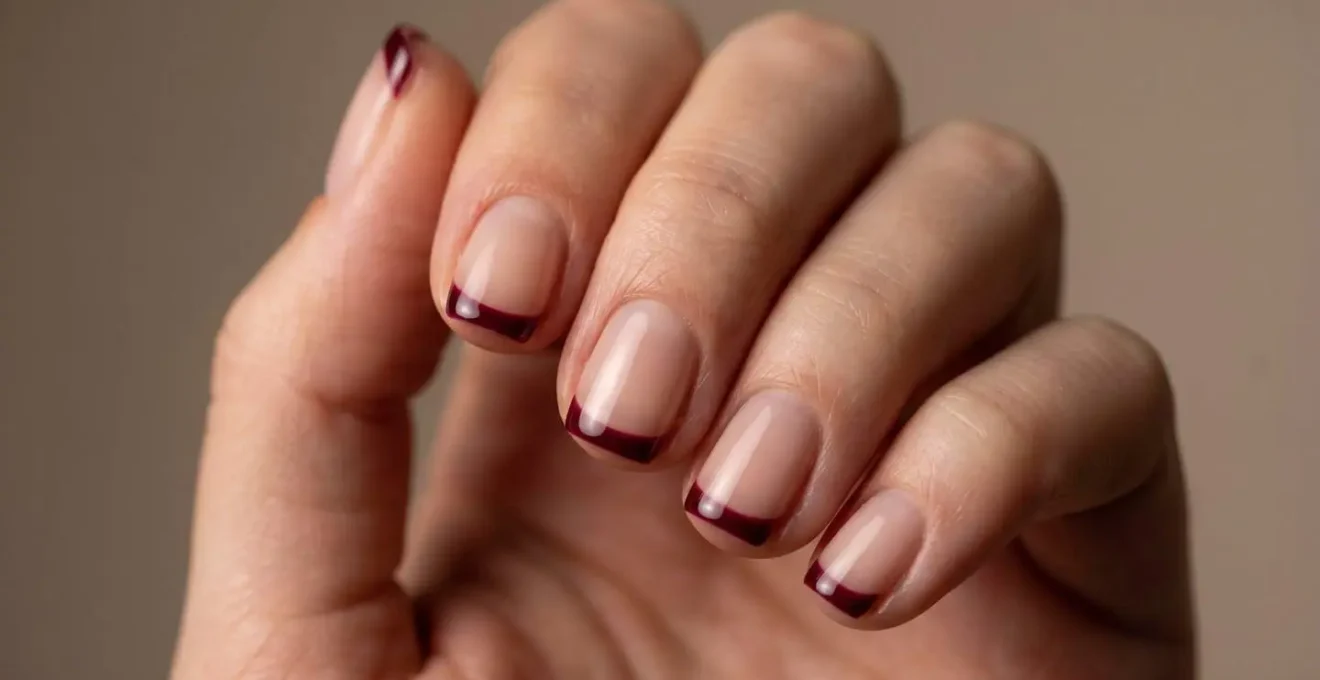
The micro-French manicure is a perfect vehicle for this. As veteran cosmetologist Lindsay Worthen of the Ogle School notes, it’s a style prized for its sophisticated subtlety. Her praise highlights exactly why this technique is so effective for office-appropriate trend translation.
I love micro French tips because they look so sleek, sophisticated, and subtle.
– Lindsay Worthen, Ogle School veteran cosmetologist and beauty educator
By applying a runway color as a razor-thin line at the tip, you deliver a look that is polished, modern, and perfectly suited for the professional who appreciates high fashion but is bound by a dress code. It’s a whisper of a trend, not a scream.
Creating a « Fabric » Look with Matte and Powder Techniques
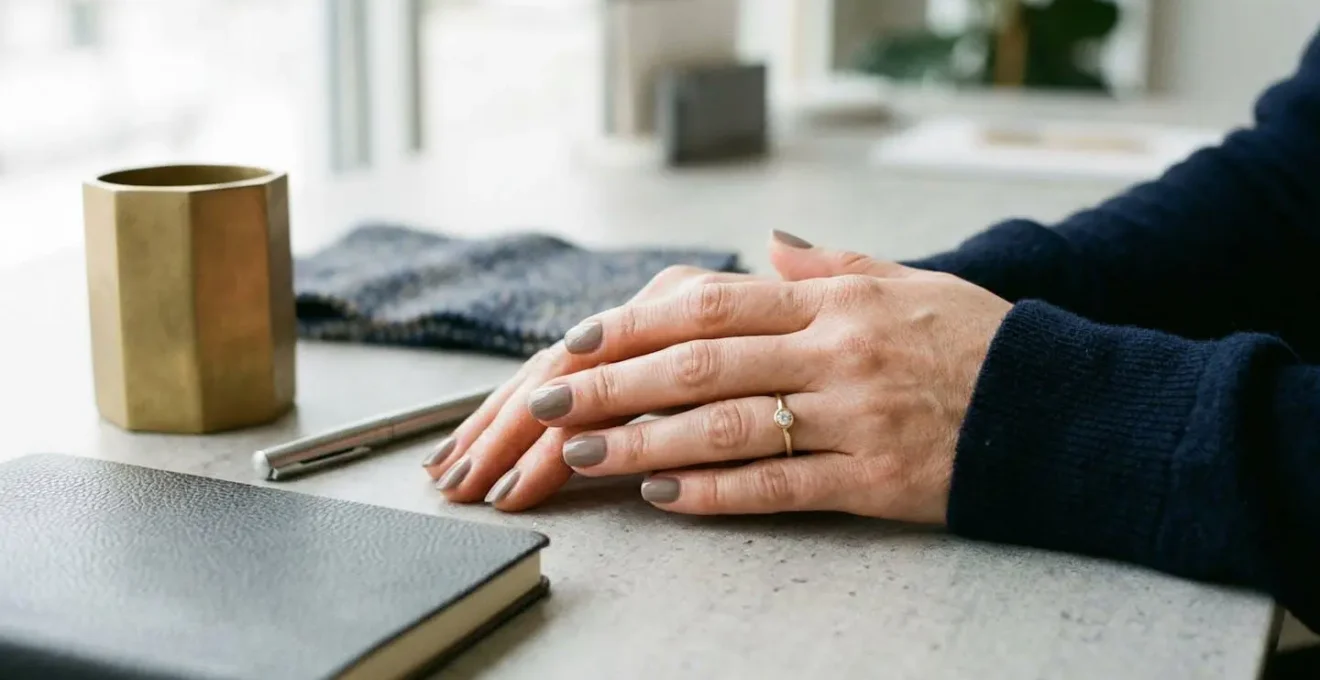
Beyond shape and color, texture is the third frontier of trend translation. Fashion collections are built around fabrics—tweed, satin, velvet, leather—and a skilled technician can evoke these materials directly on the nail. This is a form of conceptual translation, where you’re not copying a look, but interpreting a feeling or a material finish. A matte top coat is your most powerful tool here. A simple greige or taupe nail is instantly elevated to a new level of sophistication with a velvety matte finish, suggesting the texture of fine suede or cashmere.
Powders offer another path to textural complexity. By burnishing a pearl or chrome powder over a non-wipe top coat, you can create a « satin » effect that captures light with a soft, liquid-like luster. This is far more subdued than a glitter polish but offers a dynamic finish that feels luxurious and modern. For a more literal interpretation, fine lines of gel paint intersecting over a matte base can mimic the weave of tweed, especially with a light dusting of ultra-fine, tonal glitter to suggest textile thread.
These « fabric » effects embody the idea of « stealth wealth » in nail design. They are not loud or ostentatious, but their unique texture is noticeable up close, conveying a sense of quality and attention to detail. This is what many professional clients are looking for: a way to express personal style that signals sophistication without demanding attention. Here are a few formulas for translating runway textures into wearable nail art:
- Runway Tweed: Apply a matte base coat, then use a fine liner brush to create intersecting lines with gel paint. Before curing, sprinkle with ultra-fine glitter for a subtle textile shimmer.
- Runway Satin: Apply a non-wipe top coat and cure. Vigorously burnish a chrome or pearl powder onto the surface to achieve a lustrous, fabric-like sheen.
- Matte Sophistication: Use a classic professional shade like dusty rose, greige, or taupe, but finish with a high-quality matte top coat for an instantly modern and clean edge.
- Velvet Texture: For a more daring client, velvet flocking powder can create a literal fuzzy texture, but it must be expertly encapsulated to prevent it from collecting dirt and looking unkempt.
How Fast Do Runway Trends Hit Mainstream Salons?
To be an effective trend translator, you must also be a savvy trend forecaster. Understanding the lifecycle of a fashion trend helps you manage client expectations and position yourself as an expert. A look that debuts on the Paris runway doesn’t appear in suburban salons the next week. In fact, a comprehensive fashion industry study indicates it often takes two to three years for a high-fashion concept to fully trickle down to the mass market. As a nail technician, you operate in a crucial middle ground, able to introduce these trends to early adopters long before they become mainstream.
The journey from a conceptual runway idea to a widely requested salon service follows a predictable pattern. It begins with innovators—fashion editors and celebrities—who wear the look first. Next, early adopters, like high-profile celebrity manicurists and influencers, showcase the style on social media, creating initial buzz. This is typically when your most fashion-forward clients might start asking questions. The trend hits its peak when fast-fashion brands and mainstream retailers begin to replicate the look, making it widely available and recognizable.
This diffusion timeline means you can guide your clients. When a client shows you a picture of an avant-garde nail from a recent show, you can explain where that look sits in the trend cycle and propose a more wearable « early majority » adaptation. The following table, based on analysis of the fashion adoption cycle, breaks down this timeline, giving you a powerful tool for client consultations.
| Stage | Timeline | Adopter Type | Characteristics |
|---|---|---|---|
| Introduction | Month 0 | Innovators | Runway debut, celebrities and fashion editors, limited production, high prices |
| Rise | Month 1-2 | Early Adopters | Celebrity manicurists, influencers showcase style, high social media visibility |
| Acceptance | Month 3-4 | Early Majority | Fast-fashion brands reproduce, retail stores stock designs, mainstream client requests |
| Peak | Month 6-12 | Late Majority | Available everywhere, mass production, discounts begin |
| Decline | Year 2+ | Laggards | Considered outdated, production discontinued, clearance sales |
By understanding this lifecycle, you can curate your service offerings, introducing trends at the perfect moment—when they feel fresh and exciting, but not so alien that they intimidate your clientele.
Why « Runway » Doesn’t Always Mean « Instagrammable »?
A critical mistake in trend translation is confusing the purpose of a runway look with that of a viral Instagram design. They are two different languages serving two different functions. Understanding this distinction is key to liberating yourself from the pressure of creating overly complex, impractical art for your everyday clients. The runway is about communicating a concept, while Instagram is often about demonstrating technical skill. This is a crucial insight for any nail artist looking to bridge the gap between high fashion and the salon.
A recent study on runway influence and adaptation frames this difference perfectly, providing a clear and powerful distinction that every technician should internalize.
Runway = Conceptual (communicates a designer’s vision, often abstract). Instagram = Demonstrative (showcases technical skill and visual density for virality).
– Fashion Industry Analysis, Runway Influence and Fashion Adaptation Study
A three-inch-long nail with a detailed landscape painting on it is « Instagrammable » because it showcases incredible technical prowess and is designed to stop a user’s scroll. A simple, perfectly executed « wet look » nail with just a clear gel, as seen on many runways, is conceptual. It’s not technically complex, but it communicates a mood of minimalism and freshness. Your client doesn’t need the Instagram version; she needs the wearable essence of the runway concept. The goal isn’t to replicate a viral photo; it’s to extract the core idea and make it work for her life.
Fashion adaptation theory shows there are three pathways for a trend to move from runway to retail: direct translation (an oversized blazer appears in stores as an oversized blazer), concept adaptation (a runway theme of « metallics » becomes subtle silver hardware on a handbag), and styling reinterpretation (the way a runway look is layered inspires how people style their own clothes). As a nail tech, your job is to master concept adaptation and styling reinterpretation. You are extracting the idea—a color, a texture, a mood—not replicating the intimidating original garment, or in this case, the viral nail set.
Micro-French: The Minimalist Trend Replacing the Classic White Tip
The micro-French manicure is arguably the single most effective technique for translating runway trends into an office-appropriate format. It embodies the principle of « micro-dosing » by containing a bold idea within a tiny, controlled space. It takes the classic, universally accepted structure of a French manicure and gives it a modern, high-fashion update. The defining characteristic is its precision: the tip’s colored line is, according to professional nail technique standards, just 1-2 millimeters wide. This ultra-thin line reads as a deliberate, sophisticated detail rather than a block of color.
This subtlety is its strength. It allows for the use of colors that would be too daring in a full-coverage manicure. A deep burgundy, a sharp black, or even a metallic silver can be used for the micro-tip, providing a flash of personality that aligns with a client’s professional identity. This is where you, as the trend translator, can offer a truly bespoke service. By connecting specific colors to different professions, you demonstrate a deep understanding of your client’s world.
Consider this professional palette for your next micro-French consultation:
- Sharp black tip: Ideal for architects, designers, and anyone in a creative field where precision and structural thinking are valued.
- Deep burgundy tip: A perfect choice for lawyers or finance professionals, as it signals authority and traditional professionalism with a modern twist.
- Metallic silver tip: Suited for tech professionals or entrepreneurs, reflecting innovation, modernity, and a forward-thinking mindset.
- Deep grape or muted purple tip: A great balance for those in marketing or HR, balancing professionalism with approachability and personality.
- Classic nude with a barely-there micro-line: The ultimate « stealth » option for the most conservative corporate environments.
By tailoring the color to the client’s career, the micro-French moves from a simple trend to a powerful tool of personal branding. It’s a manicure that says « I pay attention to detail » and « I have great taste, » which are valuable messages in any professional setting.
Negative Space in Extreme Shapes: Balancing Bulk with Airiness
What if your client loves the drama of a longer, more structured nail but is worried it will look too heavy or bulky for the office? The answer is negative space. This design technique, which involves leaving parts of the natural nail unpolished, is the ultimate tool for balancing bulk with airiness. It creates visual interest and a sense of lightness, making even more substantial nail shapes feel sophisticated and modern. A long almond nail, for instance, can feel imposing with full-color coverage. But with a « lunula window » (the half-moon at the cuticle left bare) or a « racing stripe » (a clear vertical line running down the center), the same nail suddenly feels lighter and more artistic.
Negative space works by playing with perception. The transparent sections break up the solid block of color, drawing the eye and creating a delicate interplay between the polished and natural parts of the nail. This is especially effective for office environments because it reads as intentional and minimalist, even when applied to a more dramatic shape. It’s a design that whispers « art » rather than screaming « adornment. » As the NSI Australia 2025 Nail Trend Forecast highlights, this is not a fleeting trend but a lasting approach to modern nail art.
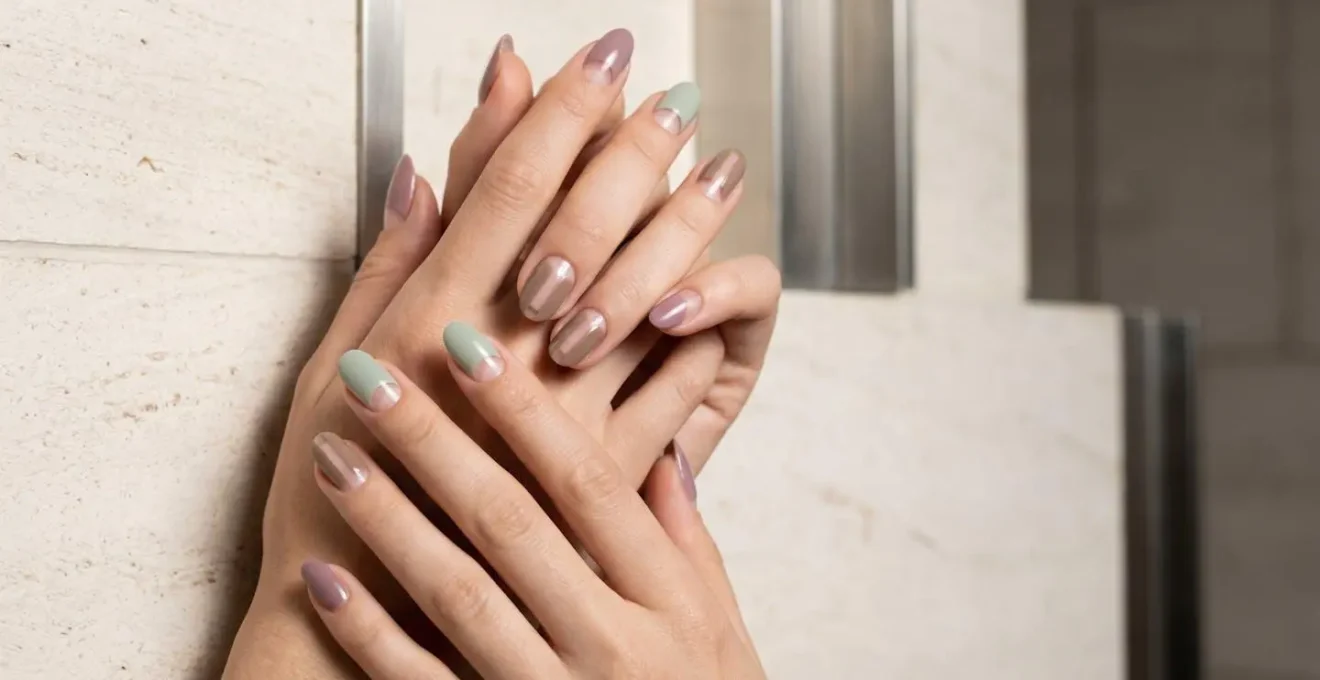
The forecast states, « Negative space nail art isn’t going anywhere in 2025, offering a minimalist approach with natural nail exposure while incorporating bold and abstract designs for a fresh, modern look. » This longevity confirms that investing your time in mastering negative space techniques is a wise business decision. It provides a consistent solution for clients who want to push their style boundaries without sacrificing an ounce of professionalism.
From a simple clear half-moon to more complex geometric cutouts, negative space allows you to offer a wide range of custom designs that feel both personal and polished. It’s the perfect way to give a client the drama she wants with the elegance she needs.
Key Takeaways
- Effective trend translation is about deconstruction, not dilution. Isolate a single element—shape, color, or texture—to make it wearable.
- Use micro-dosing techniques like the micro-French or negative space to introduce bold runway concepts in a sophisticated, office-appropriate manner.
- The 5-minute consultation sketch is a crucial business tool that transforms clients into collaborators, ensuring satisfaction and enabling you to sell higher-value, custom designs.
How to Sketch Custom Sets During a 5-Minute Consultation?
All the theory of trend translation crystallizes in one critical moment: the consultation. This is where you turn abstract ideas into a concrete plan your client can see and approve. The fear for many techs is that this takes too much time, but a highly effective design sketch can be done in under five minutes using a simple, structured method. This brief, collaborative process is the single most important step in building client trust and ensuring they are thrilled with the final result. It eliminates uncertainty and positions you as a true design partner, not just a service provider.
The goal is not to create a fine art drawing, but to quickly visualize the placement, proportions, and key elements of the design. Using pre-printed templates of different nail shapes (round, squoval, almond, etc.) is a game-changer. It saves time and allows the client to immediately ground the design in a shape they recognize. From there, the « 3-Stroke Sketching Method » provides a fast and clear path to a final concept.
Here’s how it works:
- Stroke 1: Confirm the Shape. Hand the client the template sheet and have them point to their preferred shape. Circle it. This is your canvas.
- Stroke 2: Block in the Main Design. With a pencil, quickly shade or outline the primary design area. Is it a French tip? A half-moon at the cuticle? An ombré fade? This single stroke establishes the foundation of the look.
- Stroke 3: Add the Key Detail. Now, add the one defining element discussed. Draw the fine micro-line, place a dot for a small gem, shade the negative space section, or make a squiggly line to indicate a texture.
As you sketch, use a collaborative script: « So, if we use the matte texture we talked about, and add just one fine silver line right here… how does that feel to you? » This simple question transforms the client from a passive recipient into an active co-creator. They are now invested in the design. This process ensures there are no surprises at the end of the service, leading to higher satisfaction and a greater willingness to pay for custom art.
Start implementing this 3-stroke sketching method in your next consultation. You will not only improve your efficiency but also elevate your status from a nail technician to a trusted trend curator your clients can’t live without.