The key to handling viral nail trends isn’t faster replication, but a strategic system to monetize the overwhelming demand.
- Trends follow a predictable six-stage lifecycle, allowing for proactive inventory and service planning before the hype dies.
- Effective marketing requires tiered hashtag and content strategies to differentiate between attracting followers and booking paying clients.
Recommendation: Stop reactively chasing trends and start managing them as predictable business opportunities by analyzing their lifecycle and targeting conversion-focused marketing.
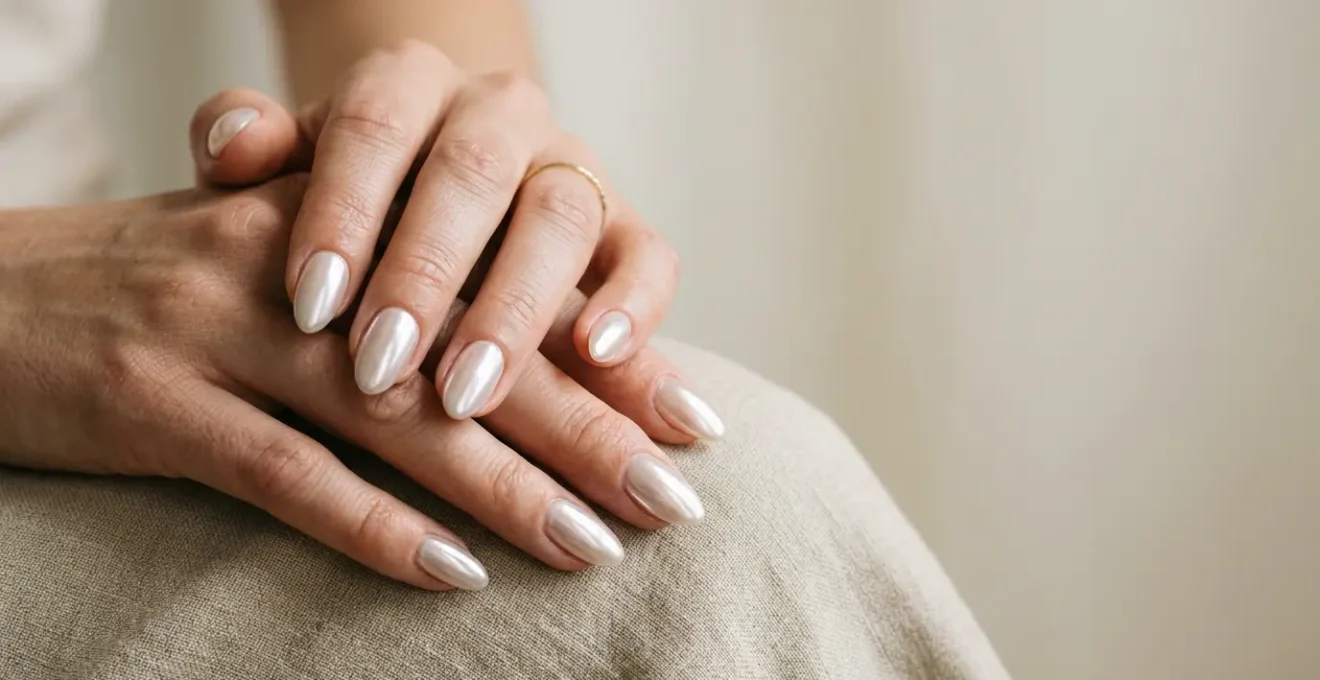
That feeling is instantly recognizable. You open your DMs, and suddenly, 20 clients in one week are all asking for the exact same thing: « Can you do the Hailey Bieber nails? » The ‘glazed donut’ chrome look explodes, and your appointment book becomes a ground-zero for a viral phenomenon. The initial reaction is often a frantic scramble to find the right products, master the technique, and keep up with demand. The common advice is simple: just buy the chrome powder and practice.
But this reactive approach is a recipe for burnout and missed opportunity. Viral moments, whether it’s ‘glazed donut’ chrome, the resurgence of Y2K butterfly art, or the explosive popularity of Barbiecore pink, are more than just creative requests. They are powerful market signals. For the savvy nail technician, they represent a predictable wave of demand that can be surfed for significant profit, rather than a tide that threatens to pull you under. The challenge isn’t just replicating the look; it’s building a business system around it.
But what if the real key wasn’t simply reacting faster, but understanding the anatomy of the trend itself? What if you could anticipate its peak, manage your inventory to avoid waste, and use social media not just to showcase your art but to strategically convert viewers into paying clients? This isn’t about working harder; it’s about working smarter by becoming a trend analyst for your own business.
This guide moves beyond the basic tutorial. We will deconstruct the lifecycle of a viral trend, provide a framework for making smart purchasing decisions, and reveal the content strategies that turn fleeting online hype into a stable, profitable part of your service menu. It’s time to transform the chaos of viral requests into a predictable engine for growth.
To navigate this landscape effectively, this article breaks down the key strategic areas. The following summary outlines how to master everything from trend prediction and inventory management to technical execution and social media engagement, turning viral moments into a sustainable business advantage.
Summary: The ‘Hailey Bieber’ Effect: A Strategic Guide for Nail Professionals
- Finding Affordable Alternatives to Celebrity Nail Products
- How Long Will a Viral Trend Last Before It Becomes « Cringe »?
- Y2K Aesthetics: Why Are Gen Z Clients Asking for Butterflies?
- Barbiecore Pink: Preparing Your Stock for Blockbuster Releases
- Which Hashtags Actually Attract Clients Searching for Trends?
- How to Seal Chrome Powder so It Doesn’t Chip or Lose Its Mirror Effect?
- The « Stamper French »: Is It Really as Easy as TikTok Says?
- Why Your Nail Photos Don’t Get Engagement Despite Good Art?
Finding Affordable Alternatives to Celebrity Nail Products
When a celebrity-endorsed trend like ‘glazed donut’ nails hits, the specific products used can sell out instantly or carry a premium price tag. For a technician managing costs, the pressure to buy brand-name items is immense, but not always necessary. The secret to profitability lies in knowing where to invest (splurge) and where to economize (save) without compromising the final look. The foundation and finish are paramount; a high-quality, professional-grade non-wipe top coat is non-negotiable for achieving that flawless mirror effect and ensuring longevity.
However, the chrome powder itself offers significant savings. The visual difference between a budget-friendly and a premium chrome powder is often negligible to the client, especially when applied correctly. Similarly, the gel polish base color is largely obscured by the chrome effect, making it an ideal area to use more cost-effective brands from your existing stock. A one-time investment in a powerful, reliable LED/UV lamp is crucial for proper curing, which directly impacts the chrome’s adhesion and durability. This strategic allocation of resources allows you to deliver a high-end, trendy look while protecting your profit margins.
The table below breaks down a strategic purchasing plan for replicating chrome nail trends, helping you decide where to invest for quality and where to save on costs.
| Product Category | Investment Level | Why It Matters | Budget Option Example | Premium Option Example |
|---|---|---|---|---|
| Base & Top Coats | Splurge | Critical for longevity and chrome adhesion | Aprés Non-Wipe Top Coat | OPI Stay Shiny Top Coat |
| Chrome Powder | Save | Similar mirror effect across price points | Suliliy White Pearl Chrome Powder | OPI Chrome Effects Tin Man Can |
| Gel Polish Base Color | Save | Chrome covers most of the base shade | Generic gel polish | OPI Funny Bunny |
| LED/UV Lamp | Splurge (one-time) | Proper curing prevents lifting and ensures chrome sets correctly | Basic 36W LED | Professional 60W dual-wavelength |
| Application Tools | Save | Disposable sponges work as well as silicone tools | Disposable eyeshadow applicators | Branded silicone applicators |
How Long Will a Viral Trend Last Before It Becomes « Cringe »?
Investing heavily in a viral trend feels risky for one reason: its lifespan is notoriously short. What is a must-have one month can be labeled « cringe » or « dated » the next. This rapid cycle creates inventory risk and makes it difficult to know when to lean in versus when to pull back. However, viral trends are not random; they follow a predictable pattern. Understanding this lifecycle is the most powerful tool for a nail technician, transforming you from a reactive order-taker into a proactive trend manager. The key is to identify which stage a trend is in to make informed business decisions.
Trends move through a six-stage lifecycle, from niche emergence to mass-market fatigue. The « Hailey Bieber » effect, for example, started with innovators (celebrities and high-fashion nail artists), was amplified by influencers (mainstreaming), and hit its peak when DIY kits became available everywhere. The final stages—criticism and discard—are inevitable as oversaturation leads trendsetters to reject it. In fact, recent data from CreatorIQ shows that top beauty launches in 2023 garnered significantly less monthly earned media value than those in 2022, suggesting the pace of trend burnout is accelerating.
By monitoring indicators at each stage—like specific hashtags, media coverage, and the type of content being created—you can gauge whether a trend has legs or is on its last breath. This allows you to strategically time your promotions, manage inventory, and even start introducing the « next big thing » to your most trend-savvy clients just as the current one begins to fade.
- Stage 1: Emergence — The trend debuts among innovators like celebrity nail artists. You’ll see it on professional accounts with niche hashtags.
- Stage 2: Mainstreaming — Early adopters, primarily beauty influencers, amplify the trend. It starts appearing on Instagram’s Explore page and in YouTube tutorials.
- Stage 3: Normalization/Peak — Mass-market adoption occurs. Drugstore brands launch their own versions, and mainstream media like Vogue covers it. This is the maximum profit window.
- Stage 4: Criticism/Fatigue — Oversaturation leads to backlash. Parody content emerges on TikTok, and search interest plateaus.
- Stage 5: Discard — Trendsetters actively reject the look, labeling it as ‘dated’ or ‘cringe’ on social media.
- Stage 6: Retrospective — Years later, the trend may see a nostalgic revival.
Y2K Aesthetics: Why Are Gen Z Clients Asking for Butterflies?
If you’ve noticed a sudden influx of requests for butterfly decals, chunky glitter, and vibrant, almost-holographic colors, you’re witnessing the full-force return of Y2K aesthetics, driven primarily by Gen Z clients. This isn’t just a fleeting nostalgic whim; it’s a powerful form of self-expression rooted in a desire for optimism, individuality, and a rejection of the minimalist « clean girl » aesthetic that dominated recent years. The butterfly, in particular, symbolizes transformation, freedom, and a playful spirit that resonates deeply with this generation.
This trend’s power is quantifiable; Google’s Year in Search data revealed a staggering 4,700% increase in searches for ‘Y2K theme party’ and massive weekly search volumes for Y2K fashion, with beauty trends following suit. For Gen Z, beauty choices are a core part of their identity. As Attest Research highlights in their Gen Z Beauty Trends survey,
Gen Z beauty choices are tied to self-expression and individuality, with 41.7% saying they mix trends with their personal style and 27.9% creating their own unique look regardless of trends.
– Attest Research, Gen Z Beauty Trends 2025 Survey
This insight is critical for nail technicians. When a Gen Z client asks for butterflies, they aren’t just asking for a decal; they’re asking for a piece of personalized, maximalist art that feels both nostalgic and uniquely theirs. Offering customizable options—different color-shifting chromes, iridescent glitters, or hand-painted details—allows you to tap into this desire for individuality, command a higher price for « custom art, » and position your salon as a go-to destination for creative expression, not just trend replication.
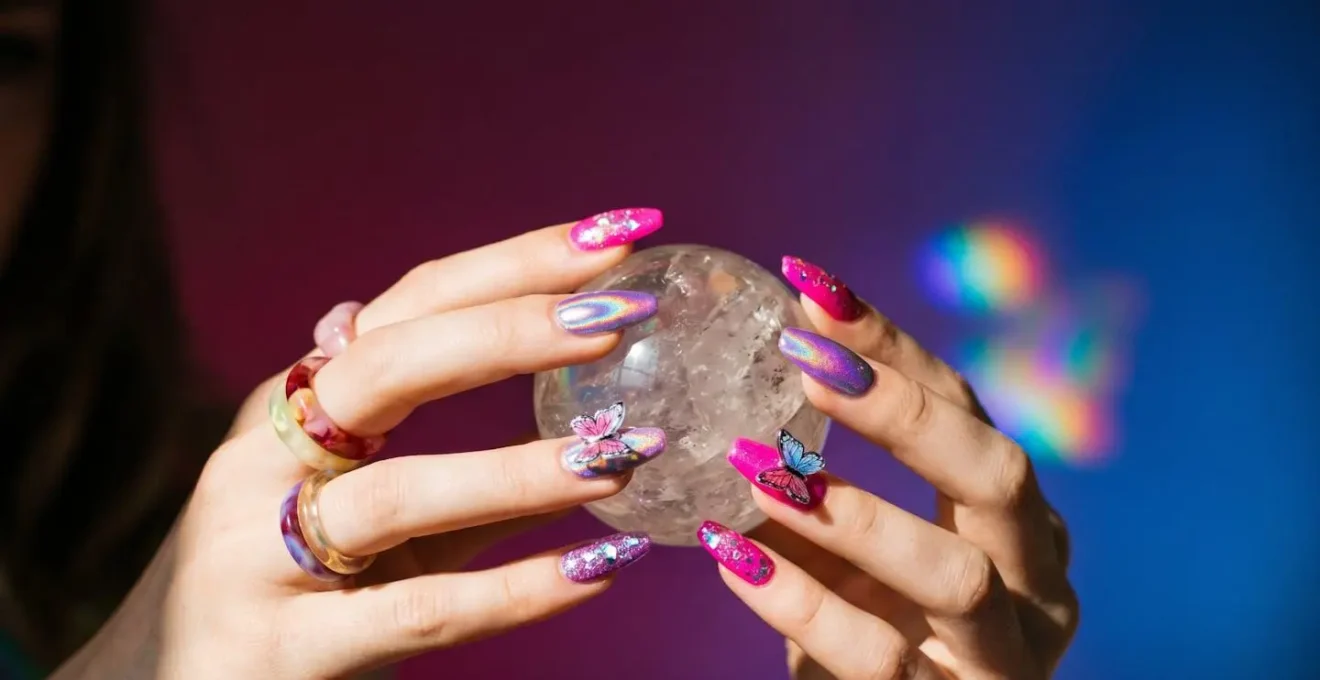
The image above captures the essence of this movement: it’s bold, playful, and unapologetically vibrant. Understanding the ‘why’ behind these requests—the search for joyful self-expression and individuality—is the key to authentically connecting with this client base and turning a simple trend into a loyal following.
Barbiecore Pink: Preparing Your Stock for Blockbuster Releases
Blockbuster movies, like the *Barbie* film, have the power to create global tsunamis of demand for a specific color or aesthetic. When « Barbiecore » exploded, salons were suddenly faced with a run on every shade of hot pink. The challenge for a business owner is capitalizing on this hype without getting stuck with 20 bottles of unsellable pink polish six months later. This requires a proactive, data-driven approach to inventory velocity rather than a reactive bulk purchase.
Instead of immediately buying a case of the « perfect » pink, smart technicians use pre-launch buzz to gauge real-world demand. Run polls on Instagram Stories (« Which Barbie pink is your favorite? »), create a « Barbiecore » waitlist, or require a small deposit for themed appointments. This transforms social media engagement into valuable market research, helping you make a more accurate initial order. This strategy mitigates risk and ensures your investment aligns with actual client commitment.
Case Study: Rhode Beauty’s Pre-Launch Seeding Strategy
Hailey Bieber’s brand, Rhode, has mastered the art of building demand before a launch. By seeding unlabeled product samples to influencers weeks in advance, they generate intense speculation and buzz. This allows them to gauge audience reaction and adjust production quantities before the official release, minimizing the risk of overstocking a trend-specific product. This model shows how creating anticipation and collecting pre-launch feedback can be a powerful tool for managing inventory in a trend-driven market.
Even with careful planning, some overstock is inevitable. The key is to have a planned exit strategy. A trend-specific color doesn’t have to become dead stock. By creatively repositioning it, you can extend its life and protect your bottom line. Here is a timeline-based exit strategy for excess trend-based inventory:
- Immediate (0-3 months post-peak): Bundle the color into « limited edition » sets with complementary glitters or art, marketing it as a collector’s item for die-hard fans.
- Short-term (3-6 months): Repurpose the color for seasonal holidays. Barbiecore pink, for example, is perfect for Valentine’s Day or Breast Cancer Awareness Month promotions.
- Mid-term (6-12 months): Create custom mixes. Blend the trending shade with other polishes to create new, unique « next-gen » colors to sell as a custom service.
- Long-term (12+ months): Use the polish for training, donate it to beauty schools for a potential tax write-off, or sell it through B2B liquidation channels.
Which Hashtags Actually Attract Clients Searching for Trends?
Posting a beautiful photo of your ‘glazed donut’ nails with the hashtag #chromenails feels productive, but it’s often the equivalent of shouting into a hurricane. With millions of posts, your work is lost in a sea of content, attracting likes from other nail techs but few actual, local clients. The key to converting social media effort into appointments is understanding that not all hashtags are created equal. A successful strategy requires a tiered approach that separates hashtags for broad discovery from those for local conversion.
The stakes are high, as social media is a primary driver of purchasing decisions for younger clients. A 2023 Beauty Marketing Study by Tinuiti found that 62% of Gen Z beauty shoppers discovered a product on social media and purchased it in the past year. To capture this market, your hashtag strategy must be as precise as your cuticle work. Broad, high-volume tags like #nailart are for brand awareness and joining a global conversation. Niche tags like #haileybiebernails connect you with enthusiasts. But the real money is in local conversion hashtags like #[yourcity]nails or #chicagonailtech. These have lower reach but are used by people actively looking to book an appointment in their area.
This table breaks down the different tiers of hashtags and their specific business purpose, helping you build a more effective strategy for every post.
| Hashtag Tier | Purpose | Example | Avg. Reach | Booking Intent | Best For |
|---|---|---|---|---|---|
| Broad Discovery | Maximize visibility | #chromenails #nailart #nailsofinstagram | High (1M+ posts) | Low (browsing) | Brand awareness, portfolio showcase |
| Niche Community | Connect with enthusiasts | #glazeddonutnails #haileybiebernails #gelnailtech | Medium (50K-500K) | Medium (interest) | Building follower loyalty, engagement |
| Local Conversion | Attract ready-to-book clients | #nailsLondon #LAnailsalon #[yourcity]nailtech | Low (under 50K) | High (booking) | Direct client acquisition, walk-ins |
| Micro-Trend | Ride viral waves | #valentinesnails2026 #summernails #bridenails | Variable | High (event-driven) | Seasonal campaigns, limited-time offers |
| Branded | Build proprietary community | #YourSalonNameNails #[signature]Manicure | Very Low (building) | Very High (loyal clients) | User-generated content, repeat business |
How to Seal Chrome Powder so It Doesn’t Chip or Lose Its Mirror Effect?
There’s nothing more frustrating than creating a perfect, mirror-like chrome manicure only to have the client return in a week with chipping, peeling, or a dull finish. The longevity of a chrome manicure is not in the powder itself, but entirely in the preparation and sealing technique. Common mistakes—like an improperly cured top coat or failing to cap the free edge—are what lead to premature breakdown. Achieving a durable, long-lasting chrome finish is a matter of technical precision.
The most critical step is applying the chrome powder over a fully cured, non-wipe top coat. Applying it over a tacky layer will result in a gritty, cloudy finish instead of a reflective one. The top coat must be cured for the lamp’s full recommended time (typically 60 seconds in a professional 48W+ LED lamp) to create a hard, smooth canvas. After buffing the chrome powder onto the nail, the sealing process is a two-part system: first, a gentle filing or buffing of the free edge to remove any chrome particles, and second, a meticulous application of a final top coat, making absolutely sure to cap the free edge. This creates a seal that locks the powder in, preventing it from chipping or wearing away from the tip.
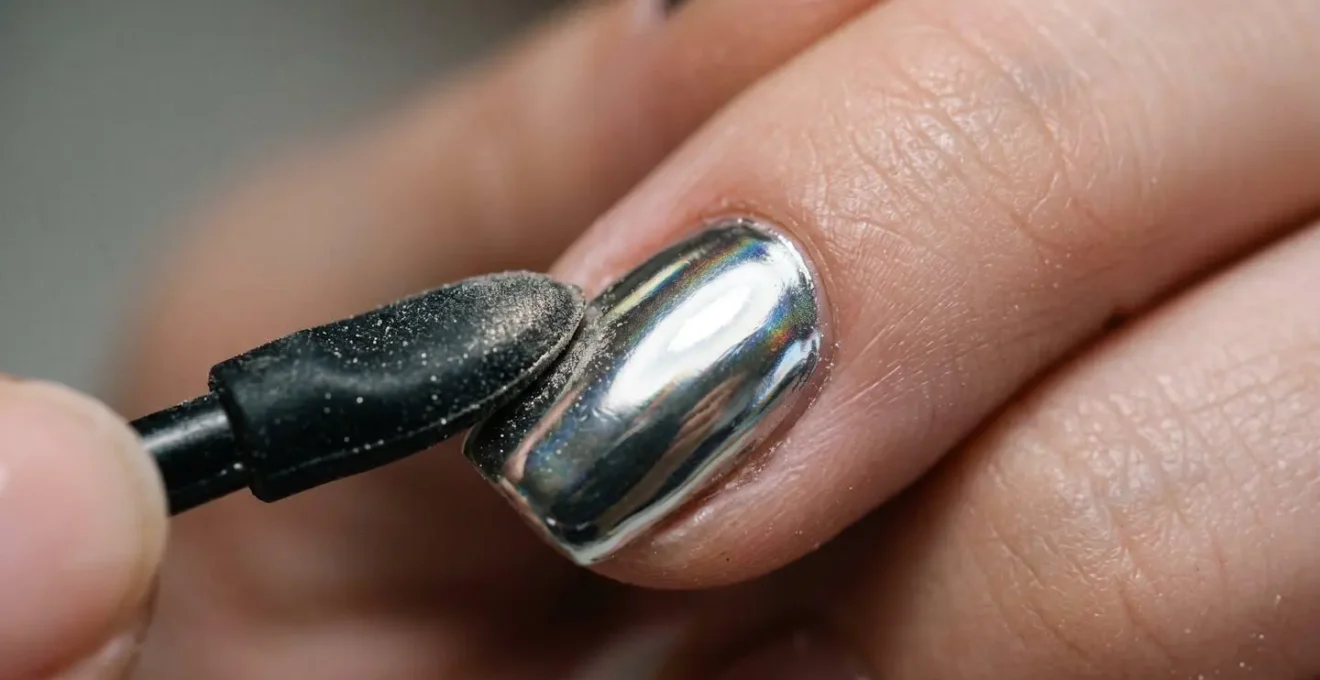
The process is delicate. The final top coat should be applied with a light touch to avoid dragging or streaking the chrome layer underneath. Educating the client on aftercare—specifically, avoiding harsh chemicals and using cuticle oil daily to maintain flexibility—is the final piece of the puzzle for ensuring a 2+ week wear time. When clients complain about chipping, it’s often an application or aftercare issue, not a product flaw.
Action Plan: Chrome Troubleshooting Matrix
- Symptom: Cloudy or grainy finish | Cause: Top coat not fully cured before chrome application | Solution: Ensure 60-second full cure under LED lamp. Verify lamp wattage (minimum 48W recommended).
- Symptom: Chrome rubs off easily | Cause: No-wipe top coat not used, or tacky layer interfering | Solution: Always apply chrome ONLY over fully cured no-wipe top coat. Never apply over tacky layer.
- Symptom: Chipping at free edge within 3-5 days | Cause: Free edge not properly capped with top coat | Solution: Apply thin layer of top coat over chrome, ensuring you wrap and cap the free edge completely.
- Symptom: Chrome appears patchy or uneven | Cause: Insufficient powder buffing or uneven base coat application | Solution: Buff chrome powder in circular motions for 30+ seconds per nail. Ensure base color is smooth and even.
- Symptom: Chrome loses mirror effect after 7-10 days | Cause: Client aftercare or inferior top coat quality | Solution: Educate clients to use cuticle oil daily and avoid harsh acetone exposure. Invest in professional-grade no-wipe top coat.
The « Stamper French »: Is It Really as Easy as TikTok Says?
The « stamper French » hack exploded on TikTok, promising a perfect, crisp smile line in seconds. For a busy nail tech, the allure is obvious: a technique that could cut down service time on one of the most requested nail art designs seems like a dream come true. With a recent Tinuiti survey finding that TikTok is the leader in beauty discovery for Gen Z, clients are increasingly coming in asking for these viral hacks. The question isn’t just « is it easy? » but « is it a professionally viable, profitable service? »
The reality is that the stamper method is a tool with specific applications, not a universal replacement for a hand-painted French. While it is significantly faster, it works best on oval and almond-shaped nails with a uniform curve. It struggles to create a clean line on square or coffin shapes, where the corners require precise, manual shaping. Furthermore, the smile line it creates is uniform and less customizable than a hand-painted one, which can be tailored to the client’s specific nail bed for a more flattering look.
Instead of viewing it as a replacement, the savvy technician positions the stamper French as a separate, distinct service. It’s an excellent, lower-priced express option for trend-conscious clients on a budget or time crunch. This approach allows you to capture a wider market segment while preserving the hand-painted French as a premium, artisan service at a higher price point. As the profitability analysis below shows, the stamper’s value is in volume, potentially increasing hourly revenue by enabling more client turnover.
| Factor | Stamper French (Hack) | Hand-Painted French (Traditional) | Strategic Recommendation |
|---|---|---|---|
| Time per Set | 12-15 minutes | 25-35 minutes | Stamper saves 13-20 min, enabling +2-3 clients/day |
| Precision Quality | Medium (uniform but less customizable) | High (custom-fitted to nail shape) | Hand-paint for premium clients, stamper for volume |
| Ideal Nail Shapes | Oval, almond (uniform curvature) | All shapes including square, stiletto, coffin | Offer stamper for specific shapes only |
| Price Point | $35-$45 (Quick Service) | $55-$75 (Premium Artisan) | Position as distinct services, not substitutes |
| Client Satisfaction | High for trend-conscious, time-limited clients | High for quality-focused, occasion clients | Pre-consultation to manage expectations |
Key Takeaways
- Treat viral trends as predictable market data, not just creative burdens, by analyzing their six-stage lifecycle.
- Align your inventory strategy with the trend’s lifecycle, using pre-orders and polls to gauge demand and having an exit plan to avoid dead stock.
- Separate social media content goals: use broad, high-reach hashtags for brand discovery and hyper-local, conversion-focused hashtags to book paying clients.
Why Your Nail Photos Don’t Get Engagement Despite Good Art?
You’ve spent an hour creating a flawless set of nails, taken a dozen photos in perfect lighting, and posted your masterpiece… to the sound of crickets. It’s a common frustration for talented nail artists: why does incredible work get so little engagement? The answer is that social media algorithms, especially on platforms like Instagram, no longer prioritize just « pretty pictures. » They prioritize content that generates high-value engagement: saves, shares, and comments. A simple, static photo of nails is easily scrolled past, while strategic content formats get rewarded with greater reach.
According to a 2023 beauty influencer report from KYRA, user preferences have shifted dramatically away from static images. The data shows that audiences are more engaged by content that provides value, such as tutorials and reviews, over simple product shots. Your content strategy must evolve to match this reality. Instead of just posting the final product, you need to create content designed to be saved for later or shared with a friend. This means thinking like a content creator, not just an artist.

This involves several key shifts. First, move beyond the standard « hand on a bottle » pose. Create dynamic, lifestyle-oriented shots with interesting props and negative space that feel more editorial. Second, and more importantly, embrace different content formats. Create « save this for your next appointment » carousels that show the finished look, close-up details, and the products used. Film short, satisfying time-lapse videos of your process. Create simple infographics like a « Nail Shape Guide » or a « Chrome vs. Glitter » comparison. These formats encourage users to hit the « save » button, signaling to the algorithm that your content is valuable and should be shown to more people.
- Format 1: Carousel Posts – Create ‘Save this for your next appointment’ carousels. These generate 3x more saves than single images.
- Format 2: Process Videos (Reels) – Film a 15-30 second time-lapse of your application. Reels can generate 22% more reach than static posts.
- Format 3: Educational Infographics – Create simple guides like ‘How to Choose a Nail Shape for Your Hand’. Informational content has the highest save rate.
- Format 4: Interactive Story Content – Use Instagram Stories with poll stickers (‘Which shade next?’). This boosts algorithm favorability.
The « Hailey Bieber » effect proves that a single trend can dominate the market, but your success as a nail professional depends on the system you build to manage it. By understanding the trend lifecycle, making strategic inventory choices, and creating content that converts, you can turn the pressure of viral demand into a powerful and predictable source of profit. Stop chasing trends and start capitalizing on them.