The key to selling couture nail art isn’t justifying your time; it’s orchestrating a luxury experience where the high price becomes part of the allure.
- Premium clients are not buying a manicure; they are investing in an escape, a status symbol, and demonstrable artistry.
- Shifting your marketing from speed and « add-ons » to « Slow Beauty » and sensory rituals transforms the service into a coveted experience.
Recommendation: Stop competing on price with low-end salons and start positioning your service as an exclusive art consultation, complete with rituals that make the cost an afterthought.
You are a true artist. Your brush control is impeccable, your designs are intricate, and your creativity transforms a simple nail into a miniature canvas. Yet, you find yourself in a frustrating cycle: clients admire your « couture » work but opt for the fast, cheap stickers. They see your hand-painted art as a time-consuming luxury they aren’t willing to pay for, leaving you feeling undervalued and competing in a market that doesn’t appreciate your skill. The common advice—to simply post on Instagram or list your material costs—misses the fundamental issue. Your challenge isn’t about proving your skill; it’s about changing the client’s entire perception of value.
The secret lies in a radical mindset shift. You must stop selling a manicure and start curating an exclusive, multi-sensory experience. This is the world of luxury sales, where the service is an event, the environment is a sanctuary, and the final product is an artifact of a memorable indulgence. It’s about building a narrative where the premium price is not a barrier but a gatekeeper, signaling an unparalleled level of quality, relaxation, and exclusivity that stickers and « chop shop » salons can never replicate. This approach doesn’t just justify the price; it makes it a desirable part of the purchase.
This guide will deconstruct the strategy of luxury positioning. We will explore how to build an elevated pre-service ritual, articulate the value of superior materials like genuine gold leaf, and leverage the psychology of premium pricing. We will also delve into marketing the concept of « Slow Beauty, » the importance of finishing touches, and the technical superiority that ensures your art not only looks but also feels and lasts like a true luxury good. Finally, we will contrast this elevated model with the pitfalls of budget salons, giving you the confidence to own your value and attract the clientele you deserve.
This article provides a structured path to transform your service from a simple commodity into a coveted luxury experience. The following sections break down each strategic element, from client psychology to the tangible details that command a premium price.
Summary: From Stickers to Status: A Guide to Selling Couture Nail Art
- Champagne and Sketches: Elevating the Pre-Service Ritual
- Using Genuine Gold Leaf vs. Foil: Is It Worth the Cost?
- Why High Prices Attract Better Clients Than Discounts?
- Marketing « Slow Beauty »: Selling Relaxation Instead of Speed
- Oil and Hot Towel: The Final Touch That Justifies the Price
- Resin or Gel: What Keeps Crystals on for 4+ Weeks?
- Hidden Costs: Why Did Your $30 Manicure Turn Into $65?
- How to Spot a « Chop Shop » Salon Before You Even Sit Down?
Champagne and Sketches: Elevating the Pre-Service Ritual
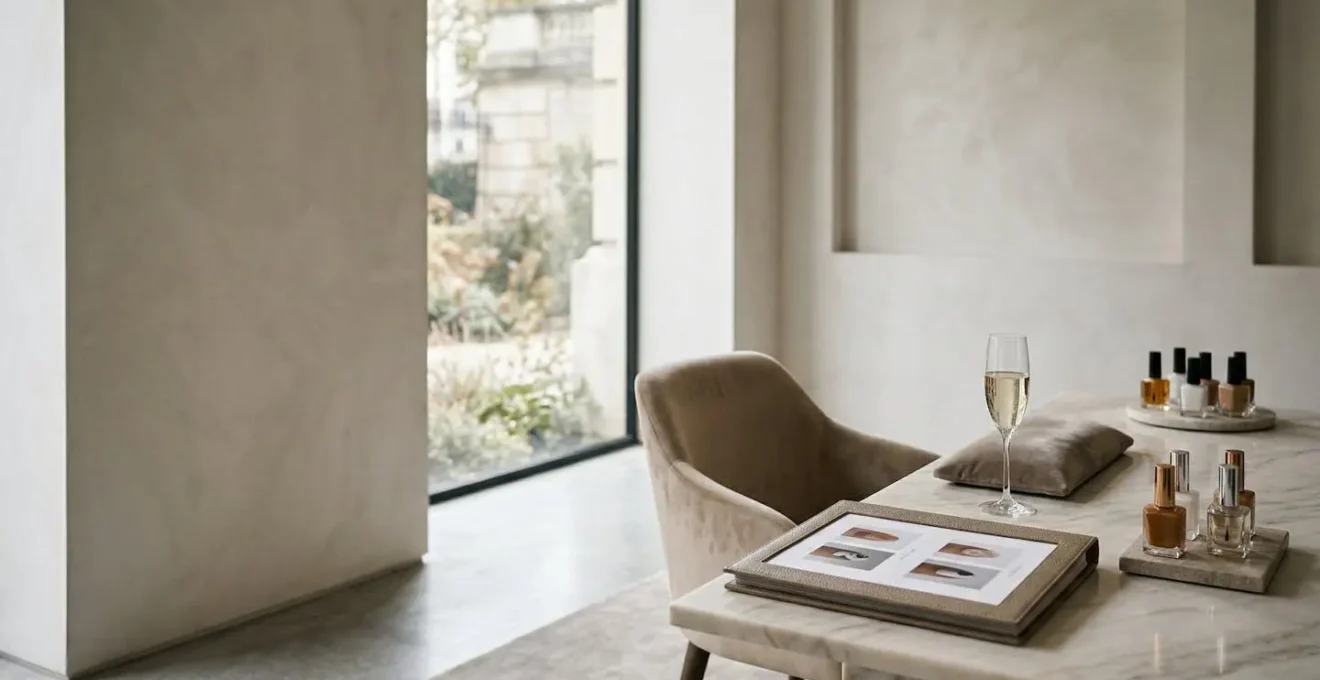
The journey into luxury begins long before a brush touches a nail. For high-end clients, the value is not just in the final product but in the entire process, which must feel exclusive and personalized from the very first moment. This is where you shift from a technician taking an order to an artistic consultant curating a bespoke experience. Instead of a hurried « What do you want? » while gesturing to a wall of polish, you must orchestrate a pre-service ritual. This can involve a comfortable seating area, a beverage offering like sparkling water or even champagne, and a dedicated consultation time.
During this consultation, you don’t just discuss colors. You sketch out design ideas, discuss the client’s personal style, and present a portfolio of your unique work as a source of inspiration. This act of sketching and collaborative design frames the service as a commission for a piece of custom art, not a standard manicure. It creates a powerful sense of involvement and co-creation that no sticker or template can offer. Luxury nail salons are redefining themselves as beautiful places to escape daily stress, focusing on creating a comprehensive pampering destination.
This elevated ritual immediately communicates that your service is different. It is thoughtful, unhurried, and centered entirely on the client. By investing this time upfront, you establish a professional rapport and an expectation of premium quality. You are no longer just performing a task; you are providing an escape and a creative partnership. This premium positioning, built on specialized skills and an elevated experience, is what allows for a significant pricing premium over standard market rates.
Using Genuine Gold Leaf vs. Foil: Is It Worth the Cost?
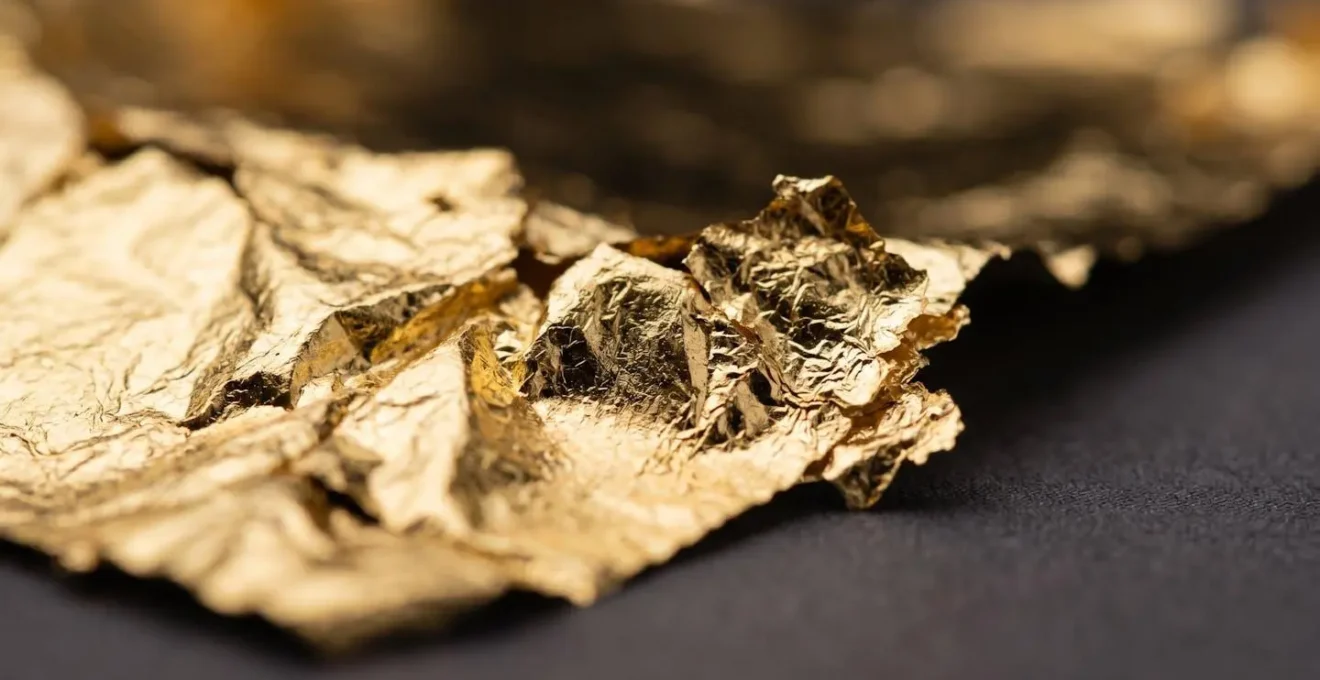
The answer is an unequivocal yes, but not for the reasons you might think. The value of using genuine 24k gold leaf over cheap metallic foil isn’t just about durability; it’s about articulating an undeniable story of luxury. Foil is flat, uniform, and lifeless. Genuine gold leaf, on the other hand, possesses a unique provenance and a visual texture that cannot be faked. It catches the light with a warmth and complexity that is immediately recognizable as authentic and precious.
When a client asks about the price difference, your role is to educate their eye. You can explain and show how genuine gold leaf is hammered into micro-thin sheets, giving it a delicate, slightly imperfect, and organic texture. This visual distinction is your most powerful sales tool. It moves the conversation from « This costs more » to « This *is* more. » You are offering them a chance to wear a precious material, a piece of authentic craftsmanship with a history. This narrative is far more compelling than simply listing the higher cost of a supply item. This is the difference between decoration and adornment.
This principle of using demonstrably superior materials is a cornerstone of luxury positioning. It creates a clear, visible gap between your couture service and mass-market alternatives. While some high-end salons incorporate precious materials with staggering price tags, such as manicures with real diamonds or sapphires, the principle remains the same at any scale. As documented in luxury beauty services, prices can reach up to $32,000, anchoring the market and making your premium service seem entirely reasonable. By using genuine gold leaf, you aren’t just adding an accent; you are embedding a statement of uncompromising quality directly into your art.
Why High Prices Attract Better Clients Than Discounts?
The fear that raising prices will drive away clients is the single biggest obstacle for talented artists. The reality, however, is that strategic high pricing is a powerful filter that attracts the *right* clients while repelling those who will never value your artistry. This phenomenon is rooted in a core principle of luxury economics known as the « Veblen Effect. » It describes a category of goods for which demand increases as the price increases because the price itself is a signal of quality, exclusivity, and status.
As the economic definition explains, this concept is central to understanding the psychology of the luxury consumer. As noted by economists studying the principle named after Thorstein Veblen:
A Veblen good is a type of luxury good for which the demand increases as the price increases, in apparent contradiction of the law of demand, resulting in an upward-sloping demand curve.
– Economic definition named after Thorstein Veblen, Veblen Effect – Wikipedia
A high price communicates confidence. It tells the world that your service is not a commodity to be bargained for but an exceptional experience worth the investment. Clients who are solely price-shopping are looking for speed and efficiency; they are the ones who will compare your hand-painted art to a $5 sticker sheet. A client seeking a luxury experience, however, uses the price as a crucial piece of information. To them, a high price suggests superior skill, better materials, a more hygienic environment, and a more relaxing and personalized service. They are not just paying for nail art; they are paying to feel pampered, special, and assured of a quality result.
By positioning yourself at a premium, you stop competing with the discount salons. You enter a different market altogether, one where your artistic talent is the main attraction, not a feature to be justified. Your high price becomes a beacon for clients who are tired of rushed, impersonal services and are actively seeking the very best. These are the clients who will respect your time, admire your skill, and become loyal patrons of your art.
Marketing « Slow Beauty »: Selling Relaxation Instead of Speed
The budget nail market is built on one thing: speed. It’s about getting clients in and out as quickly as possible. Your greatest competitive advantage is to do the exact opposite. You must embrace and market the concept of « Slow Beauty, » a philosophy that reframes your service from a quick chore into a mindful, restorative ritual. It’s about selling the one thing your high-end clients crave most: a genuine escape from their stressful lives.
The founder of the movement, Shel Pink, defines this philosophy as a practice grounded in wellness and nature. In The Slow Beauty Journal, she notes:
Slow beauty is a movement and a philosophy to help people develop a sustainable self-care practice grounded in nature, health and wellness which includes the use of multi-sensory products, tools and resources to support a joyful way of feeling and being in the world.
– Shel Pink, The Slow Beauty Journal
This isn’t just a marketing gimmick; it’s a response to a profound societal need. A survey from Mental Health America revealed that over 67% of Americans report feeling ‘overwhelmed’ or unable to cope with stress. Your salon can become their sanctuary. Instead of apologizing for the time your art takes, you celebrate it. Frame the 90-minute session not as an inconvenience but as « 90 minutes of uninterrupted tranquility » or « your dedicated time to unplug and recharge. » Use sensory language in your marketing: talk about the scent of essential oils, the warmth of the towels, the quiet ambiance, and the focused, gentle nature of your work.

By selling relaxation instead of speed, you completely change the value equation. The longer duration of the service becomes a key benefit, not a drawback. Clients are no longer just paying for beautiful nails; they are paying for a therapeutic experience. This positioning attracts individuals who see self-care as a necessary investment in their well-being, and they are more than willing to pay a premium for a service that genuinely helps them relax and de-stress.
Oil and Hot Towel: The Final Touch That Justifies the Price
The perception of luxury is often sealed in the final moments of a service. While the core artistry is crucial, it’s the small, thoughtful finishing touches that create a lasting impression and make the premium price feel entirely justified. A simple, fragrant cuticle oil massage followed by wrapping the hands in a hot, scented towel is a perfect example. This gesture costs very little in terms of time and materials, but its perceived value is immense. It is a powerful sensory signal of care, pampering, and attention to detail.
This final step serves as a moment of punctuation, elevating the entire experience from a mere transaction to a memorable ritual. It provides a non-verbal confirmation to the client: « This was a premium service. » It transforms the mundane act of paying into the conclusion of a therapeutic session. Luxury salons understand this power and often incorporate even more elaborate finishing rituals. For instance, some premium salons offer paraffin dips where clients submerge their hands in hot wax, a treatment that adds an intense level of moisture that can last for weeks, especially for those with dry hands.
These final flourishes are not frivolous « extras »; they are strategic elements of your experience architecture. They provide tangible, sensory evidence of the luxury you deliver. When the client leaves, their hands are not only beautifully adorned but also feel soft, hydrated, and cared for. This lingering physical sensation serves as a constant reminder of the quality of your service, reinforcing their decision to invest in you. It’s these final, thoughtful details that turn a one-time client into a loyal advocate who understands that what you offer is far more than just a manicure.
Resin or Gel: What Keeps Crystals on for 4+ Weeks?
A high price tag comes with high expectations, and one of the most critical is durability. A client paying a premium for couture art with 3D elements like crystals expects it to last. If embellishments fall off within days, the entire perception of luxury is shattered. Therefore, mastering and communicating your technique for longevity is not just a technical skill; it’s a core part of your value proposition. You must be able to confidently promise that your art is as durable as it is beautiful.
Whether you use a high-quality resin or a structured builder gel, the key is a meticulous application process. It involves proper nail preparation, precise placement, and, most importantly, completely sealing the base of the crystal without covering its facets, which would dull its sparkle. Using a « no-wipe » top coat around the base of the crystal and curing it thoroughly creates a strong, seamless bond that prevents snagging and ensures the embellishment stays put for four weeks or more. When a client expresses concern about longevity, you can confidently explain your multi-step process, reinforcing that their investment is protected by your expert technique.
This technical expertise is a tangible benefit that budget salons cannot offer. Your ability to ensure the art lasts is a direct justification for the price. The peace of mind that comes from knowing their beautiful, expensive manicure won’t be ruined in a week is a powerful selling point. This promise of durability, backed by demonstrable skill, is a crucial pillar of trust between you and your high-end clientele.
Your Action Plan: Securing High-End Embellishments
- Start with a clean, prepped base color, allowing the final layer to remain slightly tacky to create grip for the embellishment.
- Use a precision tool, such as fine-point tweezers or a wax-tipped picker, to place 3D elements exactly where desired on the nail.
- For sculpted designs, apply a small bead of 3D gel or acrylic with a fine brush, building the shape directly onto the nail and securing the crystal within it.
- Cure the design thoroughly under a high-quality UV or LED lamp, ensuring the adhesive or gel is fully hardened all the way through.
- Apply a strong, durable top coat meticulously around the base of each element to fully encapsulate it and prevent any edges from snagging.
Hidden Costs: Why Did Your $30 Manicure Turn Into $65?
The pricing model of many budget and mid-range salons is one of the biggest sources of client frustration: the à la carte menu of hidden upcharges. A client walks in expecting to pay the advertised $30 for a manicure, but by the time they’re done, the bill has ballooned to $65 after adding gel polish, a simple design, cuticle work, and gel removal. This « bait and switch » tactic erodes trust and leaves clients feeling deceived. This creates a powerful opportunity for you to differentiate yourself with a strategy of radical transparency.
Instead of an endless list of add-ons, structure your pricing around all-inclusive « couture » tiers. For example, your « Signature Art Manicure » at a set price could include everything: gel polish, removal of old polish, detailed cuticle work, a hand massage, and a certain level of hand-painted art. This transparent, all-inclusive pricing model positions you as a high-integrity professional. It eliminates the client’s anxiety about unknown costs and allows them to relax and enjoy the experience, knowing exactly what to expect. Indeed, a nail industry survey found that 76% of clients underestimate the cost of advanced nail art, highlighting the widespread confusion and frustration caused by opaque pricing.
Presenting a clear, upfront price for a complete experience is a hallmark of luxury service. It conveys confidence and respect for your client. To illustrate the alternative they face elsewhere, you can even educate them on the common hidden fees that inflate costs at other salons. The following table breaks down this confusing model.
| Service Element | Typical Add-On Cost | Why It’s Charged |
|---|---|---|
| Gel Polish Upgrade | $10-$20 | Longer-lasting results and pricier materials |
| Advanced Nail Art | $15-$50+ | Intricate designs, rhinestones, chrome or holographic powders |
| Gel/Acrylic Removal | $7-$20 | Time-intensive removal process and materials |
| Extensive Cuticle Work | $5-$15 | Additional time and specialized care beyond basic shaping |
| Nail Shape Upgrade | $5-$10 | Complex shapes like stiletto or coffin require more skill |
By offering a transparent, high-value package, you are not just selling a manicure; you are selling peace of mind. This builds the deep trust that is essential for cultivating a loyal, high-end clientele.
Key Takeaways
- Transform your service from a transaction into a curated « Experience Architecture » with pre-service rituals and sensory details.
- Leverage the « Veblen Good Principle »: a high price acts as a filter for quality-seeking clients and a signal of exclusivity.
- Market the concept of « Slow Beauty, » selling relaxation and escape rather than speed, turning the service duration into a key benefit.
How to Spot a « Chop Shop » Salon Before You Even Sit Down?
To truly sell the value of your couture service, you must also be able to articulate what clients are risking by choosing the cheap alternative. A « chop shop » is a term for low-end salons that prioritize volume and speed over safety and quality. Educating your clients (and potential clients) on how to spot these establishments is not negative selling; it’s a professional duty that positions you as a trusted expert who cares about their health and well-being.
Key red flags of a chop shop include a strong, overwhelming chemical smell (indicating poor ventilation), dirty-looking pedicure tubs or workstations, and technicians who reuse single-use items like files or buffers. Another major warning sign is the use of a drill or e-file on the natural nail plate, a practice that can cause significant and lasting damage. Finally, a service that feels rushed, where the technician is working on multiple clients at once or communication is minimal, is a clear indicator that quality is not the priority.
The allure of a cheap manicure can be tempting, but it comes with significant hidden dangers. These budget services often create a cycle of damage and repair that ultimately costs the client more in the long run. As industry risk analyses show, cheap manicures can lead to health risks including infections and fungal issues from poor hygiene, damage from low-grade products, and a shorter service lifespan that requires more frequent, and ultimately more costly, treatments. Your pristine environment, single-use tools, expert technique, and unhurried pace are not just luxury features; they are essential safety standards.
When you frame your service in this context, the price difference between your salon and the chop shop down the street is no longer about « art. » It’s about health, safety, and long-term nail integrity. You are offering a guarantee of quality and care that budget salons simply cannot afford to provide. This makes your premium price not an expense, but an investment in peace of mind.
By shifting your focus from selling a product to curating a holistic, luxury experience, you can finally break free from the downward pressure of price competition. Your artistry deserves a clientele that not only appreciates it but is eager to invest in it. The next logical step is to audit your current service and begin architecting this elevated experience for your own brand.